
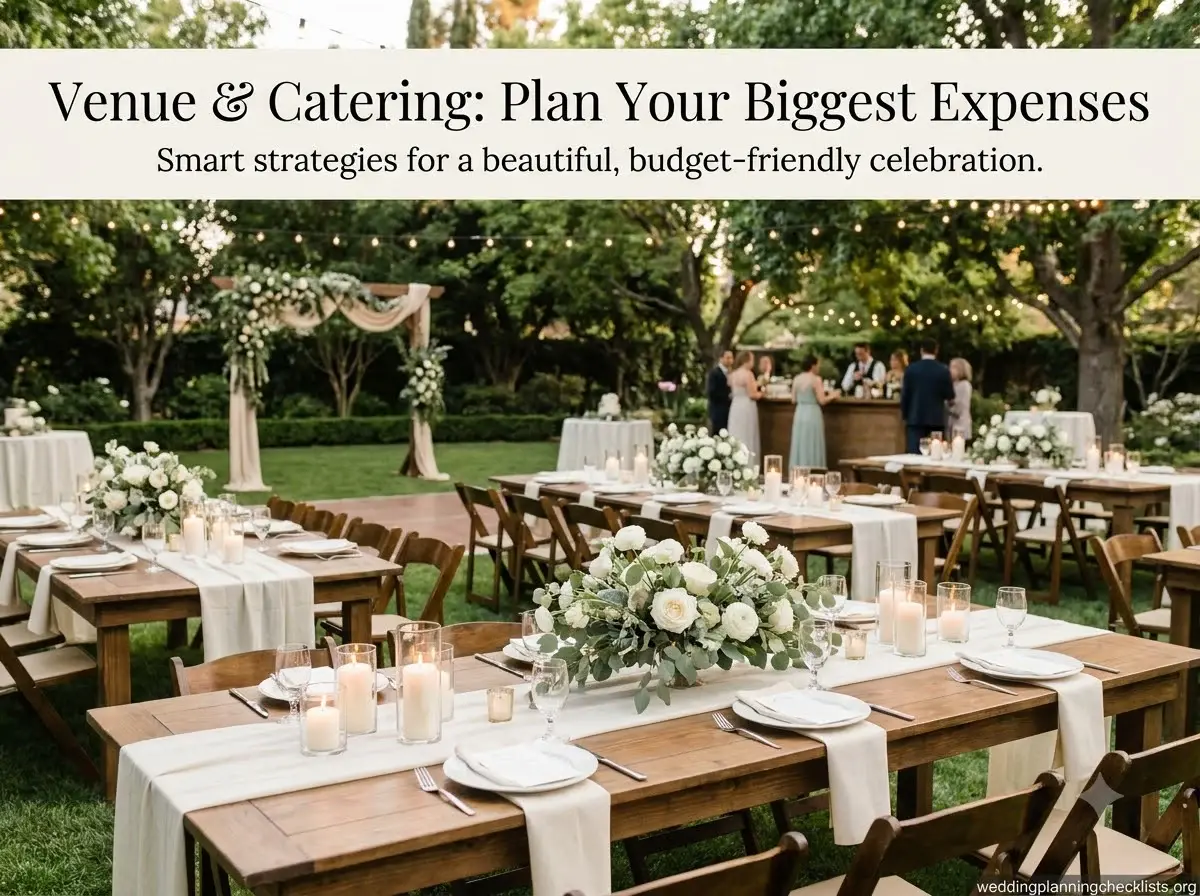
Summary: Choosing a wedding venue comes down to six things you can settle in order: budget, guest count, date, location, style and what the contract actually includes. This guide shows how to choose a wedding venue step by step, from searching wedding venues near me to comparing wedding reception locations, affordable wedding venues and all-inclusive packages. You’ll get a wedding venue tour checklist, questions to ask a wedding venue, a scoring matrix, red flags, contract must-haves, plus tips for multi-day Pakistani, Indian and Muslim weddings. Use the Wedding Countdown to keep your booking deadlines visible while you compare venues.
The venue is the first big yes of the whole wedding. Once you sign, your date is fixed, your guest limit is fixed, and a large part of your budget is gone. Catering, décor, photography and even the order of the evening start to follow from that one decision. So knowing how to choose a wedding venue matters more than any mood board.
The good news is that the process is mostly elimination. You don’t compare fifty beautiful rooms. You set five or six limits, remove everything that breaks them, and then compare the few that remain on a fair scorecard. This guide shows how to choose a wedding venue in that order, with the questions to ask on a tour and the contract points people tend to forget.
How to Choose a Wedding Venue: The Short Version
Here is the whole method in one list. Each step has its own section below.
- Set a budget for venue plus food and drink.
- Fix a guest count range.
- Pick two or three possible dates, or a season.
- Decide the area and how far guests will travel.
- Choose a style and a venue type.
- Decide between a blank slate and an all-inclusive venue.
- Build a shortlist of three to five venues.
- Tour each one with the same checklist.
- Remove any venue with a deal-breaker.
- Score what’s left.
- Read the contract line by line.
- Sign, pay the deposit and put every payment date in your calendar.
Couples who feel stuck are often touring before steps 1 and 2 are settled. If you only do one thing from this article, do those two first.
Step 1: Set the Venue Budget Before You Tour

Venue and catering usually take the biggest share of a wedding budget. A common rule of thumb puts the two together at roughly half of the total. Treat that as a starting point, not a law, because a backyard wedding and a hotel ballroom split money very differently.
Pick a ceiling for venue plus food and drink, and write it down. Then ask every venue for the out-the-door price rather than the rental fee. That figure should include tax, service charge, gratuity, set-up and clean-up, and any insurance requirement. Two venues with the same headline price can end up thousands apart once those lines are added.
A base quote of $10,000 can easily reach $14,000 after 22% service fees, 8% state tax, and mandatory security guards are factored in.
If you haven’t built a full budget yet, the wedding budget calculator splits your total across categories so the venue number isn’t a guess. For ways to bring that line down, read these wedding budget tips.
Step 2: Fix Your Guest Count
Capacity is the quickest filter you have. A room that holds 120 does not hold 150, and the fire code decides that, not the sales coordinator. Ask for two numbers: the seated dinner capacity with a dance floor, and the ceremony capacity. The standing, cocktail-style number is always bigger and always misleading.
Going too big has its own cost. A hall built for 300 can swallow a party of 60, and the room feels empty in photos. Aim for a venue whose comfortable seated capacity sits a little above your list, not double it.
No final list yet? Draft an A list and a B list, and tour with the A number. The guest list manager keeps both in one place, and the wedding guest list and seating chart guide helps when the list needs trimming.
Step 3: Choose Dates, Season and Timing
Popular venues fill early, often a year or more ahead for peak weekends. If your date is fixed, start looking sooner than feels necessary. If it’s flexible, let availability pick the date for you. A Friday, a Sunday or an off-peak month can lower the price and open up better time slots.
Write down two or three acceptable dates and a season before you contact anyone. Then ask each venue what changes by season: the price, how comfortable the outdoor areas are, how much daylight you’ll have at ceremony time, and what the rain plan looks like.
Work backward from the date you choose. The 12-month wedding planning checklist and the wedding planning timeline tool show where venue booking sits among the other early tasks. Once your date is set, add it to the Wedding Countdown and you’ll see exactly how many weekends are left to tour, decide and book.
Step 4: Pick the Area and Think About Guest Travel
Typing “wedding venues near me” gives you the closest places, not necessarily the best fit. It’s better to decide the area first: where most guests live, where the two families are based, or somewhere worth travelling to.
A few questions narrow the area quickly:
- Where do most guests live, and how long will they drive?
- Is there enough parking on site, or will guests need a shuttle?
- Are there hotels within a short ride?
- Is the venue easy to find, and is it accessible for older guests and wheelchair users?
- Will the ceremony and reception happen in one place or two?
Searching by city works the same way. If you’re working out how to choose a wedding venue near Kansas City, MO, or near Wichita, KS, add the venue type to the city name (“barn”, “garden”, “banquet hall”, “country club”) instead of only typing “wedding venues.” Then run every result through the same questions above. Broad searches such as “wedding reception locations near me”, “wedding facility near me” and “marriage venues near me” return a mixed bag, so check each venue’s own page for capacity, pricing and open dates before you spend a tour slot on it.
Searching by state or famous destination, say a Vegas chapel, a coastal town in Maine, or a wine region in Pennsylvania, is a different job. You’re choosing a region first and a venue second. If you’re heading that way, the destination wedding checklist covers the extras: guest travel, paperwork and local vendors. And if a home or private property is on your list, the backyard wedding checklist covers what a rental venue normally provides for you.
When you already have a specific named venue in mind, whether that’s a castle, a botanical garden or a country club, treat this guide as your question list. Check the venue’s own site and ask them directly for current pricing and rules, since those change.
Step 5: Match the Venue Type to Your Wedding Style
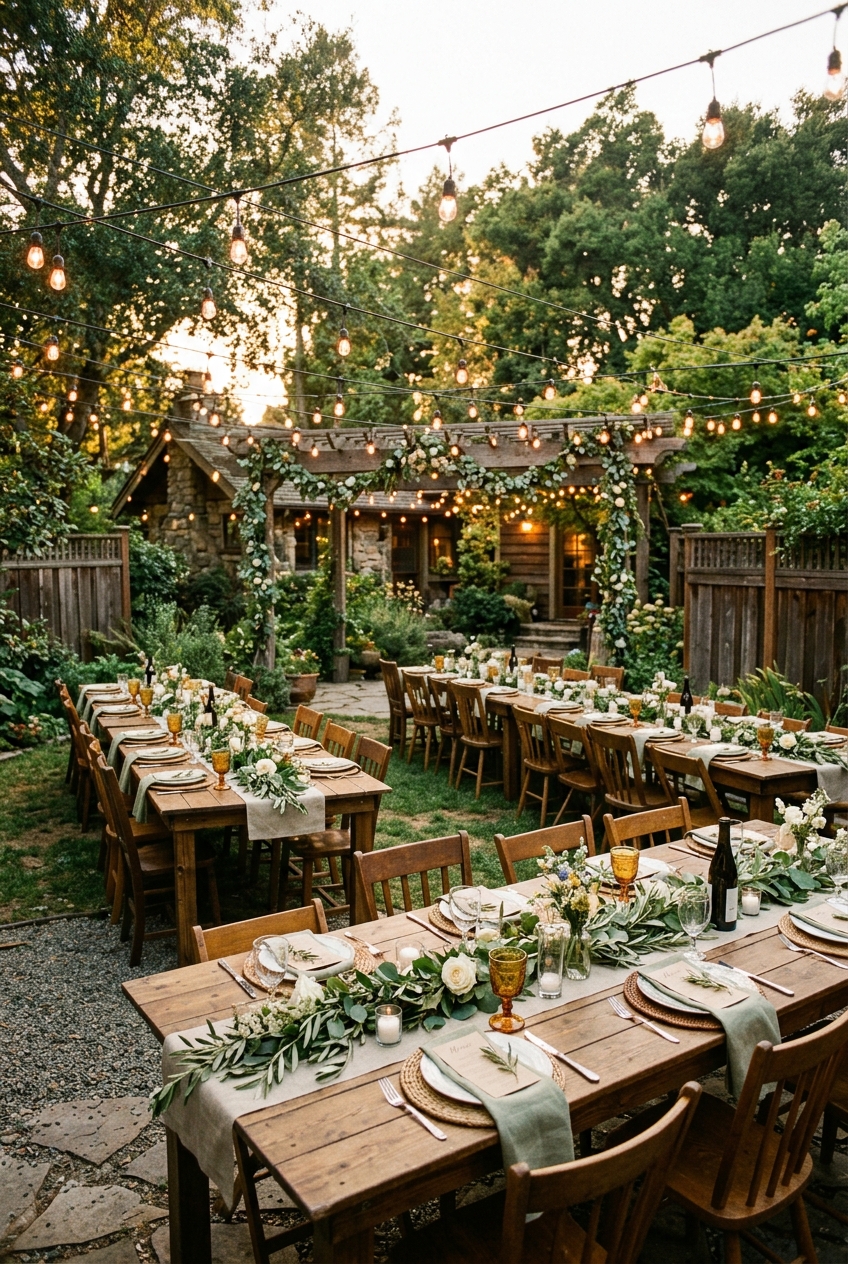
Style narrows the field faster than anything except budget. Formal or relaxed, indoor or outdoor, daytime or evening, kids or no kids: answer those first, then look at which types of venue fit.
| Venue type | Good for | Watch out for |
|---|---|---|
| Banquet hall or ballroom | Large guest lists, weather-proof, catering on site | Can feel generic; often a fixed vendor list |
| Hotel | Out-of-town guests, rooms on site | Food and beverage minimums; limited décor changes |
| Garden or outdoor space | Natural light, photos | Rain plan, heat, restrooms, noise rules |
| Barn, farm or estate | Flexible layout, rustic or boho look | Often a blank slate; rentals add up; distance |
| Country club or golf club | Trained staff, packages | Peak-date minimums, club rules |
| Museum, historic home or castle | Character, striking photos | Strict décor rules, limited capacity, restrictions on open flame |
| Restaurant | Small guest lists, simple pricing | Capacity, noise, shared space |
| Backyard or private home | Lowest rental cost | Everything is brought in; permits, parking, neighbours |
| Beach or destination | The setting itself | Weather, guest travel cost, permits |
If you aren’t sure what your style is yet, build a wedding moodboard first. Ten saved photos will usually show a pattern, and that pattern tells you which row of the table to start with.
Step 6: Blank Slate or All-Inclusive?
This choice changes both your cost and your workload, so make it on purpose.
A blank slate venue is a bare room or open space. You bring in almost everything: tables, chairs, linens, dinnerware, a sound system, lighting, portable restrooms, sometimes a generator and a kitchen. The rental fee looks low, but the rentals pile up fast.
An all-inclusive venue bundles several of those things into one price, and often catering and bar service too. It costs more up front, but the total is easier to predict and there are fewer vendors to coordinate.
| Blank slate | All-inclusive | |
|---|---|---|
| Rental fee | Usually lower | Usually higher |
| Total cost | Harder to predict | Easier to predict |
| Your workload | High: you book and coordinate everything | Lower: the venue handles most of it |
| Flexibility | High: your caterer, your layout | Lower: venue rules and menus apply |
| Best if | You have time, a planner and strong ideas | You want fewer decisions and a clear price |
The honest way to compare the two is to price both at full strength. Add every rental, every extra vendor and every fee to the blank slate quote, then set it beside the all-inclusive quote. The cheaper option on paper is often not the cheaper one in practice.
Step 7: Build a Shortlist of Three to Five Venues
Before you book any tour, do a short desk check on each venue:
- Ask for the pricing sheet and a sample contract by email.
- Look at full wedding galleries, not only the styled photos on the homepage.
- Read recent reviews and look for the same complaint repeated.
- Confirm your preferred dates are open.
- Check the capacity against your guest count.
Anything that fails one of those checks is out before you’ve spent a weekend on it. Keep a simple spreadsheet with one row per venue and columns for price, capacity, available dates, what’s included and your notes. The wedding planning dashboard can hold the same information next to your other tasks, so venue notes don’t get lost in your phone.
Three to five tours is plenty. More than that, and the rooms start to blur together.
The Wedding Venue Tour Checklist
Use the same list at every venue and fill it in right after, in the car, while you still remember the details.
“Never sign a venue contract until you’ve walked the physical space at the exact time of day your ceremony will take place to check sun angles and acoustics.
DDavid Sterling
Venue Procurement Specialist
Before you go
- Bring your partner, and anyone else who has a say in the decision.
- Book the tour at a time close to your real ceremony time, so you see the light the way it will be.
- Print or save the question list below.
- Take photos of the rooms, the restrooms, the parking and the loading area.
While you’re there
- Stand where the ceremony would happen and look at where guests would sit.
- Walk the route from ceremony to cocktail hour to dinner. Notice any bottlenecks.
- Find the restrooms, the kitchen, the bar and the getting-ready rooms.
- Check the sound: can music be played at the volume you want, and until what time?
- Look at the parking and the entrance as a guest would arrive.
- Notice how staff answer a question they didn’t expect.
- Where are the best natural lighting and portrait locations on site? Take notes on scenic spots and sunset angles, then review our wedding photography poses for beginners to plan your couple and family photo sessions.
Afterwards
- Score the venue the same evening (the matrix below helps).
- Email any question you forgot, and keep the reply.
- Note how you felt in the space. Gut feeling is data, just not the only data.
Questions to Ask a Wedding Venue
Bring these to every tour. Write the answers down, and ask for anything important to be added to the contract. This is a core set of 36; add your own for anything specific to your wedding.
Dates and pricing
- Is our date open, and does the price change by day of the week or season?
- What is the full out-the-door price for our guest count, including tax, service charge and gratuity?
- What is the deposit, and when is each payment due?
- Is there a food and beverage minimum?
- Do you charge extra for set-up, clean-up or extra hours?
- Do you offer lower rates for a Friday, a Sunday or an off-peak month?
Space and capacity
- What is the seated capacity with a dance floor, and what is the ceremony capacity?
- Can we see the layout plan for our guest count?
- Is the space ours alone for the whole event, or shared?
- Where do the couple and the wedding party get ready, and from what time?
- How many restrooms are there, and are they accessible?
- Is the venue accessible for wheelchairs and older guests?
Rules and vendors
- Can we bring our own caterer, photographer, florist and DJ, or is there a required list?
- Are there any décor limits (candles, open flame, confetti, hanging items, nails)?
- Is there a noise limit or curfew, and what time must the music stop?
- Can vendors access the space for set-up the day before?
- Do we need to buy event insurance?
- Does the venue provide a coordinator, and what exactly do they handle?
Food and drink
- Is catering in-house only, or can we use an outside caterer?
- Can the kitchen handle allergies, vegetarian, vegan, halal and kosher requests?
- Is there a tasting, and is it included?
- Can we bring our own alcohol, and is there a corkage fee?
- How is bar service priced: by person, by hour or by consumption?
- Who provides the cake table, cake cutting and serving?
Weather and logistics
- What is the rain or heat plan, and who decides when to switch?
- Does the indoor backup cost extra, and can we see it?
- Is there on-site parking, and how many cars fit?
- Are there hotels nearby, and does the venue have a room block?
- Is there climate control or heating for the whole space?
- What is the plan if there is a power cut or a vendor cancels?
Contract and payment
- What is the cancellation policy, and what happens to the deposit?
- What happens if we need to postpone?
- What if the venue changes ownership or management before our date?
- Can the contract list everything that was promised on the tour?
- How many hours do we get, including set-up and tear-down?
- Can we have a copy of the contract to read at home before signing?
Keep the list with the rest of your planning notes, and bring it back out when you start booking other vendors.
Deal-Breakers and Red Flags
Part of knowing how to choose a wedding venue is knowing what gets a place crossed off. Remove a venue from the shortlist if it hits one of these, and don’t talk yourself around them.
- The out-the-door price is over your ceiling.
- Your date isn’t available, or only a bad time slot is.
- The seated capacity is below your guest count.
- There is no real rain or heat plan, just “we’ll figure it out.”
- Important promises aren’t being put in writing.
- It requires vendors you don’t want, with no flexibility.
- Staff stay vague on fees or answer slowly and with irritation.
- You’re pressured to sign on the spot because “another couple is looking.”
- Several reviews describe the same problem.
One yellow flag on its own may be fine. Two together usually mean trouble.
How to Compare Wedding Venues With a Scoring Matrix
After the tours, a short scorecard stops the last venue you saw from winning by default. Score each remaining venue from 1 to 5 on the criteria below, multiply by the weight, and add the results. Change the weights to match your priorities.
| Criteria | Weight | Venue A | Venue B | Venue C |
|---|---|---|---|---|
| Total out-the-door cost | 25% | 3 | 5 | 4 |
| How it feels to be there | 20% | 5 | 3 | 4 |
| Capacity and flow | 15% | 4 | 4 | 3 |
| Guest logistics (parking, hotels, access) | 15% | 3 | 4 | 5 |
| Staff and communication | 10% | 4 | 3 | 5 |
| Photo and light quality | 10% | 5 | 3 | 4 |
| Flexibility and rules | 5% | 2 | 4 | 3 |
| Weighted total (out of 5) | 100% | 3.80 | 3.85 | 4.05 |
The scores above are an example, not real venues. Notice that Venue A is the most beautiful and still lands in the middle, because its price and logistics pull it down. Venue C wins on balance.
If two venues finish within about 0.2 of each other, wait 48 hours before you decide. Notice which one you keep picturing. And watch for the usual traps: choosing the cheapest option when a slightly dearer one is better value, preferring the venue you saw last, and letting a relative’s opinion outweigh your own.
Read the Contract Before You Pay the Deposit
A tour is a conversation. The contract is the only thing that counts. This is general information, not legal advice, so if the amounts are large or the terms are unusual, have someone you trust read it as well.
Check that the contract names:
- The exact date, the exact spaces and the hours, including set-up and tear-down.
- The full price, every fee and every payment date.
- The deposit, and whether any of it is refundable.
- The cancellation and postponement terms.
- What the price includes: tables, chairs, linens, staff, equipment.
- The rain or heat plan, and any fee for activating it.
- Your vendor rules, including any required or banned vendors.
- Insurance and liability requirements.
- Guest capacity and any minimum spend.
- What the venue coordinator does and does not do.
Staff change. A promise from the person who showed you around only counts if it’s written down. Keep a copy of every email in one folder, and put each payment date in your calendar and on the Wedding Countdown so a deadline never sneaks up on you.
How to Choose a Venue for a Pakistani, Indian or Muslim Multi-Day Wedding

South Asian weddings often run over several days and functions, which changes what you need from a venue. A single beautiful hall isn’t enough if it only works for one of the events.
Think through these points before you shortlist:
- Capacity for each function. Mehndi, baraat, nikah or shaadi, and walima can each have a different guest count. Ask for the seated and standing numbers for every event, not only the biggest one.
- One venue or several. Using a different space for each function is common, but it multiplies the number of contracts, timings and vendor moves. Compare the combined cost, not just each rental.
- Entrance and stage space. A baraat or grand entrance needs room for a procession, parking for many cars and a clear drop-off point. Ask about both.
- Food rules. Confirm early whether your family’s caterer is allowed and whether the kitchen can meet halal requirements. Some venues only allow their own caterer.
- Seating plans. If you want separate or partly separate seating, ask whether the layout allows it and whether the staff are used to it.
- Prayer space. For a nikah, or for guests who pray during the day, ask whether there’s a quiet room.
- Open flame and music. If a ceremony uses fire, or if you plan a dhol or a late DJ set, check the venue’s rules and curfew first.
- Getting-ready rooms. Bridal hair and makeup take hours. Ask for early access to a private room and for enough power and mirrors. The Pakistani wedding hairstyles and Indian wedding hairstyles guides show how much time different looks can take.
- Finish times. Many functions run late. Check the curfew against your real schedule, including the farewell.
For full task lists across every function, use the Pakistani and Muslim multi-day wedding checklist or the Indian wedding master checklist. The day-of schedule checklist helps you test whether a venue’s hours can really hold your plan.
How to Find Affordable Wedding Venues
Searching “affordable wedding venues near me” or “cheap wedding venues” will bring up places with low rental fees. Judge them on total cost, not just on the rental fee. These are the levers that usually lower it:
- Change the day. A Friday, a Sunday or a weekday often costs less than a peak Saturday.
- Change the month. Off-peak months tend to have lower prices and more flexibility.
- Use one venue for everything. Holding the ceremony and reception in the same place saves transport, a second rental and set-up time.
- Pick an included-items venue. One price that covers tables, chairs and linens beats a cheaper rental plus separate hire.
- Look beyond the obvious. Community halls, restaurants with private rooms, parks and family property can cost much less than a dedicated wedding venue, but add up the extras before you decide.
- Shorten the hours or the list. Fewer guests and fewer hours both lower food, bar and rental costs.
For small guest lists, the intimate and small wedding checklist shows what to plan and what you can skip.
Common Mistakes When Choosing a Wedding Venue
- Touring before the budget and guest count are set.
- Falling for the venue’s styled photos and not checking real galleries.
- Comparing rental fees instead of out-the-door totals.
- Taking the posted capacity at face value.
- Accepting a vague rain or heat plan.
- Not asking who is allowed to cater or serve alcohol.
- Counting on verbal promises that aren’t in the contract.
- Booking before checking that your key guests can travel on that date.
After You Book: What Comes Next

Booking the venue starts the rest of the work. Use the vendor booking checklist to decide who to hire next and in what order. Many vendors, such as caterers, photographers and DJs, depend on your venue’s rules and availability, so book them soon. The Day-of Timeline Generator then turns your venue’s hours into a schedule you can share with them.
Plan a second visit about a month before the wedding with your planner or key vendors. Walk the route one more time and confirm the layout, the load-in time and the rain plan.
Ready to Choose Your Venue?
How to choose a wedding venue gets much simpler when each decision follows the one before it: budget, guests, date, area, style, tours, scores, contract. Start with the numbers, tour with a checklist and read what you sign.
Set your date in the Wedding Countdown so you can see your touring weekends, then keep every venue note, payment date and next step in the wedding planning dashboard. For the bigger picture, the ultimate wedding planning checklists guide shows where your venue fits in the whole plan.