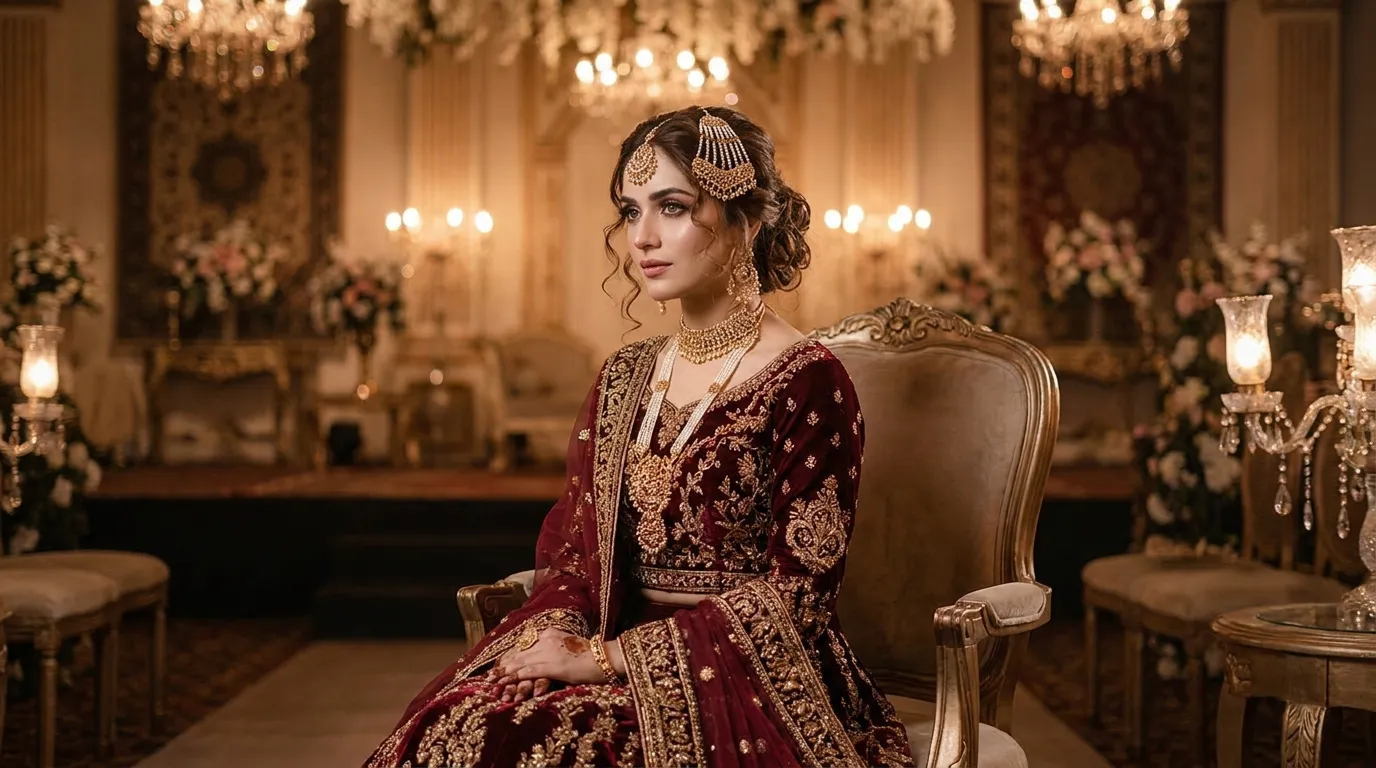
Pakistani wedding hairstyles do more than look beautiful for photos. Across a multi-day shaadi, your hair carries the weight of a tissue dupatta at Baraat, holds fresh motia through a Mehndi dance floor, and frames your face under a jhumar at Nikkah. This guide brings together 45+ Pakistani bridal hairstyles, organized by function, so you can compare Mehndi hairstyles, Baraat hairstyles, Walima hairstyles, and Nikkah hairstyles side by side. Each style is matched to face shape, hair length, and outfit weight, with guidance on jhumar, matha patti, and other bridal hair accessories, so you walk into your salon consultation knowing exactly what to ask for.
Whether you are exploring our general wedding hairstyle guide, comparing Indian wedding hairstyles, or reviewing regional bridal hairstyle traditions, South Asian bridal hair requires distinct structural planning.
“For Baraat, anchor your bun with reinforced silk padding. Tissue and velvet dupattas require a solid structural foundation to prevent head tilt and keep your jhumar perfectly straight for hours of ceremony photos.
ZZainab Malik
Couture Bridal Hair Stylist
How to Choose Your Pakistani Bridal Hairstyle
Your best Pakistani wedding hairstyle depends on three things: your face shape, your hair length, and the weight of your outfit and jewelry.
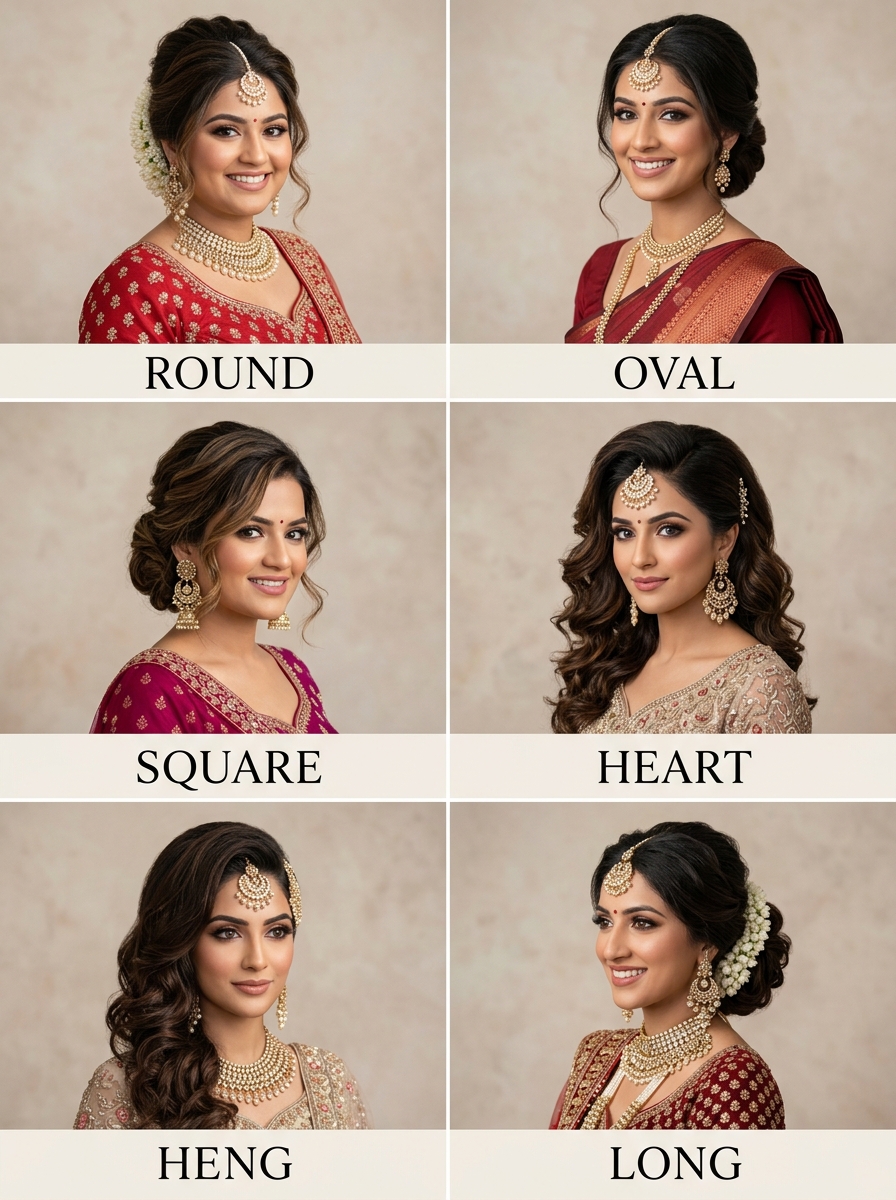
By Face Shape
- Round face: High buns, side-swept styles, and volume at the crown elongate the face. Avoid center-parted low buns, which widen it further.
- Oval face: Nearly any style works, including center-parted buns, sleek ponytails, and open curls.
- Square face: Soft waves and side-swept fringe soften strong jawlines. Avoid severe, blunt center partings.
- Heart-shaped face: Styles with volume near the chin, like low textured buns, balance a narrower jaw.
- Long face: Horizontal volume from braids, fishtails, or a low chignon shortens the visual line of the face.
By Hair Length
- Long hair: Supports every style in this guide, including heavy braids, paranda-wrapped plaits, and structural buns.
- Medium hair: Works well for half-up styles, fishtail braids, and buns built with light padding.
- Short hair: Clip-in extensions or a hair donut add the volume needed for updos; loose waves and half-up styles also work without extensions.
By Outfit Weight
Heavier tissue, velvet, or gota-embellished dupattas need a structural low bun or braid as an anchor. Lighter net or chiffon dupattas pair well with open curls or half-up styles that do not need to bear extra weight.
Before scheduling your trial, gather your hair and accessory inspiration into your wedding moodboard to share directly with your salon team.
Bring your dupatta swatch or your actual jewelry set to your hair trial appointment. Pinning a jhumar into a dummy mannequin head feels completely different from securing it onto your own scalp under real dupatta tension.
Mehndi Hairstyles (12 Styles)
Mehndi is the most relaxed function, so hair here favors movement, color, and fresh flowers over rigid structure. Because Mehndi often involves dancing and outdoor settings, stylists typically avoid heavy backcombing or extensions and instead focus on braids, half-up styles, and fresh floral accents that hold up through hours of movement without needing constant touch-ups.
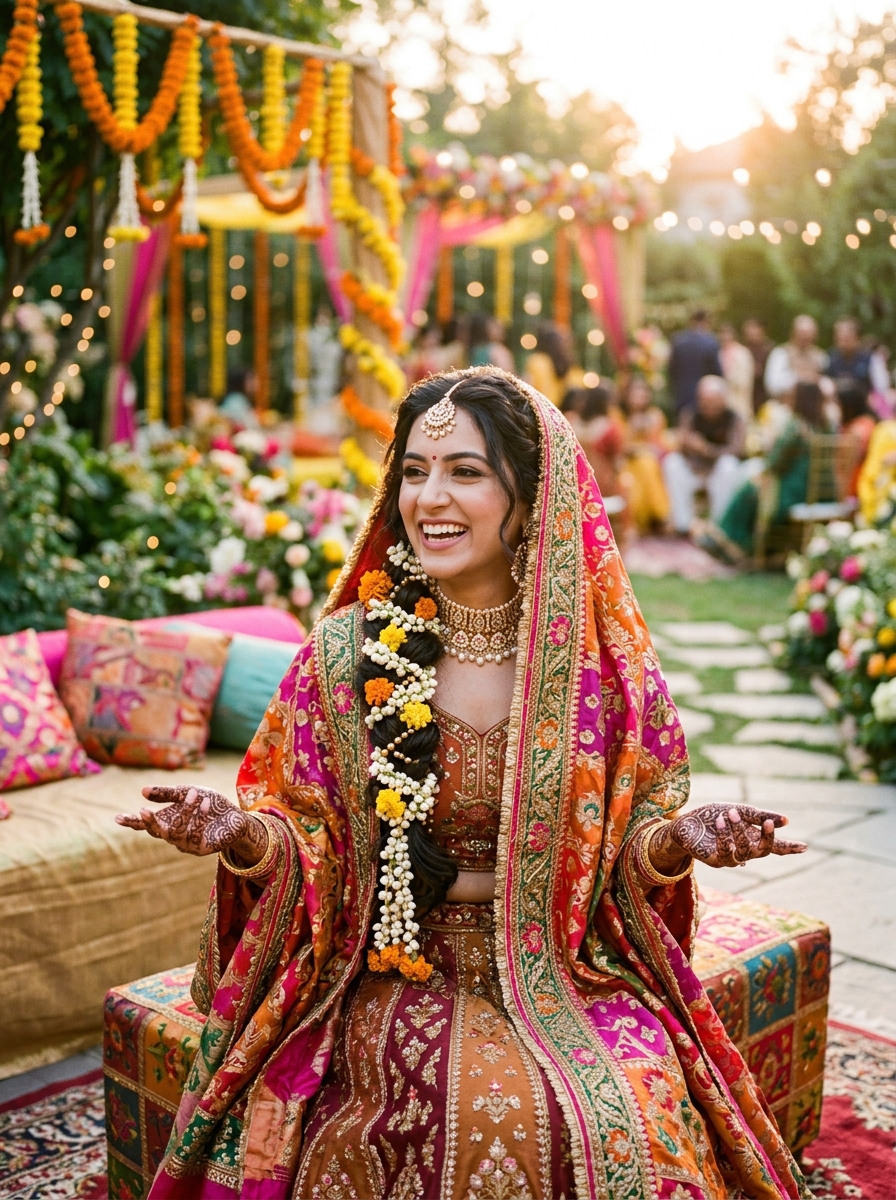
1. Loose floral braid
Loosen a few sections for an undone finish, then weave a side braid from ear-level down, tucking motia and marigold blooms every few inches. Best for long to medium hair and holds well through hours of dancing without feeling stiff.
2. Messy fishtail
Backcomb the crown slightly before fishtailing to keep volume near the roots, then pull a few face-framing pieces loose. The undone texture reads effortless on camera and works for medium to long hair without extensions.
3. Half-up floral crown
Section off the top third of hair, pin it back loosely, and wrap a ring of fresh flowers around the base. Leave the rest open in soft waves; this suits round and oval faces especially well.
4. Boho double braids
Two loose, slightly textured braids start above the ears and meet near the nape, leaving soft strands out around the face. A favorite for outdoor or daytime Mehndis with a relaxed dress code.
5. Low floral bun
Twist hair into a low, slightly loose bun at the nape and wrap the base in a garland of motia or roses instead of a plain hair tie, giving a soft, garden-party finish.
6. Braided ponytail
Gather hair into a sleek ponytail, then braid the length below the tie for a polished-but-playful look. Works well on medium-length hair and pairs easily with colorful Mehndi jewelry.
7. Side-swept curls with gota tikka
Curl hair in loose waves, sweep it all to one shoulder, and pin a gota-work tikka just above the ear to anchor the style and catch the light while dancing.
8. Flower crown with open hair
Leave hair fully open and softly curled, then place a structured floral crown across the top of the head rather than pinning individual blooms, for a more polished, photo-ready finish.
9. Twisted crown braid
Twist two front sections back from the temples and braid them together across the crown, pinning the ends underneath. The rest of the hair stays open, giving height without a full updo.
10. Waterfall braid
A single braid runs horizontally across the back of the head, releasing strands as it goes so hair cascades beneath it. It keeps hair off the face while still looking soft and undone.
11. High braided ponytail
Gather hair high on the crown, braid the ponytail loosely, and pull at the edges for volume. This gives height and structure for brides who want more than loose waves but not a full bun.
12. Loose beachy waves with baby’s breath
Create loose, textured waves with a wand, then tuck small sprigs of baby’s breath in at random. Minimal pinning is required, making it a low-maintenance option for a long Mehndi night.
Store your motia and rose garlands in an airtight box lined with slightly damp paper towels inside the refrigerator until 45 minutes before styling to ensure they stay plump and fragrant all evening.
Baraat Hairstyles (12 Styles)
Baraat hair needs to support heavy jewelry and embroidered dupattas for hours, so structure and padding matter most here. Because the Baraat outfit is usually the heaviest of the wedding, stylists build the base with padding or extensions first, then choose a bun or braid strong enough to anchor a jhumar, matha patti, or dupatta without slipping during the ceremony.
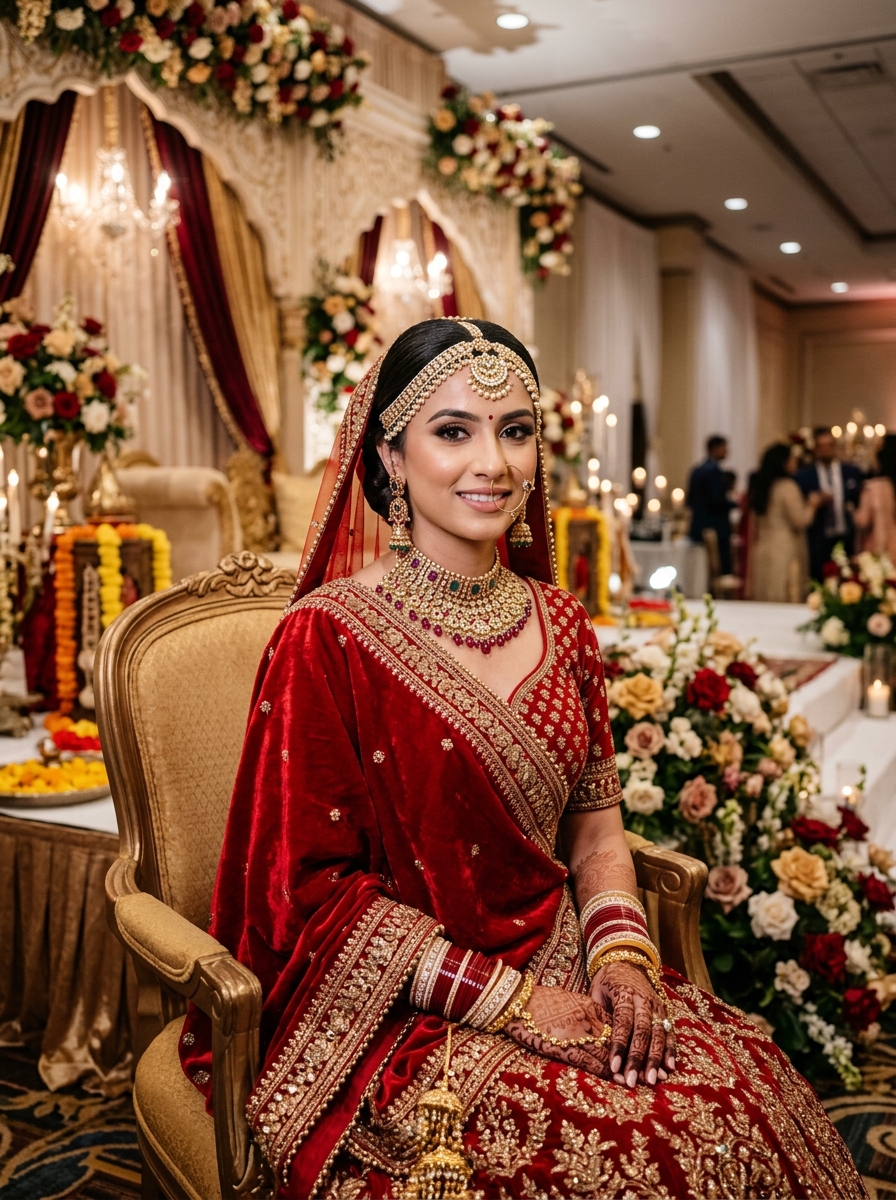
13. Structured low bun (judda)
Hair is smoothed back, padded with a donut or rat-tail for volume, and pinned into a firm low bun at the nape. This is the anchor style for heavy jhumar and embroidered dupattas.
14. High padded bun
The same padding technique as the judda, but positioned higher on the crown to add height under a full matha patti set and keep jewelry visible rather than hidden by the dupatta’s drape.
15. Braided bun
A thick braid is coiled and pinned into a rounded bun shape rather than a smooth twist, giving extra texture and grip so pins hold firmly through hours of ceremony and photos.
16. Side bun with passa
The bun sits slightly off-center, leaving room near one temple for a passa to sit without competing with the bun’s bulk, a common request for brides wearing asymmetrical jewelry sets.
17. Sleek low chignon
Hair is smoothed completely flat with no backcombing, then twisted into a low, minimal-volume chignon. Popular with brides wearing modern, less heavily embellished lehengas who want a cleaner silhouette.
18. Textured bouffant bun
Backcombing at the crown creates noticeable height before the hair is gathered into a bun, a good option for brides with fine or thin hair who need extra body without full extensions.
19. Braided low bun
Two or three small braids wrap around the base of a low bun instead of smooth hair, adding a decorative, slightly bohemian detail while still reading formal enough for Baraat.
20. Gota-wrapped bun
Instead of finishing the bun with pins alone, a strip of gota lace is wound around its base, matching embellished dupattas and giving the bun a more finished, jewelry-like appearance.
21. Rope-braid updo
Two-strand rope braids are twisted from each side and pinned into a rounded shape at the back, creating texture and visual interest without the weight of a full braided crown.
22. Jhumar-ready side part
A deep, precise side part is created specifically so a jhumar can hang cleanly along the hairline without hair covering the jewelry’s chain or stones.
23. Double-braid crown updo
Two braids start at the temples and wrap around the back of the head like a crown, meeting and pinning at the center, giving a regal, structured finish that holds all day.
24. Voluminous back-combed bun
Heavy backcombing throughout the crown and sides builds significant volume before the hair is gathered into a large bun, designed specifically to support oversized matha pattis without collapsing.
Velvet or zardozi dupattas weigh between 1.5 to 3 kg. Never rely on hairspray alone; insist that your stylist anchor 4 to 6 large interlocking bobby pins directly through the dupatta border into the dense padded base of the bun.
Walima Hairstyles (12 Styles)
Walima favors softer, more Western-leaning glam, since gowns and lighter dupattas replace heavier Baraat attire. With gowns, ghararas, or lighter sarees replacing the heavier Baraat outfit, hair can move more freely and lean into softer waves or glam curls. Many brides also choose to leave more hair open for Walima, since there is less dupatta weight to manage than at Baraat.
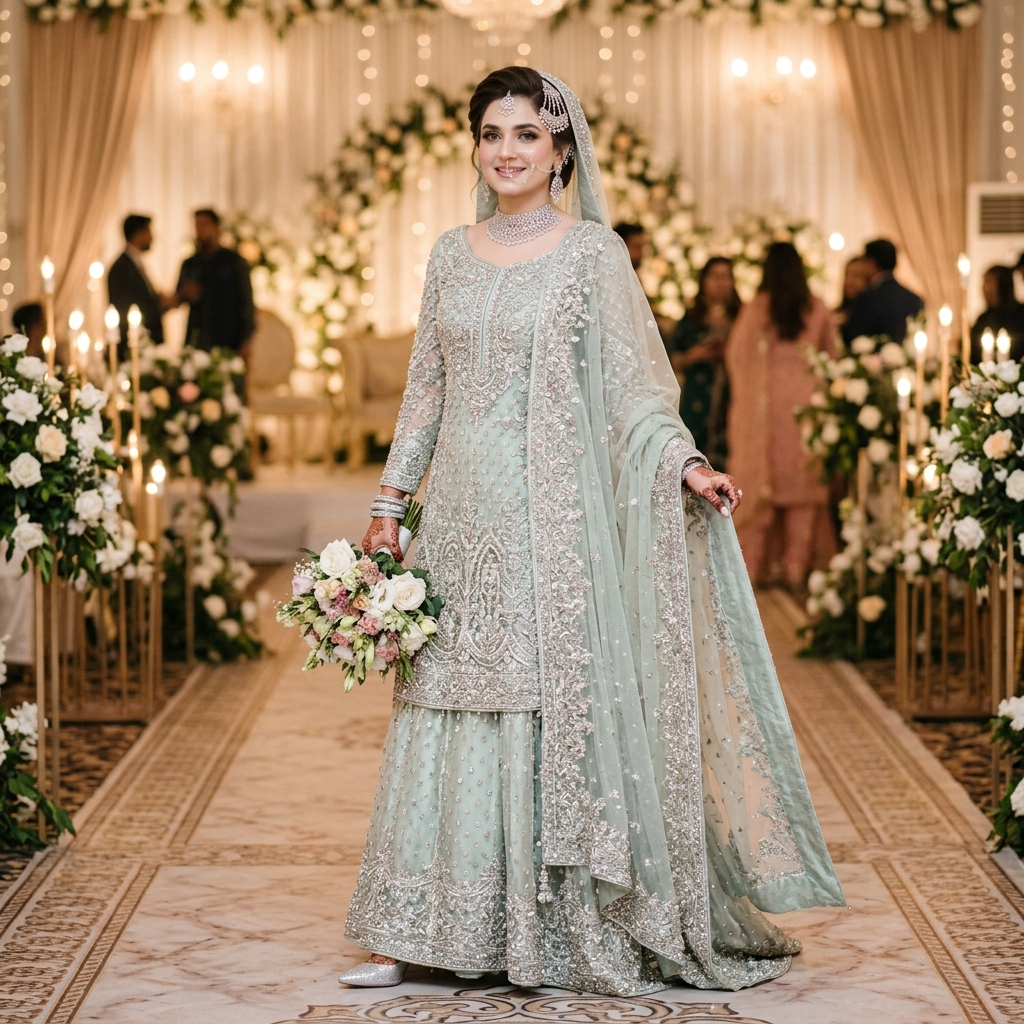
25. Hollywood glam waves
Hair is set in deep, defined curls with a curling iron, then brushed out into soft, glossy waves and left completely open, a red-carpet-style finish that pairs naturally with fitted gowns.
26. Soft textured low bun
A romantic, slightly undone bun sits low at the nape, with a few face-framing pieces left loose around the hairline for a softer, less formal look than a Baraat bun.
27. Side-swept waves
All hair is curled and swept over one shoulder, keeping the opposite side of the neckline visible, ideal for gowns or sarees with statement necklines or off-shoulder detailing.
28. Sleek high ponytail
Hair is smoothed back with no volume at the crown and gathered into a high, polished ponytail, giving a modern, minimalist silhouette that suits contemporary Walima looks.
29. Braided low ponytail
A soft, loose braid finishes the length of a low ponytail rather than leaving it straight, adding a decorative element without the formality of a full braided updo.
30. Regal side braid
A single, thick braid is draped forward over one shoulder rather than worn at the back, keeping the face and jewelry visible while still offering a structured, elegant finish.
31. Half-up glam
The crown section is pinned back with volume and a slight bouffant, while the rest of the hair is left in loose waves, balancing structure with a softer, romantic finish.
32. Twisted updo with hair jewelry
Sections of hair are twisted and pinned into a smooth updo, then accented with small pearl or crystal hairpins scattered throughout rather than a single statement piece.
33. Curled shoulder-length bob styling
Shorter hair is curled in loose waves and the front sections are lightly pinned back off the face, giving a polished shape without needing length-adding extensions.
34. Center-parted sleek waves
A precise center part leads into smooth, symmetrical waves on both sides, a clean, classic option that photographs well for both gowns and traditional sarees.
35. Low bun with pearl strand wrap
A neat, low bun is finished by wrapping a delicate pearl strand around its base instead of a floral or gota wrap, suiting pastel or ivory Walima outfits.
36. Voluminous blowout with side pin
Hair is blown out for maximum body and shine, then swept to one side and secured with a single decorative pin, keeping it away from the face for photos and speeches.
Nikkah Hairstyles (9 Styles)
Nikkah hair typically sits under a lightweight dupatta, so styles favor coverage-friendly, modest silhouettes. Because Nikkah is a religious ceremony rather than a reception, many brides also prefer a slightly more modest, less dramatic look than Baraat or Walima, prioritizing styles that stay neat and secure through readings, photos, and family gatherings.
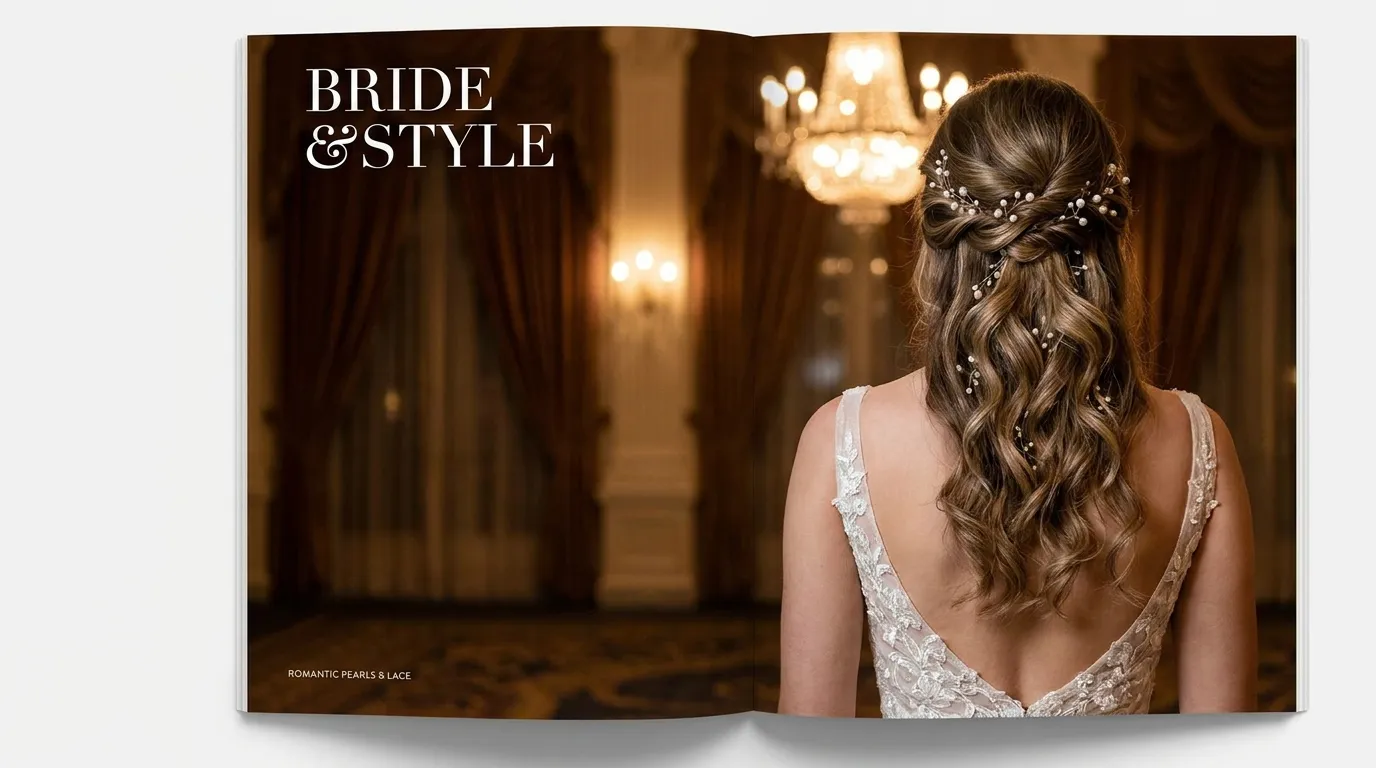
37. Half-up half-down with net dupatta
The crown section is pinned back loosely while the rest stays open in soft waves, leaving enough structure near the hairline to pin a lightweight net dupatta securely in place.
38. Soft romantic low bun
A gentle, slightly loose bun sits at the nape with minimal backcombing, giving the dupatta a stable base to pin into without adding visible bulk under the fabric.
39. Simple center-parted waves
Hair is parted down the center and left in soft, natural waves with no updo at all, an understated choice for daytime or smaller, more intimate Nikkah ceremonies.
40. Low braid with dupatta pin
A single, neat braid runs down the back, giving the dupatta a clear anchor point at the crown where it can be pinned without disturbing the braid itself.
41. Front-twisted half-up
Two small sections are twisted back from each temple and pinned together at the crown, while the rest of the hair stays open and softly styled below.
42. Modest side-swept bun
A small, neat bun sits toward one side of the head rather than centered, a subtler option favored for more conservative or religiously observant Nikkah ceremonies.
43. Open hair with tikka
Hair is left fully open and lightly curled for movement, with a simple maang tikka placed at the center part as the only hair jewelry, keeping the look understated.
44. Textured low ponytail
A soft, slightly undone ponytail sits low at the nape, with a few pieces pulled loose around the face for a relaxed finish suited to smaller Nikkah gatherings.
45. Braided halo
A thin, tightly woven braid wraps across the crown from temple to temple like a halo, while the rest of the hair stays open and loosely curled beneath it.
Essential Pakistani Bridal Hair Accessories
Understanding these accessories helps you communicate clearly with your stylist when planning any of the Pakistani bridal hairstyles above.
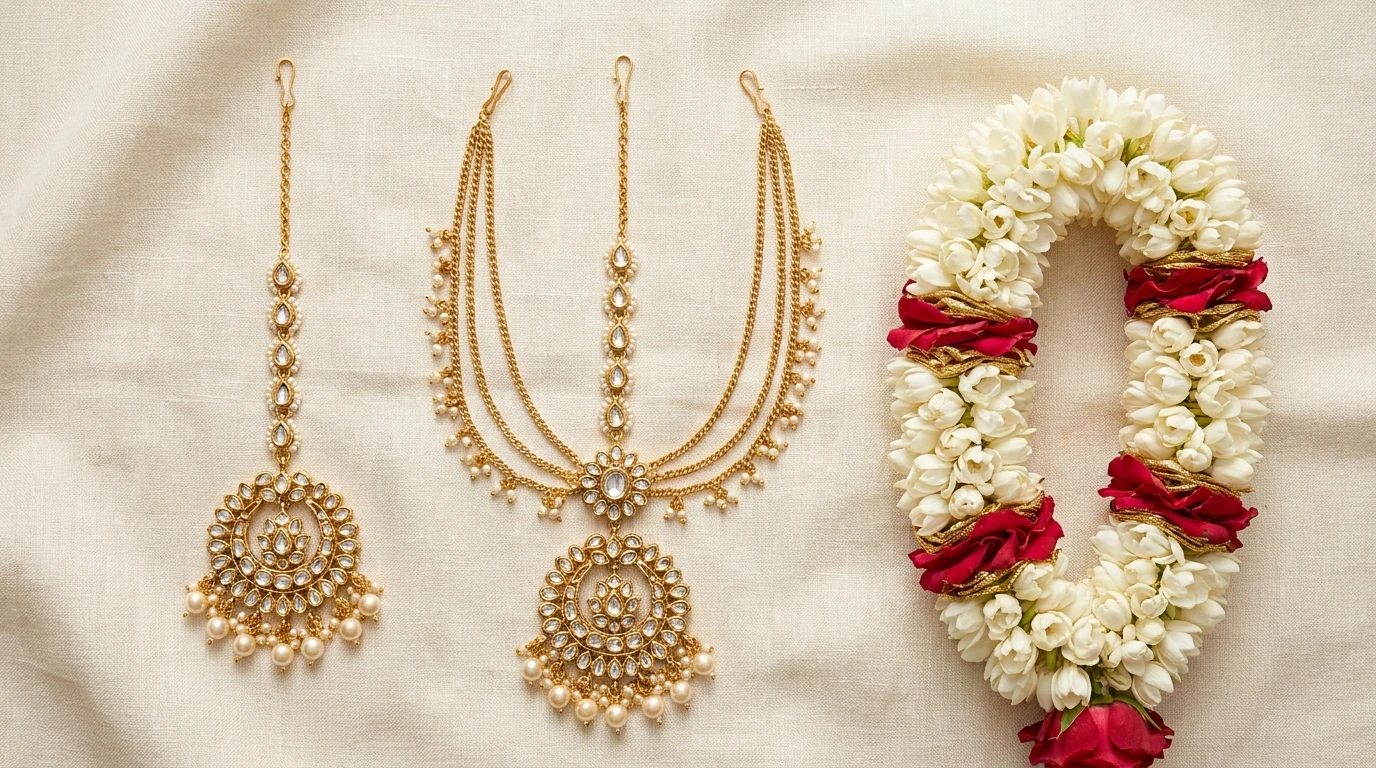
- Jhumar: A hanging fan-shaped or teardrop jewelry piece pinned to the left side of the hair, traditionally worn for Baraat. Secure it with criss-crossed bobby pins anchored into a teased section or padded bun base.
- Matha patti: A jewelry piece that frames the hairline from ear to ear across the forehead, often paired with a center or side part.
- Passa: A side jewelry piece similar to a jhumar, usually smaller and worn closer to the temple.
- Paranda: A decorative multi-colored silk tassel woven into a braid, common for Mehndi and increasingly for Baraat braided styles.
- Maang tikka: A pendant that sits at the center parting, popular for Nikkah and Walima.
Hairstyle & Accessory Compatibility Matrix
| Ceremony | Typical Dupatta Fabric | Primary Hair Jewelry | Recommended Hairstyle | Padding Needed? |
|---|---|---|---|---|
| Mehndi | Organza / Chiffon / Net | Gota Tikka, Paranda, Motia Flowers | Loose Floral Braid or Half-Up Waves | Optional |
| Baraat | Heavy Velvet / Tissue / Zardozi | Jhumar, Matha Patti, Passa | Structured Low Judda or High Padded Bun | Yes (Firm Donut/Rat-tail) |
| Walima | Soft Net / Georgette / Silk | Delicate Tikka, Pearl Strand Pins | Hollywood Glam Waves or Sleek Low Bun | Light |
| Nikkah | Fine Chiffon / Sheer Net | Maang Tikka, Subtle Hairpins | Soft Low Bun or Front-Twisted Half-Up | Minimal |
How Long Does Pakistani Bridal Hair Styling Take
Budget 1.5 to 2 hours for full bridal hair preparation across most Pakistani wedding hairstyles.
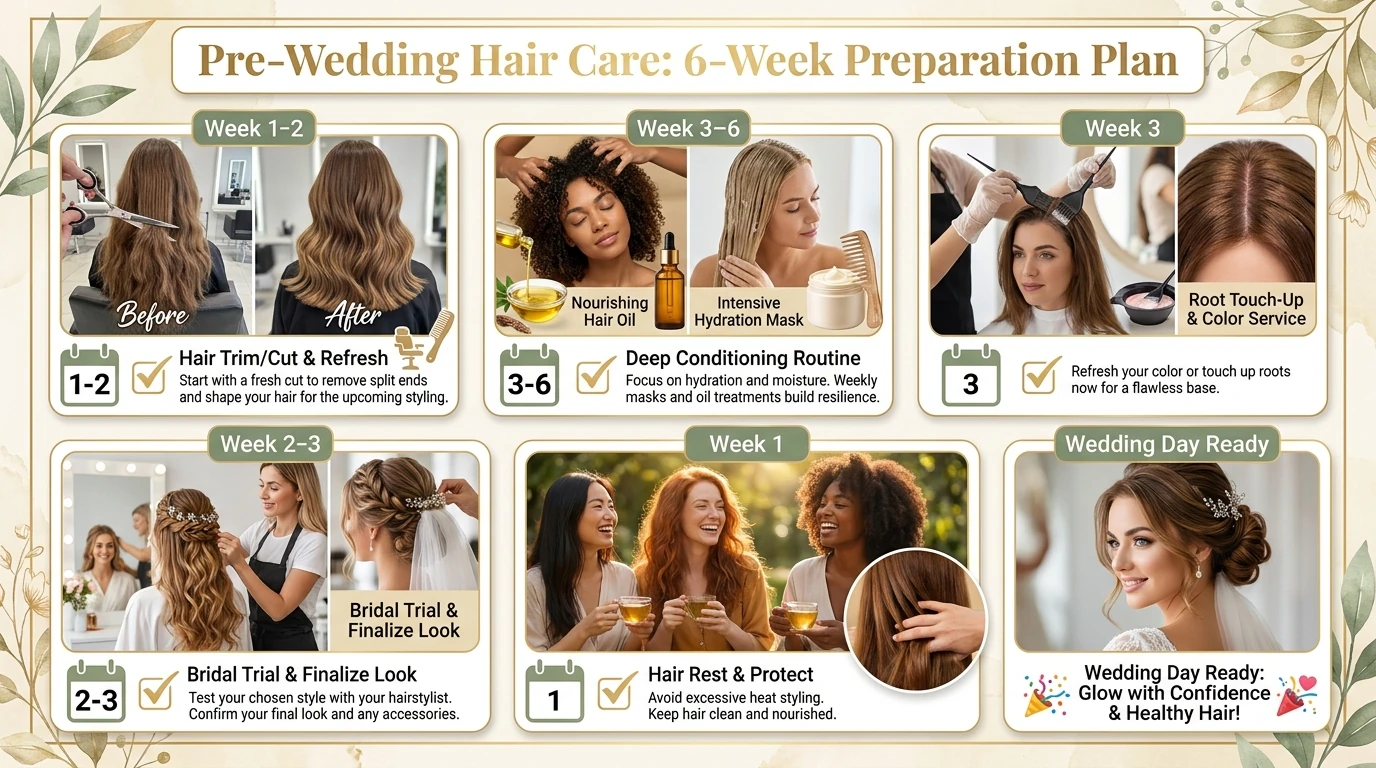
This typically includes:
- Washing and blow-drying (20-30 minutes): Ideally done the night before for Baraat to help hair hold grip for pins and padding.
- Extension or padding placement (15-20 minutes): Inserting clip-in wefts, rat-tail padding, or a structural hair donut.
- Base styling (30-45 minutes): Curling, tonging, intricate braiding, or sculpting the bun structure.
- Dupatta pinning and jewelry setting (20-30 minutes): Setting the jhumar, matha patti, passa, and securing multiple interlocking dupatta pins.
You can log and schedule all your appointment timings across your multi-day itinerary using the interactive wedding planning dashboard.
Final Thoughts
Choosing your Pakistani wedding hairstyle comes down to matching the function, your face shape, and your outfit’s weight. Bring reference photos from this guide to your trial appointment, and confirm your stylist has experience with the jewelry pieces, like jhumar and matha patti, that your outfit requires.
Once your hair plan is set, pair it with your Pakistani wedding outfit choices, consult our master wedding planning checklists guide for trial booking milestones, and add both to your Pakistani wedding checklist so nothing gets missed before the big day.
For a polished look from head to hand, browse bridal nail ideas for a Pakistani wedding look.