What Is a Pakistani Wedding Checklist?
A Pakistani wedding checklist is a task list built around how Pakistani and Muslim weddings actually run: several events over several days, each with its own venue, guest list, menu, outfit, and vendors. A standard 12-month wedding planning checklist assumes one ceremony and one party. Yours has six or seven.
That changes the work. You aren't planning one wedding, you're planning a small festival, and the tasks overlap. The henna artist you book for Mehndi needs to know the Baraat date. The tailor stitching your Walima outfit is also stitching your Mayun yellow.
Use this Pakistani wedding checklist in three passes. Start with the foundation tasks below. Then work through each event. Finally, use the wedding-week list to lock everything down. Every family runs things a little differently, so treat this as a solid base and add your own customs.
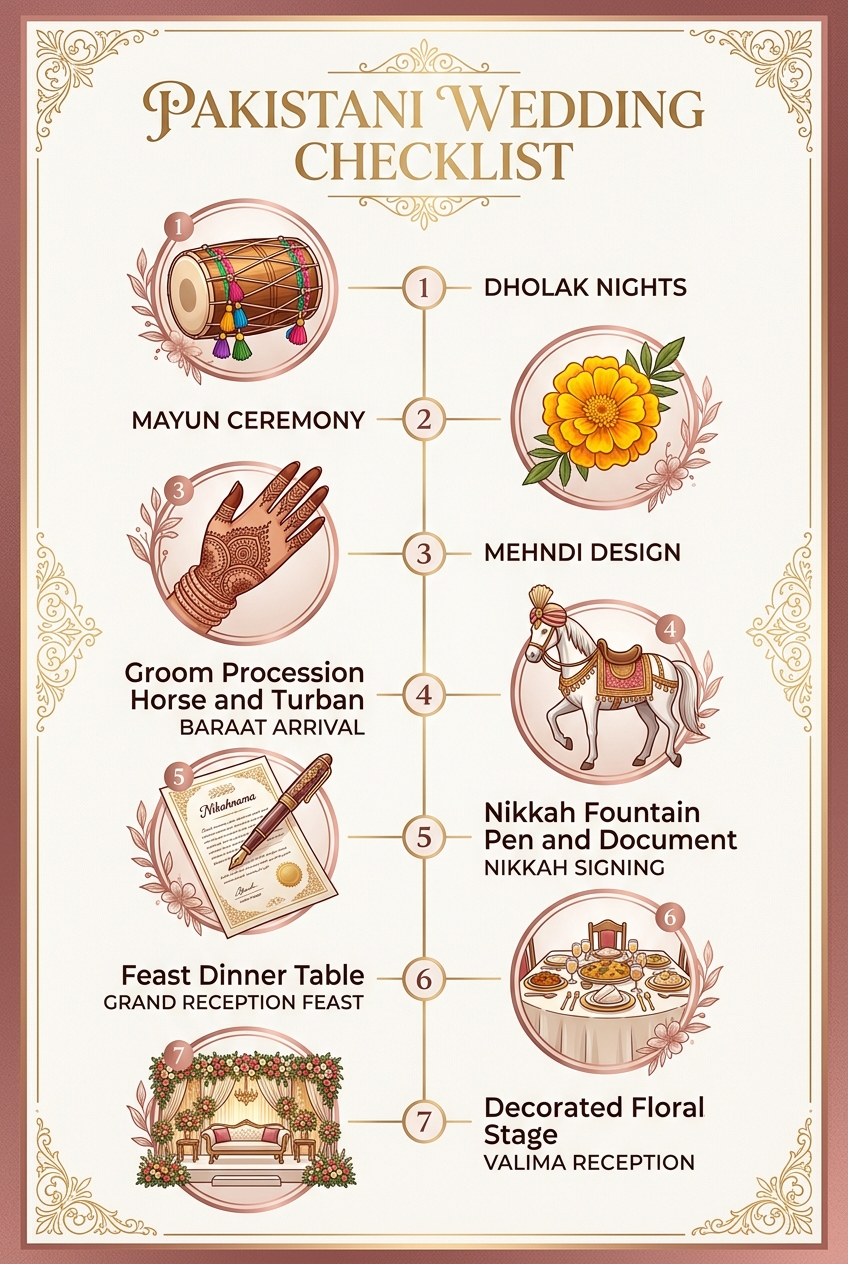
Pakistani Wedding Checklist: The Functions at a Glance
Not every family holds every function. A Punjabi family, a Pashtun family, and a Muhajir family may each add, merge, or skip events. Here is the usual line-up.
| Function | What it is | Commonly hosted by | Biggest planning task |
|---|---|---|---|
| Mangni (engagement) | Families formally agree to the match, rings or gifts exchanged | Either family | Deciding guest size |
| Dholki | Informal evenings of dholak, singing, and dancing at home, usually in the weeks before | Both families, separately | Schedule and food for many nights |
| Mayun / Ubtan | Bride wears yellow, ubtan is applied, often kept simple and private | Bride's family | Outfit, ubtan, photographer |
| Mehndi | Henna night with music, dance, and dinner | Bride's family, often with a separate groom-side Mehndi | Stage, sound, henna artists |
| Baraat and Rukhsati | The groom's procession arrives, dinner is served, and the bride leaves with her new family | Bride's family | Venue, catering, timing |
| Nikkah | The Islamic marriage contract, with consent, mahr, and witnesses | Varies: home, mosque, or the Baraat venue | Paperwork and officiant |
| Walima | Reception that celebrates the marriage | Groom's family | Venue, menu, outfits |
When to Start Your Pakistani Wedding Checklist
Twelve months is comfortable. Six months is workable. Three months is possible if you decide fast and book early. Pick the 18-month, 12-month, 6-month, or 3-month master checklist that matches your runway, then layer this page on top for the cultural tasks.
Two calendar points catch people out. First, Islamic dates move about ten or eleven days earlier each year on the Gregorian calendar, so a date that worked last year may land in Ramadan this year. Many families also avoid Ramadan and Muharram for wedding events, so ask your elders early. Second, in many cities the winter months are popular for weddings, and good halls book out well ahead.
Here is a simple phase guide.
| When | Focus |
|---|---|
| 9 to 12 months out | Budget, date, event list, first guest list, book venues |
| 6 to 9 months out | Caterer, photographer, decor, makeup artist, start outfit shopping |
| 3 to 6 months out | Jewelry, tailoring, invitations, Nikkah paperwork, hotels for guests |
| 1 to 3 months out | Fittings, menu tastings, RSVPs, run of show for each event |
| Final week | Vendor confirmations, final headcounts, payments, emergency kit |
If you'd rather see the whole runway as a sequence, our 14-month wedding planning timeline shows how the tasks stack up week by week.
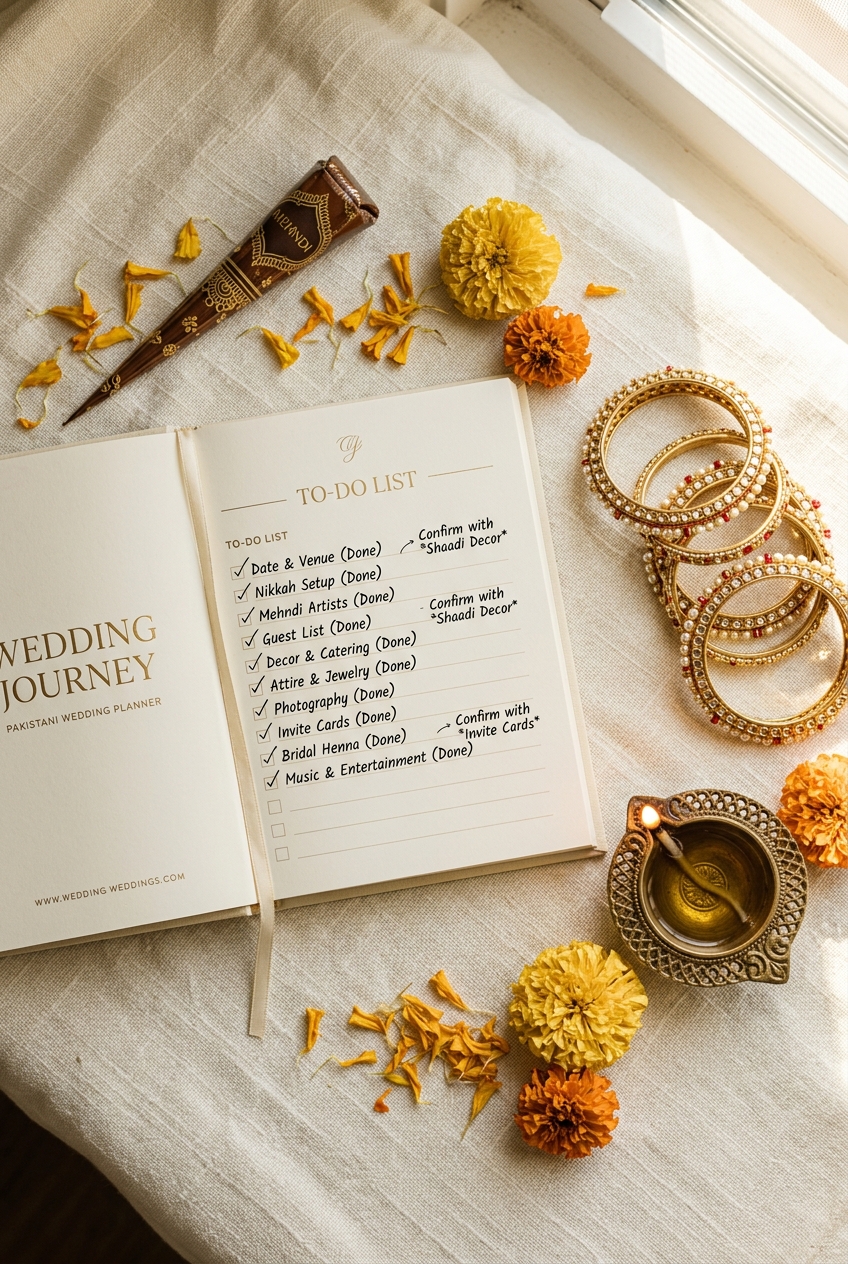
Pakistani Wedding Checklist Foundation: Your First 30 Days
These decisions shape everything after them. Get them settled before you pay a single deposit.
- Agree which functions you're holding and who hosts each one
- Choose a date after checking family calendars, Ramadan, Muharram, exams, and weather
- Set a total budget, then split it across events
- Draft a guest list for each function, not just one master list
- Name one point person on each side of the family
- Shortlist venues and book the biggest one first, usually the Baraat hall
- Decide whether you'll hire a wedding planner or coordinate through family
- Open a shared folder for contracts, receipts, and quotes
Put your working budget into the wedding budget calculator early. It's far easier to adjust a plan than to explain an overspend to two families.
Event-by-Event Pakistani Wedding Checklist
Mangni (Engagement)
- • Confirm the date with both families and pick a venue or home
- • Fix the guest list, keeping it close family only if you can
- • Arrange rings, sweets, and gift exchanges
- • Plan outfits so the photographs suit both sides
- • Book a photographer if you want the day documented
Dholki
Dholki tends to grow. What starts as a few evenings with cousins can become two weeks of nightly gatherings. Decide the number of nights early.
- • Fix a schedule and a rotation between homes
- • Arrange a dholak, speakers, and a playlist of songs the family knows
- • Plan snacks and chai for each night so nobody scrambles
- • Assign someone to collect and coordinate the songs and performances
- • Set clear end times, especially when neighbors are close by
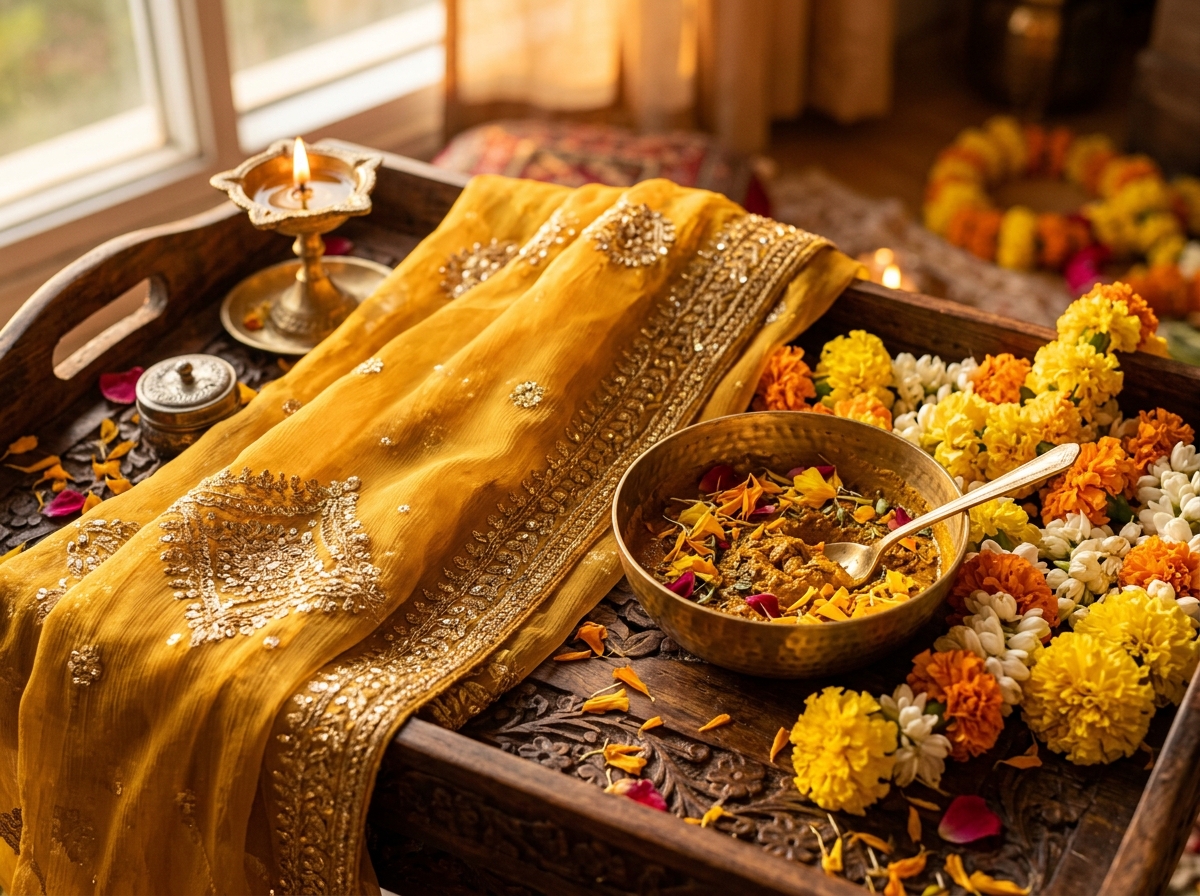
Mayun / Ubtan
- • Buy or book the yellow outfit and matching accessories
- • Prepare or order the ubtan and confirm any skin sensitivities beforehand
- • Decide who is in the room and who isn't
- • Arrange yellow floral decor, marigolds, and seating
- • Book a photographer, or ask a relative if it's a small gathering
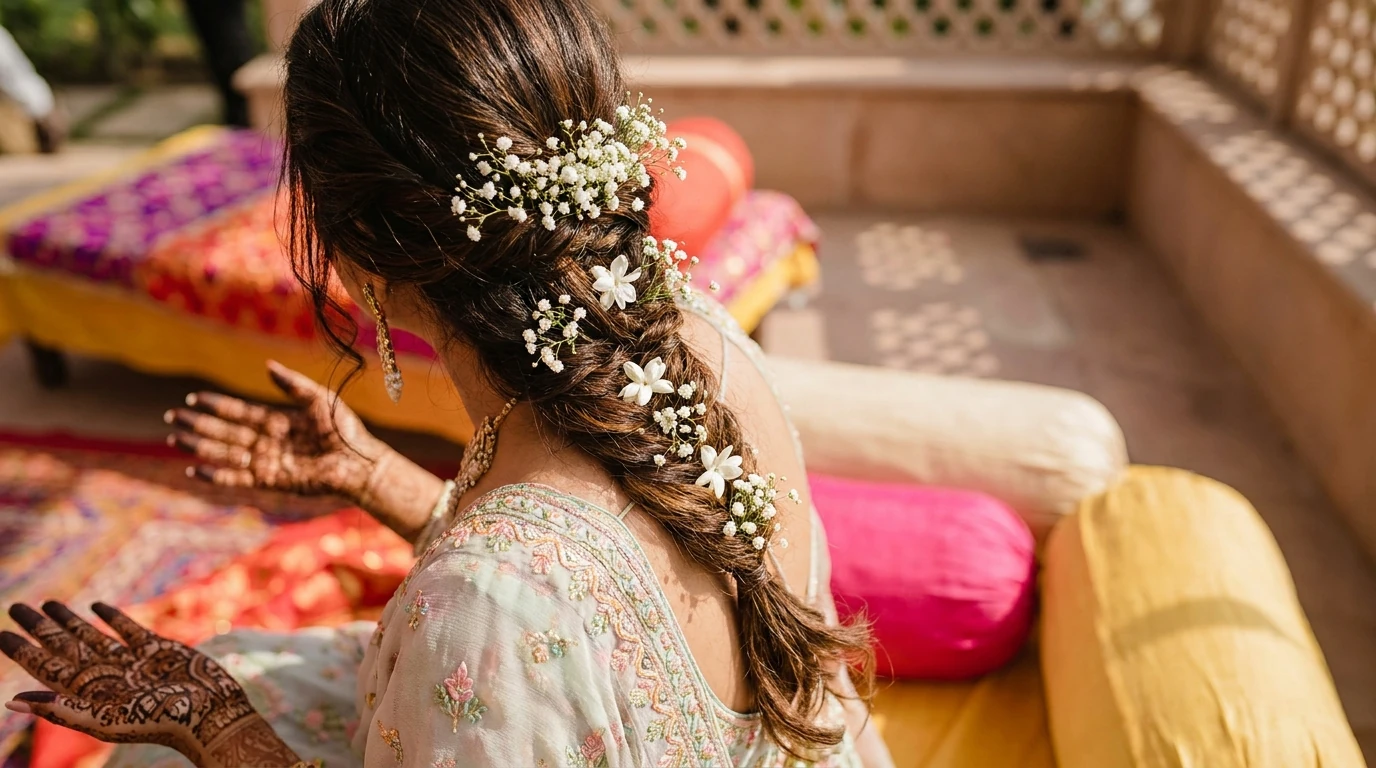
Mehndi
- • Book the venue, stage designer, and sound system
- • Hire a henna artist for the bride and separate artists for guests if needed
- • Confirm dance performances and rehearsal times
- • Plan the menu and a chai or dessert counter
- • Finalize the Mehndi outfits, often in green, yellow, or bright colors
- • Prepare the mehndi thaals and small favors
Baraat and Rukhsati
This is usually the largest event, so it needs the most lead time.
- • Confirm venue capacity, stage, parking, and separate entrances if required
- • Lock the menu, tasting date, and serving schedule
- • Arrange the groom's arrival: car, flowers, and any band or dhol
- • Plan the Rukhsati moment with the photographer and family
- • Prepare bridal transport and a car for the couple's departure
- • Assign family members to greet guests and manage seating
Nikkah
The Nikkah is the religious and legal heart of the wedding, so keep it on the checklist even if it feels quiet next to the parties.
- • Choose the date, time, and place: home, mosque, or the wedding venue
- • Confirm the nikah khwan or officiant
- • Agree on the mahr in advance and have it written into the Nikah Nama
- • Arrange two adult Muslim witnesses, following your family's tradition
- • Bring CNICs or valid ID for the bride, groom, and witnesses
- • Plan the moment for consent (ijab and qubool) and the dua afterward
- • Check local registration requirements, because these differ by province and country
If you're marrying abroad, also check whether your Nikkah is legally recognized where you live, or whether a separate civil registration is needed. Ask the registrar directly rather than relying on a cousin's memory.
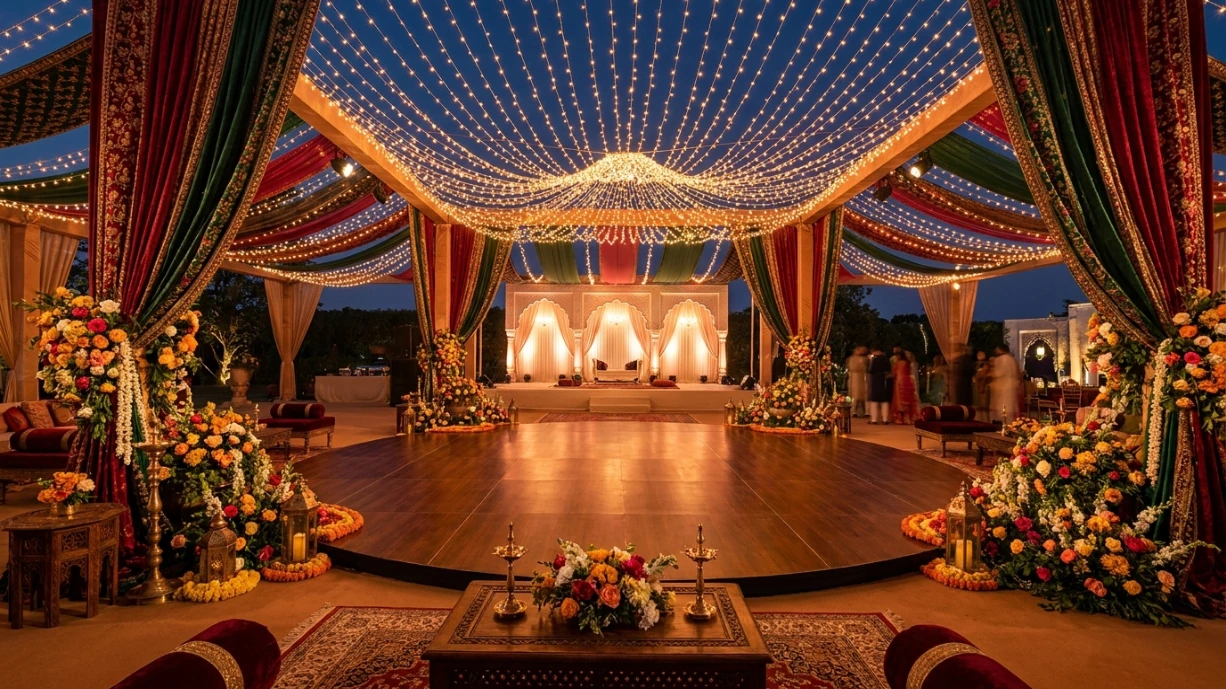
Walima
- • Confirm the venue, menu, and guest count, which is usually smaller than the Baraat
- • Arrange the couple's outfits, often in softer shades
- • Plan the stage, seating, and the couple's entrance
- • Coordinate with the groom's family on hosting duties
- • Book the photographer for family portraits
Pakistani Bridal and Groom Attire Checklist
Attire eats more time than people expect. A bridal outfit can take months to design, embroider, and fit.
👰 For the bride
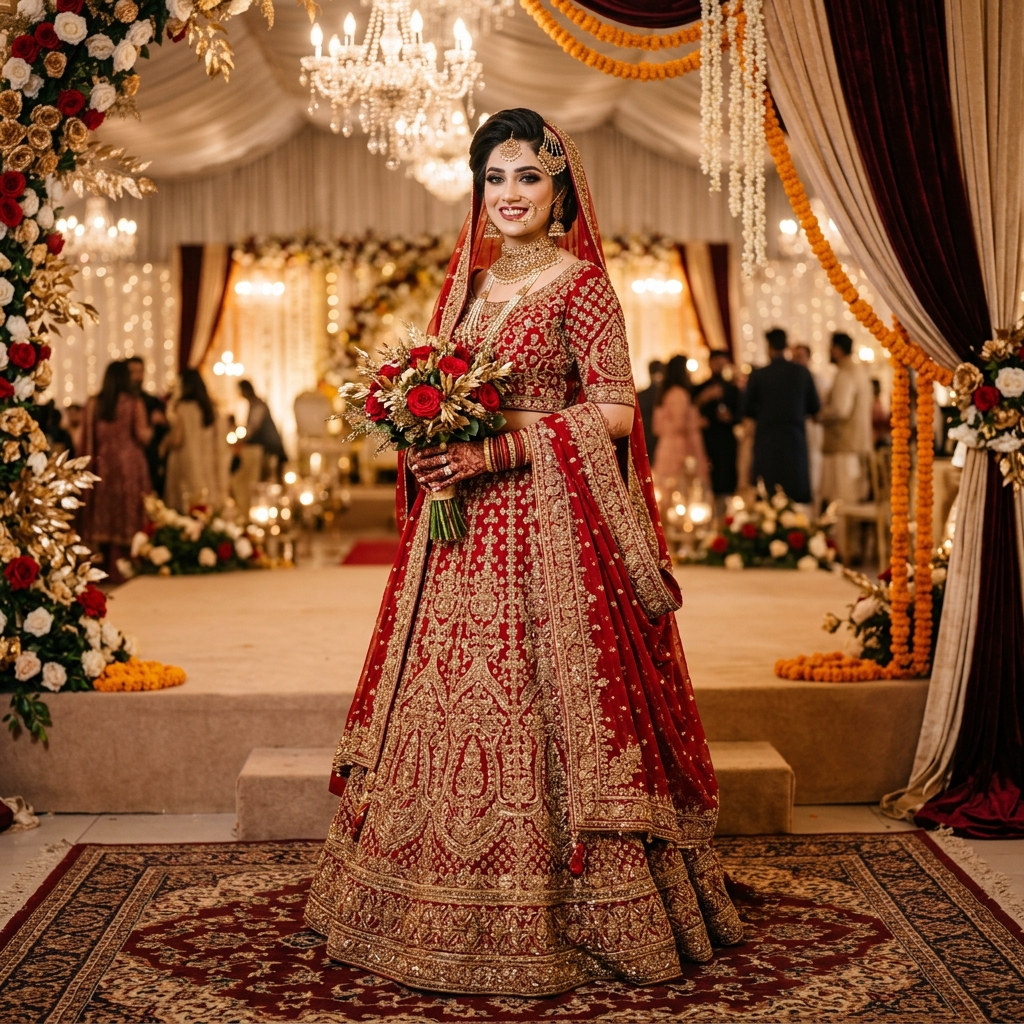
- • Order the Baraat lehnga, gharara, or sharara early
- • Choose separate outfits for Mayun, Mehndi, Nikkah, and Walima
- • Schedule at least two fittings, and one final fitting near the date
- • Confirm dupattas, blouses, and any custom embroidery
- • Buy or rent the jewelry sets: gold, kundan, tikka, jhoomar, matha patti
- • Arrange safe storage and insurance for valuable pieces
- • Book a makeup and hairstyle trial, then choose the final look from our Pakistani wedding hairstyles guide
- • Browse ideas in our Pakistani wedding outfits for brides article
🤵 For the groom
- • Order the sherwani, kulla or turban, and khussa for the Baraat
- • Choose a waistcoat or prince coat for the Walima
- • Plan Mehndi and Mayun outfits that coordinate with the bride
- • Schedule tailoring appointments with buffer time for alterations
Pack a bridal emergency kit for each event. Safety pins, tissues, blotting sheets, and a sewing kit have saved many a Baraat.
Vendor Checklist
Multi-day weddings mean many contracts, so vendors sit near the top of any Pakistani wedding checklist, and the wrong booking order creates problems. Our vendor booking order and contract checklist covers the full sequence. For a Pakistani wedding, these are the vendors that matter most:
- ✓ Venue or marquee for each function
- ✓ Caterer with halal certification and a menu tasting
- ✓ Photographer and videographer, ideally booked for all events
- ✓ Stage and decor designer
- ✓ Makeup artist and hairstylist, including a female team if your family prefers
- ✓ Henna artist for Mehndi
- ✓ Dholak performers, DJ, or sound provider
- ✓ Invitation designer and printer
- ✓ Transport for the Baraat, bridal car, and guest shuttles
When you sign, check the deposit amount, the cancellation terms, overtime charges, and the exact dates listed. A contract that names only one event can leave you exposed on the others.
Budget Across Multiple Events
The mistake most couples make is budgeting for the Baraat and forgetting everything else. Dholki nights, Mayun, and the Nikkah look small, but the costs add up.
A good Pakistani wedding checklist gives every function its own budget line. Set a ceiling for each function, then keep a buffer of around ten percent for surprises. Log every deposit the day you pay it. If your total is fixed, use the wedding budget calculator to see where the split leaves you, or start from the nearest tier: $10,000, $20,000, $30,000, or $50,000+. For trimming costs without ruining the day, our wedding budget tips are a good next read.
Agree early on who pays for what. Traditionally the bride's family hosts the Baraat and the groom's family hosts the Walima, though many families now share costs. Have that conversation once, calmly, and write it down.
Guest List, RSVPs, and Seating
Pakistani weddings often carry large guest lists, and each event has a different one, so your Pakistani wedding checklist should track them separately. The Baraat might include extended family and neighbors. The Walima might include colleagues. The Mayun might be twelve people.
- • Build a separate list for every function
- • Track each guest's RSVP per event, not overall
- • Note dietary needs and accessibility needs for elderly relatives
- • Decide on seating style: mixed, separate, or family-based
- • Book hotel blocks for out-of-town guests
- • Assign someone to follow up on missing RSVPs
The guest list manager handles the tracking, and our wedding guest list and seating chart guide explains how to structure the lists. For the full task sequence, see the guest list and RSVP master checklist.
Food, Catering, and Prayer Timing
Food is the center of a Pakistani wedding, and guests will remember the menu more than the flowers. Book a tasting at least six weeks before the first event.
- • Confirm that the caterer is halal and can handle your guest count
- • Choose a menu with traditional mains such as biryani and korma, plus BBQ, naan, and desserts like kheer
- • Plan a chai or Kashmiri chai station for late evenings
- • Ask about vegetarian and allergy options
- • Agree on serving times, so the main dish doesn't arrive at midnight
Prayer times deserve a line on the schedule too. If an event runs through Maghrib or Isha, leave a gap and set aside a clean prayer space. Guests notice it, and they appreciate it.
Venue and Decor
Choose the venue by capacity, parking, kitchen access, and how easily the bride's party can enter without crossing the crowd. Our guide to choosing the perfect wedding venue lists the questions to ask before you sign. For stage design, florals, and lighting, use the decor and floral checklist, and build a moodboard so every function feels connected without looking identical.
Wedding Week and Day-Of Checklist
The last seven days of your Pakistani wedding checklist are about confirmation, not new decisions.
- Reconfirm every vendor with time, address, and contact number
- Send final headcounts to caterers and venues
- Prepare labeled envelopes for final vendor payments
- Pack outfits, jewelry, and accessories for each event in separate bags
- Print the schedule for each function and give copies to your point people
- Charge phones, cameras, and power banks
- Rest. Sleep matters more than one more decor tweak
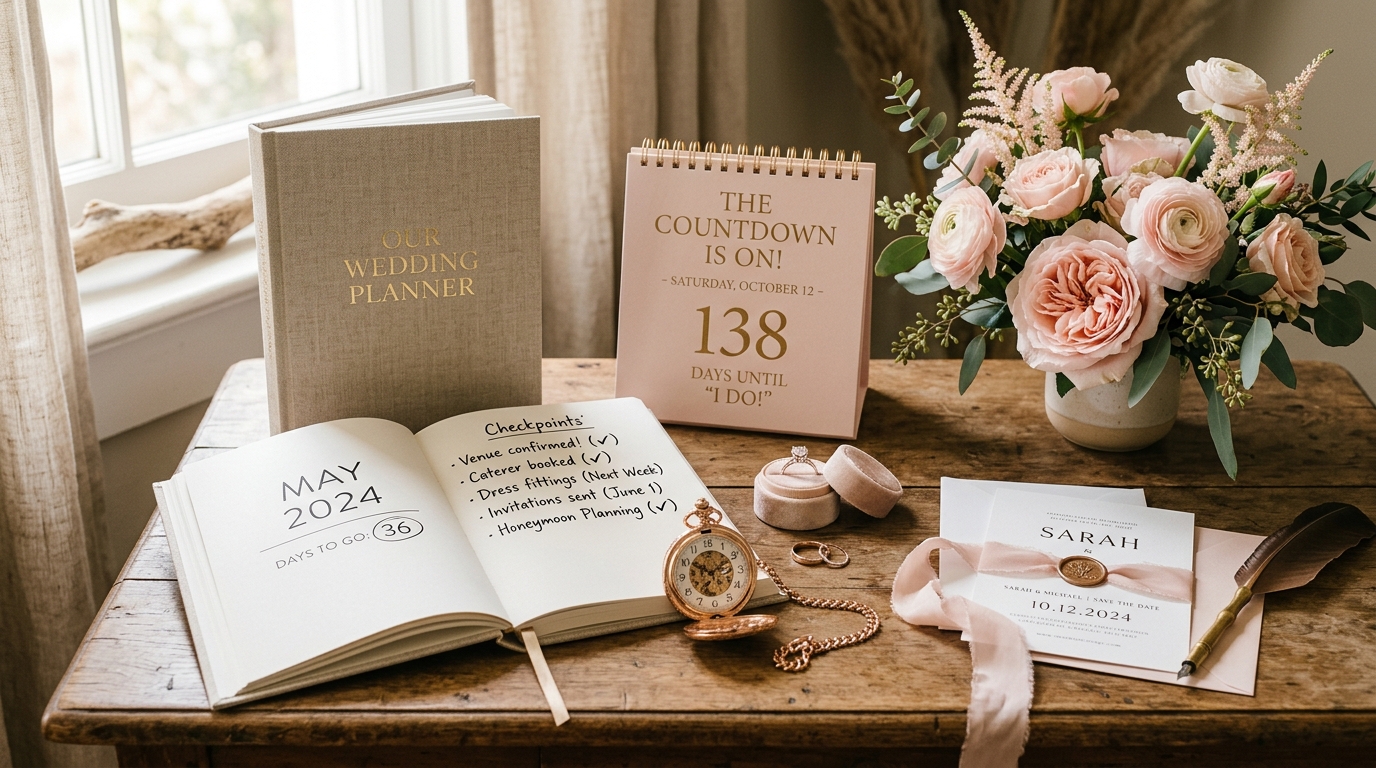
Build the run of show with the day-of timeline generator, and use the day-of schedule and timeline checklist as a cross-check. Put your first event date into the wedding countdown so the whole family sees the same number of days left.
Common Pakistani Wedding Planning Mistakes to Avoid
Booking one venue and stopping. Every function needs a confirmed place and date.
Skipping the Nikkah paperwork. Check forms, ID, and registration well ahead.
Leaving tailoring late. Bridal work often needs several months and multiple fittings.
No single point of contact. Two families giving contradictory instructions to a caterer is a recipe for stress.
Forgetting small events in the budget. Dholki and Mayun spending is easy to ignore until the bills arrive.
Ignoring out-of-town guests. Hotels, transport, and directions need planning too.
Frequently Asked Questions
What should a Pakistani wedding checklist include?
It should cover each function you're holding, such as Dholki, Mayun, Mehndi, Baraat, Nikkah, and Walima. For each, list the venue, guest list, menu, decor, outfits, and vendors. It should also include budget tracking, Nikkah paperwork, guest RSVPs, and a wedding-week confirmation list.
How many days does a Pakistani wedding last?
There's no fixed length. Many families run three to five days, with events like Dholki stretching over a week or more beforehand. Smaller families may combine Mayun and Mehndi, or hold the Nikkah and Baraat on the same day.
How far in advance should I start planning?
Twelve months gives you room to book the best venues and vendors. If you have less time, use the 6-month or 3-month checklist and make venue and caterer decisions in the first few weeks.
What is the difference between Nikkah, Baraat, and Walima?
The Nikkah is the Islamic marriage contract. The Baraat is the groom's procession and the bride's send-off, usually with a large dinner. The Walima is the reception hosted by the groom's family after the marriage.
Who pays for which event?
Traditionally the bride's family hosts the Baraat and the groom's family hosts the Walima. Many families now split costs or share hosting. Agree on this early and record it, so nobody is surprised later.
What paperwork do I need for a Nikkah?
Typically you'll need valid ID for the bride, groom, and witnesses, an agreed mahr recorded in the Nikah Nama, and a registrar or officiant. Rules vary by province and country, so confirm with your local registrar.
Can I use this checklist for a Muslim wedding that isn't Pakistani?
Yes. This Pakistani wedding checklist shares its Nikkah, Walima, halal catering, and prayer-time planning planning with most Muslim weddings. Swap in your own cultural events and outfits for the rest.
Is this Pakistani wedding checklist free?
Yes. You can use it, print it, and pair it with our interactive planning tools at no cost.
Start Your Pakistani Wedding Checklist Today
A multi-day wedding feels huge until it's written down. Once every function has a date, a venue, an owner, and a budget line, the pile turns into a plan.
Keep your Pakistani wedding checklist in one place: start with the foundation tasks, move through your events one at a time, and keep everything in one place. Open the Wedding Planning Dashboard to track tasks live, or generate a personalized list with the wedding checklist generator. Then explore the wider Wedding Planning Checklists guide for everything else on your list.