Introduction: Choosing Your Perfect Bridal Outfit
Your wedding day is one of the most significant moments of your life. Every detail matters—from the venue and flowers to the music and photography. But perhaps nothing defines your bridal look more than the outfit you choose to wear. As a bride, you will wear your wedding outfit for 8-12 hours or more, making it not just a fashion statement but a critical comfort and confidence choice.
If you are an Indian, Pakistani, UK-based, or UAE bride planning a wedding, you have an incredible array of traditional and contemporary options. The world of bridal fashion in South Asian weddings is vast, beautiful, and sometimes overwhelming. From the voluminous lehengas of North India to the elegant drapes of South Indian sarees, from the regal Pakistani sharara to modern fusion creations, choosing the perfect outfit requires understanding not just what is trendy, but what makes YOU feel beautiful.
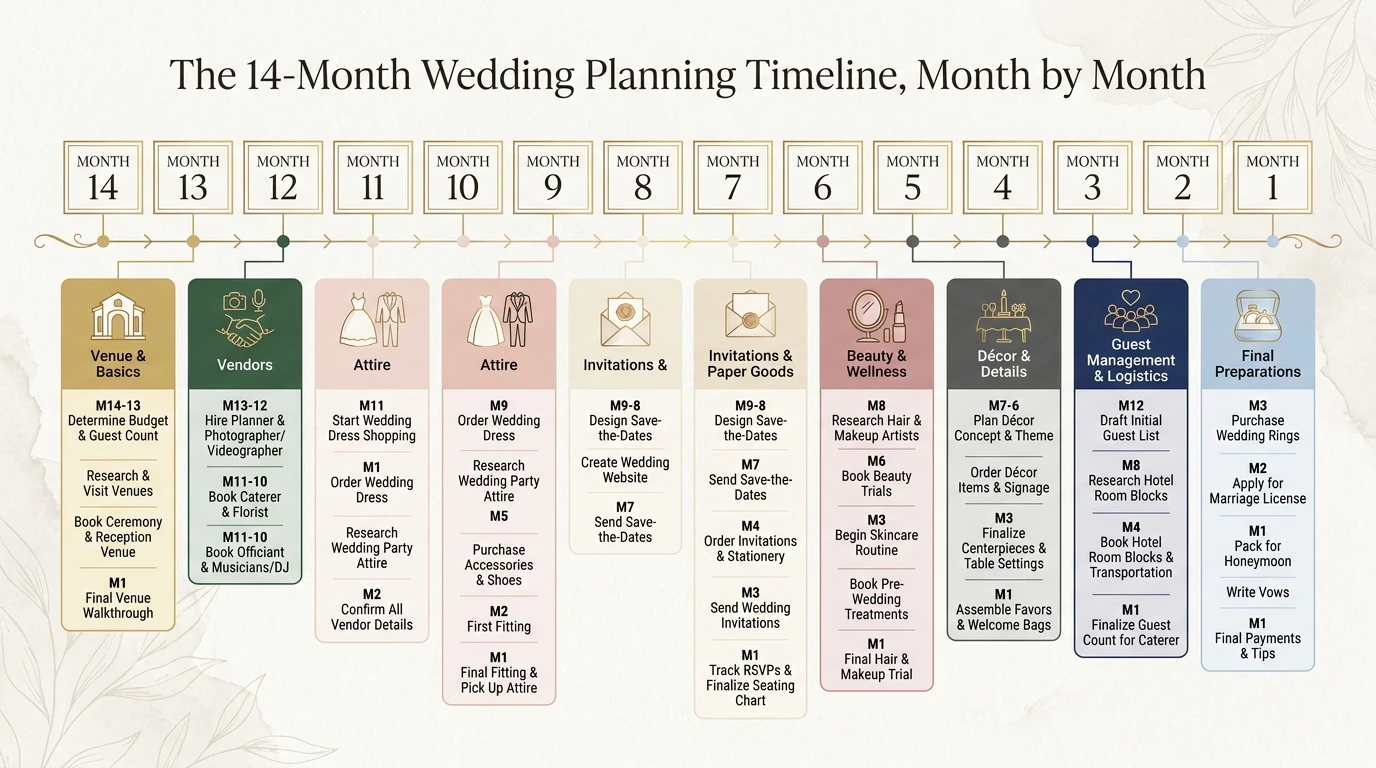
This comprehensive guide covers everything you need to know about wedding outfits for brides. We will explore every major outfit type, help you understand regional variations, guide you through the selection process, and show you how to coordinate your complete bridal look with jewelry, makeup, and accessories. Whether you are planning a traditional ceremony or a modern fusion wedding alongside an 18-Month Wedding Planning Timeline, you will find detailed information to help you make the perfect choice.
1. Complete Guide to Wedding Outfit Types
Bridal Lehengas: The Iconic Three-Piece Ensemble
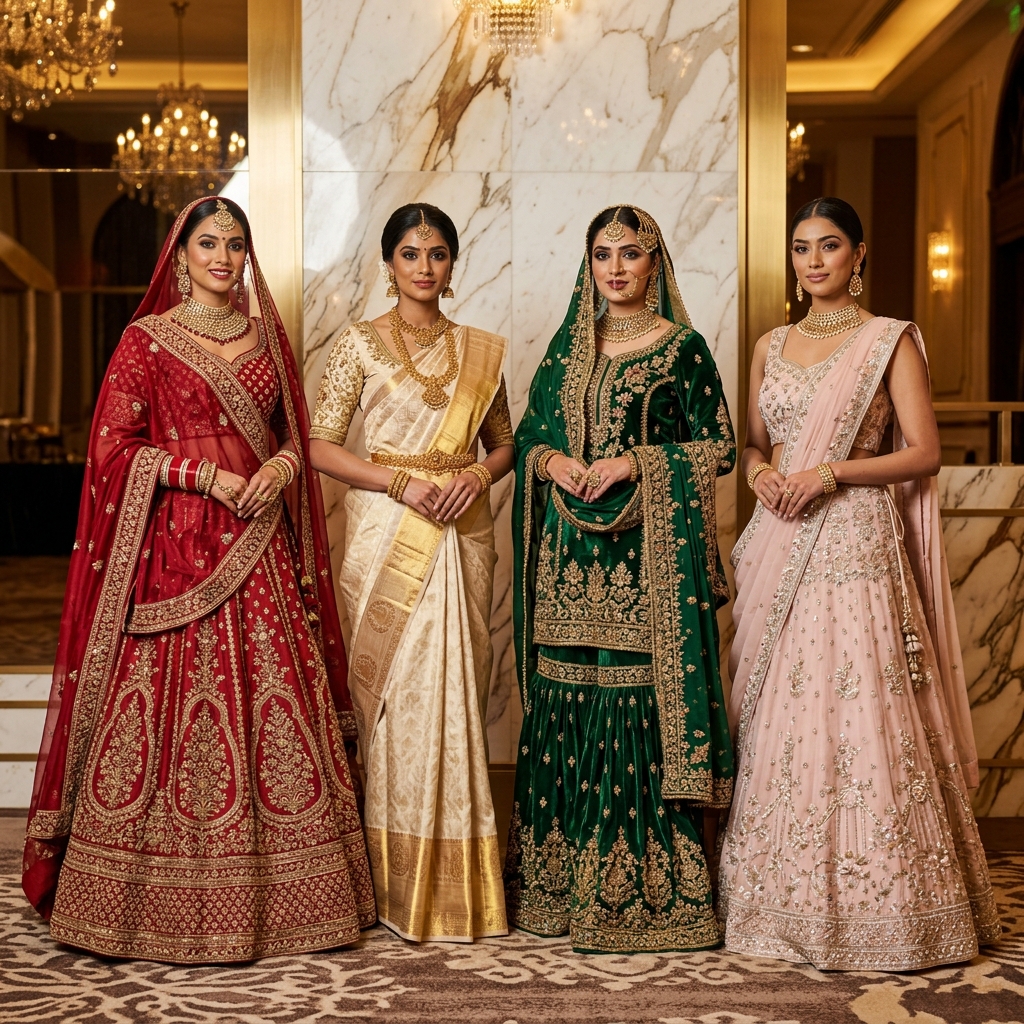
A lehenga is the most recognizable and widely worn bridal outfit across India and Pakistan. It consists of three main components: a fitted blouse (choli), a voluminous skirt (lehenga), and a shawl or scarf-like piece called a dupatta. This outfit has been the quintessential bridal choice for centuries and remains the top choice for modern brides across South Asia.
What defines a bridal lehenga:
- Extensive embroidery and embellishment covering most of the fabric.
- Rich, traditional colors—deep reds, maroons, golds, burgundies, and increasingly, jewel tones.
- Heavy weight due to embroidery, zardosi (gold thread work), beads, sequins, and stones.
- A fitted choli (blouse) that accentuates the waist and upper body.
- A voluminous skirt with a circumference of 2-3 meters or more, often with a long train.
- A dupatta (shawl) that drapes over the shoulder, head, or arms for added drama.
- Can feature traditional zardosi work, kundan stones, or modern embroidery techniques.
Lehenga advantages for brides:
- Flattering for all body types with proper tailoring
- Allows comfortable seated movements
- Creates a dramatic, regal silhouette
- Easy to style with traditional jewelry
- Can be customized to any color or design preference
Traditional Sarees: The Elegant Drape
A saree is a single piece of fabric, typically 5-6 meters long and 1-1.2 meters wide, draped around the body in a traditional manner. While sarees have been worn for centuries across India, they have become increasingly popular as a bridal choice in recent years. South Indian brides have traditionally favored sarees, but now brides from all regions and backgrounds are choosing this elegant option.
Characteristics of bridal sarees:
- Beautiful draping that creates an elegant, elongated silhouette
- Available in silk (Kanchipuram, Mysore, Tussar), cotton, or blended fabrics
- Traditional bridal colors: bright reds, dark maroons, creams, or golds
- Features a striking pallu (end piece) often with contrasting colors or elaborate embroidery
- Usually includes a matching blouse or choli
- Can be minimally embroidered or heavily ornamented depending on style
- Worn with a petticoat to help maintain the drape
Why brides choose sarees:
- Graceful, timeless elegance
- Allows freedom of movement
- Lightweight compared to heavy lehengas
- Flattering vertical drape for tall and petite figures alike
- Showcases beautiful heirloom jewelry
- Increasingly versatile modern styling options
Pakistani Sharara: Tradition Meets Grandeur
A sharara is a traditional Pakistani outfit consisting of a fitted kameez (tunic-style top) paired with heavily embroidered, flared trousers that gather at the knees and flare out wide to the ankles. This Mughal-inspired ensemble is the epitome of Pakistani bridal fashion and is particularly popular in Lahore, Karachi, Islamabad, and among international diaspora communities in the UK and UAE. Explore more styling details in our Pakistani Wedding Hairstyles Guide.
Sharara components and details:
- Fitted kameez (often knee-length or shorter) that may be heavily embroidered
- Flared trousers (around 3-4 meters at the hem) that create a beautiful fluted effect
- Dense embroidery using zardosi, beads, sequins, and Swarovski crystals
- Rich colors—deep reds with gold, forest green, royal blue, or burgundy
- Paired with an ornate dupatta that has heavy gold or silver border embroidery
- Traditionally worn with a belt or kamarband that cinches the waist
- Creates a graceful, flowing silhouette with movement
Gharara: The Formal Bridal Statement
A gharara is another traditional Pakistani and Mughal-inspired outfit, often considered more formal than a sharara. It features a short kameez paired with voluminous, structured gathered trousers. The gharara creates a distinctive bell-shaped silhouette and is considered the most regal choice for Pakistani brides.
Gharara specifications:
- Short kameez (usually ending above the knee) with elaborate embroidery
- Structured gathered trousers that gather sharply at the knee (gote)
- Extremely heavy embroidery and embellishment throughout
- Often features tissue fabric with gold embroidery for maximum impact
- Paired with a heavily embroidered dupatta
- Creates an extremely formal, bridal appearance
- Best suited for formal sitting ceremonies and portraits
Modern Fusion Outfits: Breaking Traditions Beautifully
Modern fusion bridal outfits are increasingly popular among brides who want to honor their cultural heritage while expressing their personal style. These outfits blend traditional silhouettes or embroidery with contemporary design elements, creating something uniquely beautiful.
Types of fusion outfits:
- Lehengas with minimalist embroidery and contemporary cuts
- Embroidered jumpsuits or pantsuits with traditional motifs
- Sarees with modern fabrics and unconventional draping
- Lehenga-inspired skirts paired with crop tops or contemporary jackets
- Color-blocked outfits combining traditional and modern hues
- Outfits featuring asymmetrical cuts with traditional embroidery
- Contemporary silhouettes with traditional fabric or embroidery details
2. How to Choose Your Perfect Bridal Outfit: The Complete Guide
Step 1: Understand Your Body Type and Personal Style
Before you fall in love with a particular outfit, understand what flatters YOUR body. Different silhouettes work for different shapes, and what looks stunning on your sister or best friend might not feel right on you.
- Pear-shaped: A-line lehengas with fitted tops draw attention upward.
- Apple-shaped: Empire waist designs with structured waists create definition.
- Rectangle-shaped: Voluminous lehengas add curves; sarees create elegant vertical lines.
- Hourglass: Fitted cholis and structured lehengas emphasize waist curves.
- Full-figured: Lehengas with strategic vertical embroidery; sarees with longer jackets.
Consider comfort zones:
- Do you prefer being covered or showing more skin? This affects choli design choices.
- Are you comfortable in heavy embroidery or do you prefer minimalist designs?
- Do you like the freedom of a saree’s drape or prefer the structure of a lehenga?
- How do you feel wearing heavy jewelry? This affects outfit choice.
Step 2: Match Your Wedding Theme and Venue
Your outfit should cohesively blend with your overall wedding aesthetic. A heavily embroidered red lehenga suits a traditional temple or palace venue, but might feel overdone for a destination beach wedding. Be sure to check our guide on How to Choose the Perfect Wedding Venue.
+-----------------------------------+---------------------------------------------------+
| Venue Type                        | Recommended Outfit Style                          |
+-----------------------------------+---------------------------------------------------+
| Traditional Temple / Palace       | Heavy red/gold Lehengas, Kanchipuram Silk Sarees  |
| Contemporary Urban Hotel          | Modern Fusion, Pastel Lehengas, Sleek Sarees     |
| Outdoor / Garden                  | Lightweight Silk, Floral Pastels, Georgette       |
| Destination Beach Wedding         | Chiffon Fusion Lehengas, Lightweight Organza      |
+-----------------------------------+---------------------------------------------------+
Step 3: Select Colors That Complement Your Complexion
The right color can enhance your natural beauty, making your skin glow and your eyes sparkle. The wrong color can wash you out or clash with your complexion.
Color guide by skin tone:
- Fair/Light Skin with Cool Undertones: Deep reds, burgundy, forest green, sapphire blue, plum, silver-grey.
- Fair/Light Skin with Warm Undertones: Warm reds, peachy tones, golden yellows, warm oranges, rose gold tones.
- Medium/Olive Skin with Neutral Undertones: Jewel tones (emerald, sapphire), warm reds, golds, rust, warm browns.
- Deep/Dark Skin with Warm Undertones: Jewel tones, deep golds, warm reds, oranges, rust, burgundy, mustard.
- Deep/Dark Skin with Cool Undertones: Jewel tones, silvers, cool blues, purples, cool greens.
Step 4: Consider Comfort and Practical Aspects
You will be wearing your wedding outfit for 8-12 hours or more. Comfort is not a luxury—it’s essential.
- Weight & Construction: Can you sit, stand, and walk comfortably? Test the outfit for 2-3 hours before your wedding. Ensure the blouse isn’t too tight under the arms.
- Fabric Breathability: For summer or humid climates (such as UAE weddings), choose lighter silk or organza fabrics with open backs.
- Mobility: Can you climb stairs in this outfit? Can you move freely for ceremonies or rituals?
3. Indian Bridal Wedding Outfits: Regional Traditions
India’s bridal fashion is incredibly diverse, with each region having its own distinct traditions, color preferences, and silhouettes. Learn how to style your hair alongside your regional attire in our guide to Regional Indian Wedding Hairstyles.
North Indian Bridal Fashion: Bold, Ornate, and Regal
North Indian brides have a distinctive bridal aesthetic defined by heavily embroidered lehengas in deep, rich colors. The tradition emphasizes opulence and grandeur.
- Color: Deep red, maroon, burgundy, gold, and jewel tones.
- Embroidery: Extensive zardosi (gold thread) work, kundan stones, and beadwork.
- Silhouette: Voluminous lehengas with heavy embroidered cholis.
- Jewelry: Heavy, ornate pieces—chokers, bangles, tikkas, and nose rings (nath).
- Dupatta: Large, ornate double-dupatta styling over head and shoulders.
South Indian Bridal Fashion: Silk, Elegance, and Tradition
South Indian bridal traditions emphasize the elegance of the saree, quality woven fabrics, and traditional temple gold jewelry.
- Primary outfit: Silk saree (Kanchipuram, Mysore, or Tussar silk).
- Colors: Bright red, maroon, cream, gold, or mustard.
- Saree features: Contrasting pallu with zari border, temple motifs.
- Jewelry: Traditional temple jewelry—navaratna sets, long chains (harem), waist belts (vaddanam).
- Hair & Accessories: Braided with fresh jasmine flowers (malli poo), paired with an Indian bridal hairstyle as detailed in our Indian Wedding Hairstyles Guide.
4. Pakistani Bridal Outfits: Tradition and Elegance
Pakistani bridal fashion represents a beautiful blend of Mughal heritage, Islamic traditions, and contemporary design. The emphasis is on opulence, craftsmanship, and cultural significance.
The Pakistani Wedding Wardrobe Across Multi-Day Events
                      ┌─────────────────────────────────────────┐
                      │    Pakistani Bridal Wardrobe           │
                      └────────────────────┬────────────────────┘
                                           │
         ┌──────────────────┬──────────────┴───────┬──────────────────┐
         │                  │                      │                  │
┌────────▼────────┐┌────────▼────────┐   ┌─────────▼────────┐┌─────────▼────────┐
│    Mayun        ││    Mehndi       │   │    Baraat        ││    Walima        │
│ Yellow/Green    ││ Bright Multicolor│   │ Deep Red Sharara ││ Pastels/Jewel    │
│ Comfortable     ││ Sharara/Lehenga  │   │ Heavy Zardosi    ││ Elegant Saree    │
└─────────────────┘└─────────────────┘ └──────────────────┘└──────────────────┘- Mayun Day Outfit: Bright, celebratory colors like yellow or green in lightweight silks.
- Mehndi Outfit: Festive, colorful embroidered sharara or lehenga, comfortable for dancing.
- Baraat/Ceremony Outfit: The most formal outfit—heavy red, maroon, or emerald sharara with zardosi work.
- Walima/Reception Outfit: Elegant pastels, champagne, or jewel tones in a lighter sharara or saree.
5. Wedding Outfit Trends and Modern Adaptations
Bridal fashion is evolving constantly. While traditional choices remain popular, modern trends offer exciting new possibilities for brides who want to blend heritage with contemporary style.
Color Trends in Bridal Wear
- Luxury Pastels: Blush pink, sage green, powder blue, and lavender are gaining traction among modern brides.
- Jewel Tones: Emerald green, sapphire blue, deep purple, and rich burgundy provide royal alternatives to red.
- Deep Neutrals: Champagne, gold, cream, and ivory respect traditions while providing a modern aesthetic.
Sustainable and Ethical Bridal Fashion
Eco-conscious brides are increasingly choosing sustainable options such as organic silk, fair-trade handloom weaves, and repurposing heirloom family sarees into modern lehenga silhouettes.
6. Bridal Outfit Budget Planning: From Affordable to Luxury
Wedding outfits are a significant investment. Review our 10 Budget-Saving Wedding Tips and try our Interactive Budget Calculator Tool to organize your wedding expenses.
- Luxury Designer Bridal Wear (₹2,00,000 to ₹15,00,000+): Handcrafted zardosi by master artisans, premium silk/tissue fabrics, custom fittings.
- Mid-Range Designer Wear (₹75,00,00 to ₹2,00,000): Excellent craftsmanship, custom color selections, 4-6 week lead times.
- Affordable Quality Wear (₹30,000 to ₹75,000): Decent embroidery quality, established online bridal platforms, local designer boutiques.
- Budget-Friendly Options (₹15,000 to ₹30,000): Local tailors, off-season sales, semi-stitched lehenga sets with custom tailoring.
7. Coordinating Your Complete Bridal Look: Jewelry, Makeup & Accessories
Your wedding outfit is just the foundation. Coordinating jewelry, makeup, hair, and accessories creates a cohesive, stunning look. Look through our guide on 50+ Hairstyles for Wedding for hair inspiration.
                  ┌──────────────────────────────────────────────┐
                  │      Coordinating Your Bridal Look          │
                  └──────────────────────┬───────────────────────┘
                                         │
       ┌───────────────────┬─────────────┴──────┬───────────────────┐
       │                   │                    │                   │
┌──────▼───────┐    ┌──────▼───────┐     ┌──────▼───────┐    ┌──────▼───────┐
│   Jewelry    │    │    Makeup    │     │ Hair Styling │    │   Dupatta    │
│ Kundan/Temple│    │ Bold vs Soft │     │ Updo/Braids  │    │ Double-Drape │
└──────────────┘ └──────────────┘ └──────────────┘ └──────────────┘- Heavy Embroidered Outfits: Pair with traditional Kundan or Polki choker sets, full arm bangles, and ornate maang tikkas. Keep hair in an updo to showcase necklines.
- Minimalist & Pastel Outfits: Pair with statement emerald or diamond jewelry, soft glowing makeup, and romantic loose waves or braided jasmine styles.
8. Frequently Asked Questions About Wedding Outfits
Q1: What color should I choose for my wedding outfit?
A: Choose a color that flatters your skin tone and aligns with your personal style. While traditional reds and maroons remain popular, modern brides choose from a vast palette—jewel tones, pastels, golds, and even unconventional hues. Consider your wedding theme, venue, and personal preferences.
Q2: How many wedding outfits should a bride have?
A: At minimum, one outfit for the main ceremony. Many brides prefer multiple outfits: main ceremony outfit, reception outfit, and pre-wedding events like mehendi or sangeet. Pakistani brides often have 4-5 outfits for different events.
Q3: Lehenga or saree—which should I choose?
A: Both are equally valid choices. Lehengas offer structured flair and easy mobility, while sarees provide timeless vertical elegance. Many brides choose a lehenga for the main ceremony and a silk saree for the reception.
Q4: Can I wear white or unconventional colors if I prefer them?
A: Yes, modern brides are increasingly choosing unconventional colors. If white is preferred, cream, champagne, or ivory are popular choices that respect traditional sensibilities while providing a contemporary aesthetic.
Q5: How do I ensure my outfit is comfortable for a full day?
A: Test wear your outfit for 3-4 hours before the wedding. Ensure proper blouse fitting under the arms, check skirt weight, practice sitting and walking, and wear broken-in comfortable footwear with proper petticoat support.
Q6: How long does it take to get a custom-made bridal outfit?
A: Luxury designer outfits require 6-12 weeks or more. Mid-range designers require 4-6 weeks, online custom platforms take 2-4 weeks, and local tailors take 1-2 weeks. Start early to allow time for fittings and alterations.
Q7: What if I gain or lose weight before the wedding?
A: Work with your tailor to build side seam margins. Schedule your final fitting 1-2 weeks before the wedding so final precision adjustments can be made.
Q8: What shoes should I wear with my bridal outfit?
A: Choose broken-in shoes with proper support that you can wear for 8-12 hours. Many brides bring backup comfortable flats or embellished block heels for the reception.
Q9: How do I care for my bridal outfit after the wedding?
A: Use specialized bridal dry cleaning. Store flat or properly hung in acid-free tissue paper and a breathable garment bag in a cool, dry place away from sunlight.
Q10: What are the latest bridal trends I should know about?
A: Top current trends include luxury pastels (blush pink, sage green), deep jewel tones (emerald, sapphire), minimalist strategic embroidery, sustainable fabrics, and modern fusion cuts.
9. Final Thoughts: Choosing Your Perfect Bridal Outfit
Your wedding outfit is more than just clothing. It’s a tangible connection to your heritage, culture, and personal identity as you step into one of life’s most significant moments. Whether you choose a traditional red lehenga with extensive embroidery, an elegant silk saree, a regal Pakistani sharara, or a modern fusion creation, what truly matters is that you feel beautiful, confident, and authentically yourself.
The journey of selecting your bridal outfit should be enjoyable and empowering, not stressful. Take your time to explore options. Try on different styles. Consider what makes YOU feel most beautiful. Honor your cultural traditions while embracing your personal style. Remember that trends come and go, but your confidence and joy will shine through in every photograph.
For additional planning assistance, browse our complete list of resources including our Complete 14-Month Timeline, Guest List Guide, and 20 Essential Wedding Checklist Tips.