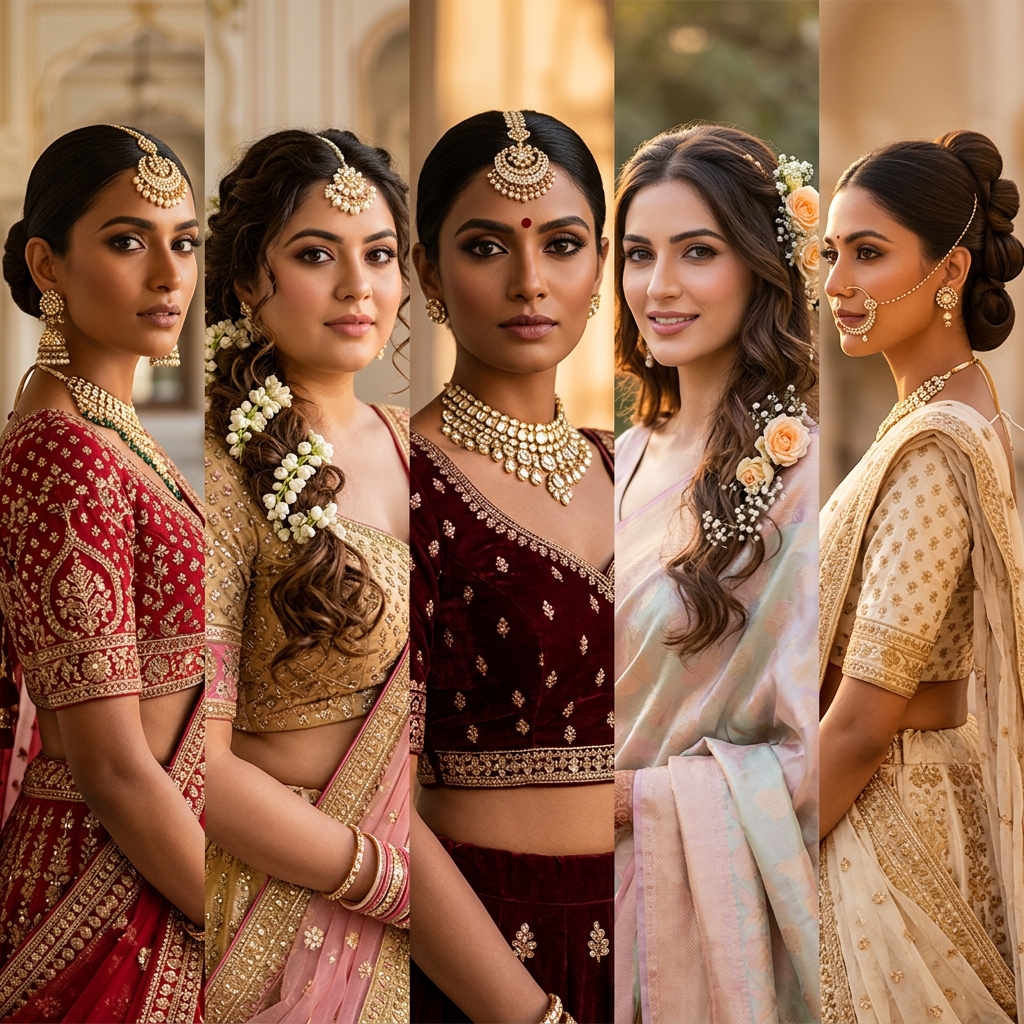
Your wedding hairstyle is far more than a beauty choice—it’s your connection to centuries of bridal tradition, a statement of identity, and a practical decision that needs to last through mehendi, sangeet, and your big day. If you’re an Indian or Pakistani bride, your hair choices carry cultural weight, and the good news is you have stunning options rooted in your region’s bridal heritage.
This guide explores hairstyles from five major Indian and Pakistani wedding traditions, helping you choose a look that honors your culture, complements your venue, and keeps you feeling confident from ceremony start to celebration’s end.
Quick Comparison: Regional Indian Wedding Hairstyles
| Region | Signature Style | Complexity | Duration | Best For |
|---|---|---|---|---|
| North Indian | Bridal bun with maang tikka | Medium | 1.5–2 hrs | Temple weddings, formal celebrations |
| South Indian | Temple curls with gajra flowers | High | 2–2.5 hrs | Temple ceremonies, outdoor venues |
| Pakistani | Bridal maang with dupatta integration | Medium | 1.5–2 hrs | Formal events, banquet halls |
| Bengali | Loose waves with sankhha bangles | Low | 45–60 min | Intimate gatherings, outdoor weddings |
| Maharashtrian | Tiered bun with nath placement | Medium | 1.5–2 hrs | Regional weddings, family-centric events |
Why Regional Hairstyles Matter for Indian Brides
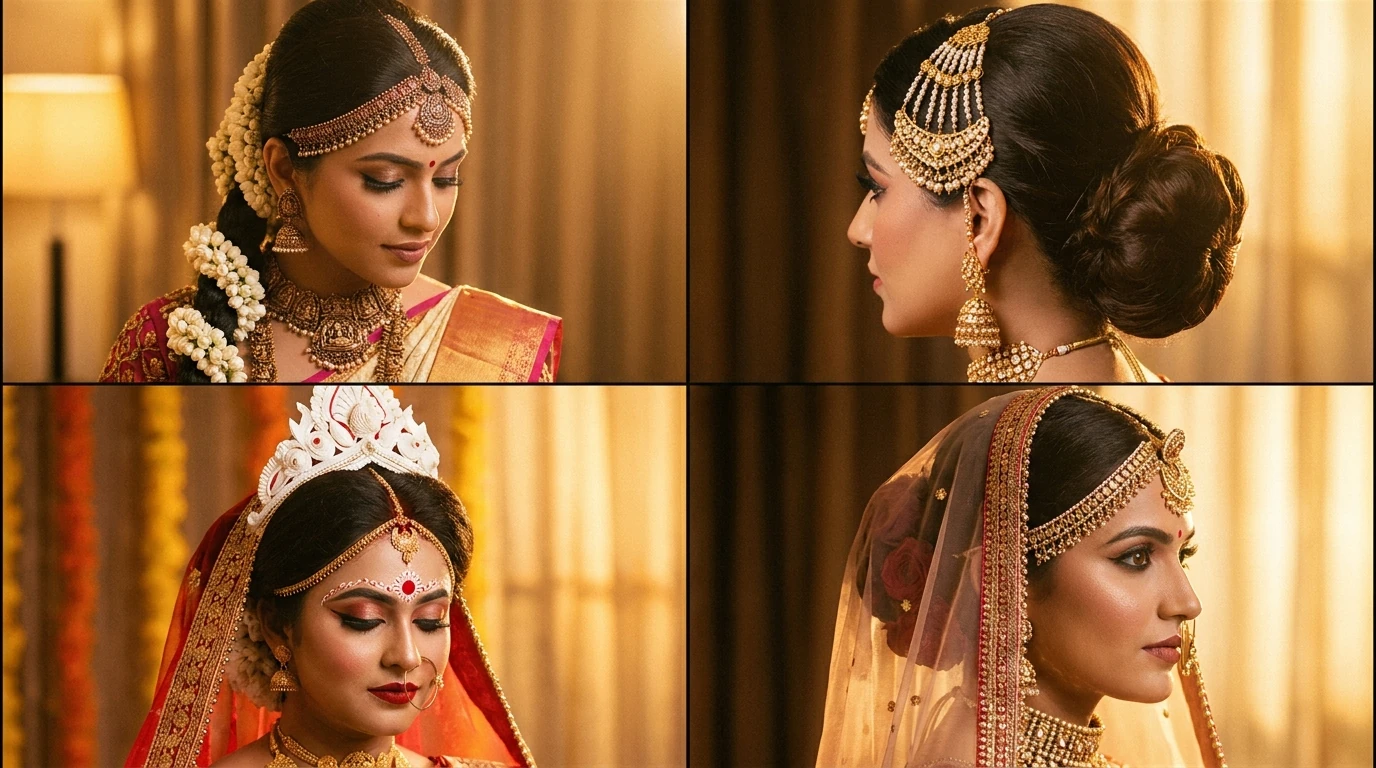
Every region of India and Pakistan has evolved its own bridal hair traditions, shaped by geography, climate, available materials, and centuries of cultural practice. These aren’t just pretty styles—they’re ways of saying “this is who I am.”
- Cultural continuity: Wearing your regional hairstyle connects you to mothers, grandmothers, and brides who came before you. It’s portable heritage.
- Practical genius: These styles were designed by women for women in your climate, with your hair type in mind. A South Indian bride’s temple curls manage heat and humidity differently than a Bengali bride’s looser waves.
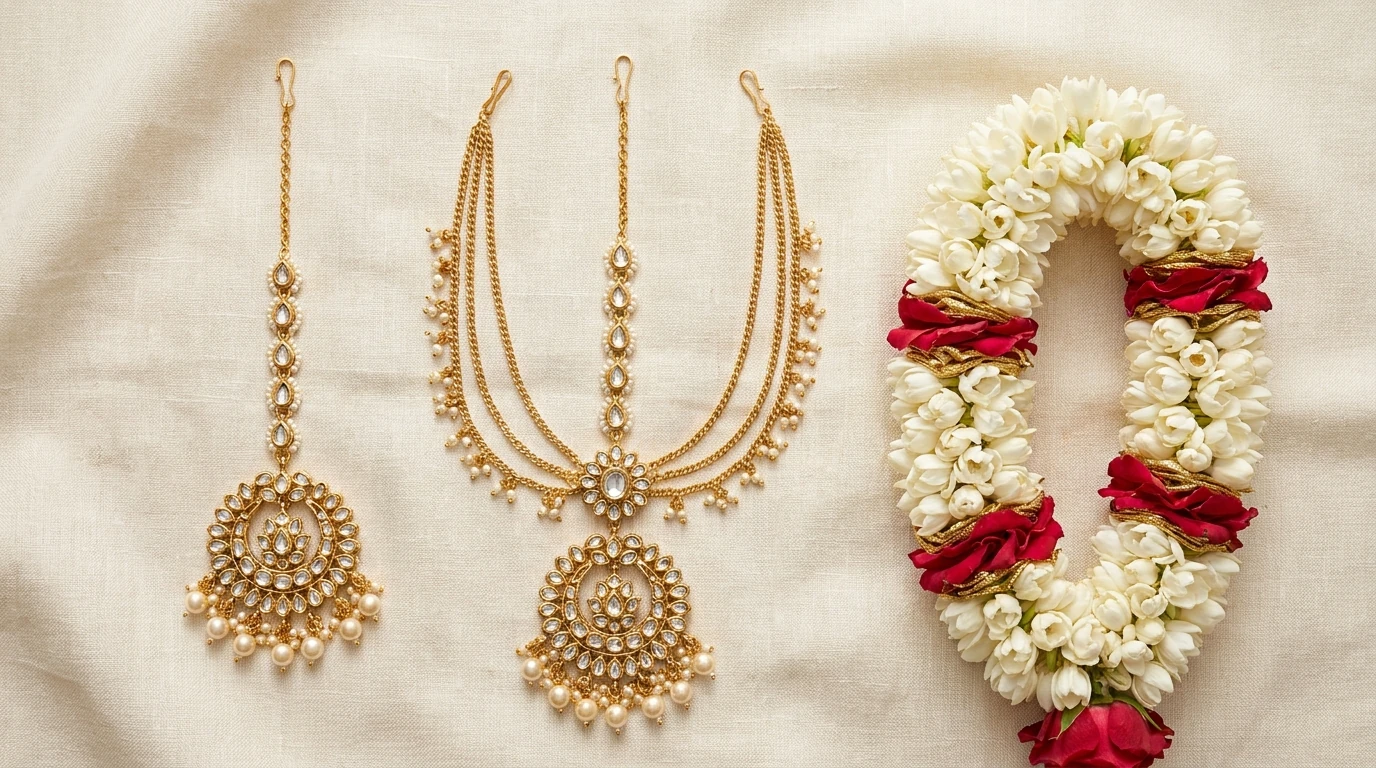
- Jewelry harmony: Your hairstyle is built to showcase specific ornaments—the maang tikka for North Indian brides, the nath for Maharashtrian brides, flowers for South Indian temples. The hair and jewelry are one system, not separate.
- Durability: Traditional styles are engineered to last through multi-day celebrations without collapsing.
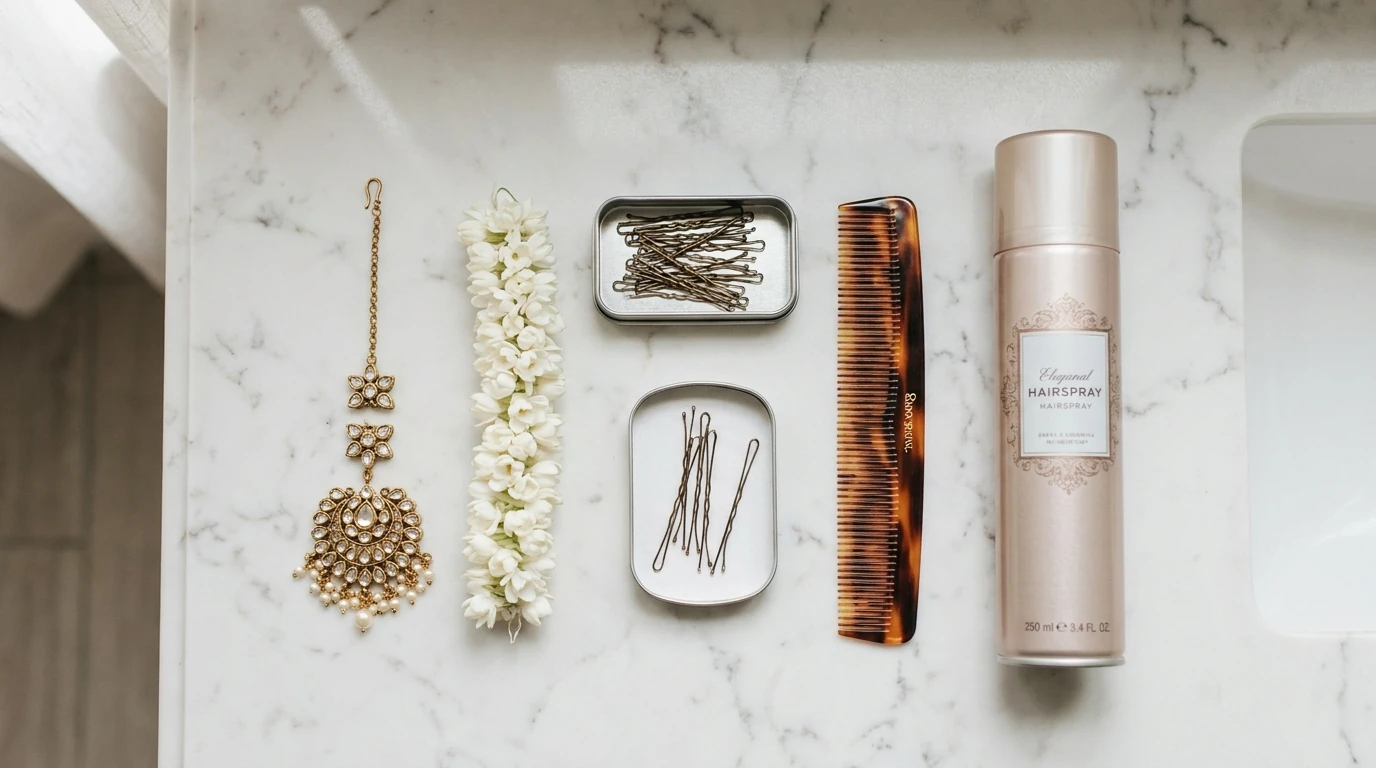
North Indian Bridal Hairstyles
The North Indian bridal bun is perhaps India’s most iconic wedding look: sleek, regal, and perfectly positioned to showcase the maang tikka that traces your center parting.
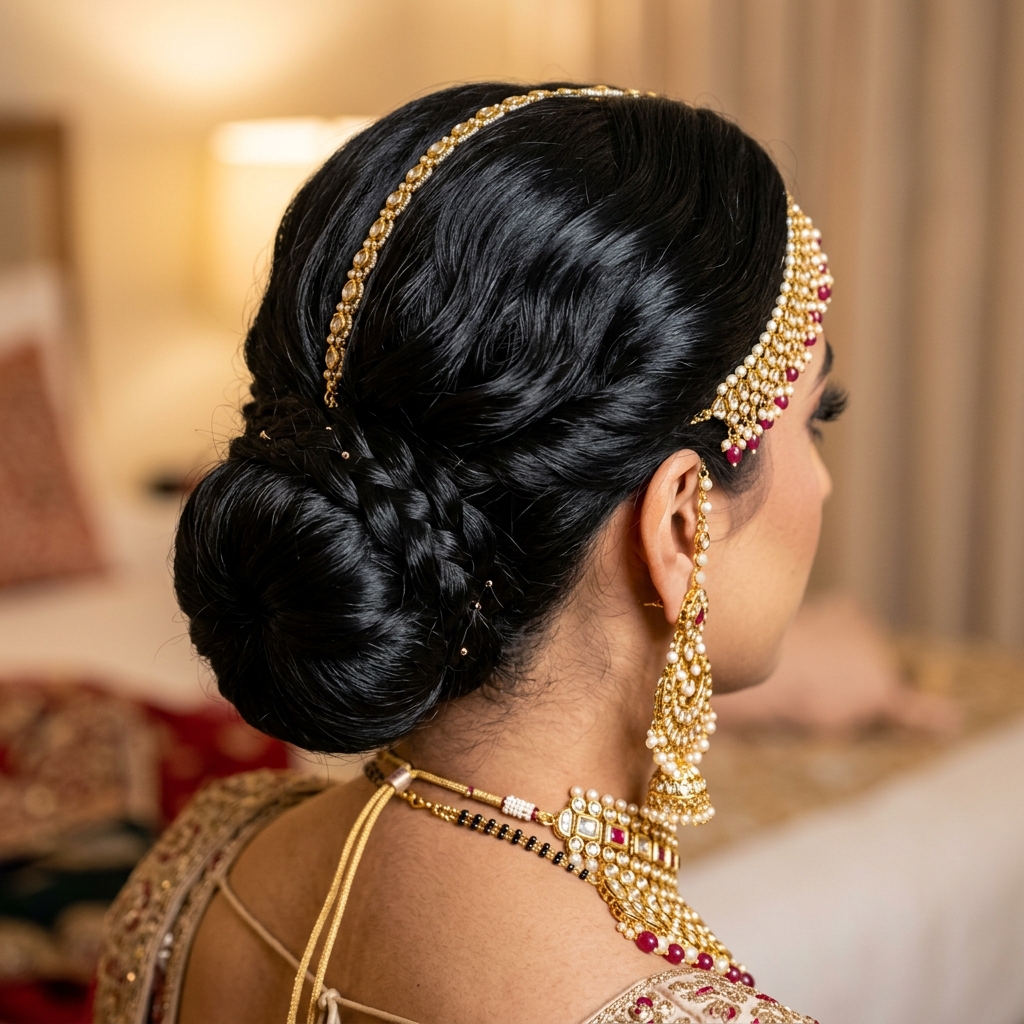
The Classic Bridal Bun
A low or mid-height bun at the back of the head, often created with soft waves at the crown for dimension. The bun is typically pinned tightly enough to last 6–8 hours of dancing and celebration.
What makes it work:
- Creates a clean canvas for heavy jewelry (maang tikka, earrings, nosering)
- Works with any hairstyle—straight, wavy, thick, or thin (though thick hair holds the bun more easily)
- Elegant from front and back, photogenic from every angle
Styling timeline: 1.5–2 hours with professional stylist
Best for: Temple weddings, formal banquet receptions, couples mixing traditional and modern elements
Hair type compatibility:
- Thick hair: Natural hold; minimal product needed
- Thin hair: Requires teasing and volumizing spray for fullness
- Curly hair: Works beautifully when defined and controlled
- Straight hair: Benefits from texture spray before styling
Side-Swept Bridal Bun Variation
A more modern take where the bun sits to one side, allowing a portion of hair to drape across the shoulder or be loosely braided. Still showcases the maang tikka but feels softer.
Best for: Brides wanting tradition with a contemporary edge; outdoor celebrations where the softer silhouette feels less formal.
North Indian Bridal Hair Tips
Durability hacks:
- Use silk pins instead of bobby pins (hold longer, less damage)
- Spray the base with lightweight hairspray before pinning
- Create a “grid” of teased sections to anchor the bun
Jewelry coordination:
- The maang tikka should rest along your center part and fall between your brows
- Heavy maang tikkas (common in North India) need a bun positioned low enough to balance the weight
- Match bun height to the length of your tikka’s hanging portion
Comfort considerations:
- If wearing heavy jewelry, pin your bun lower to reduce scalp tension
- Silk scarves under jewelry prevent slipping and reduce tension headaches
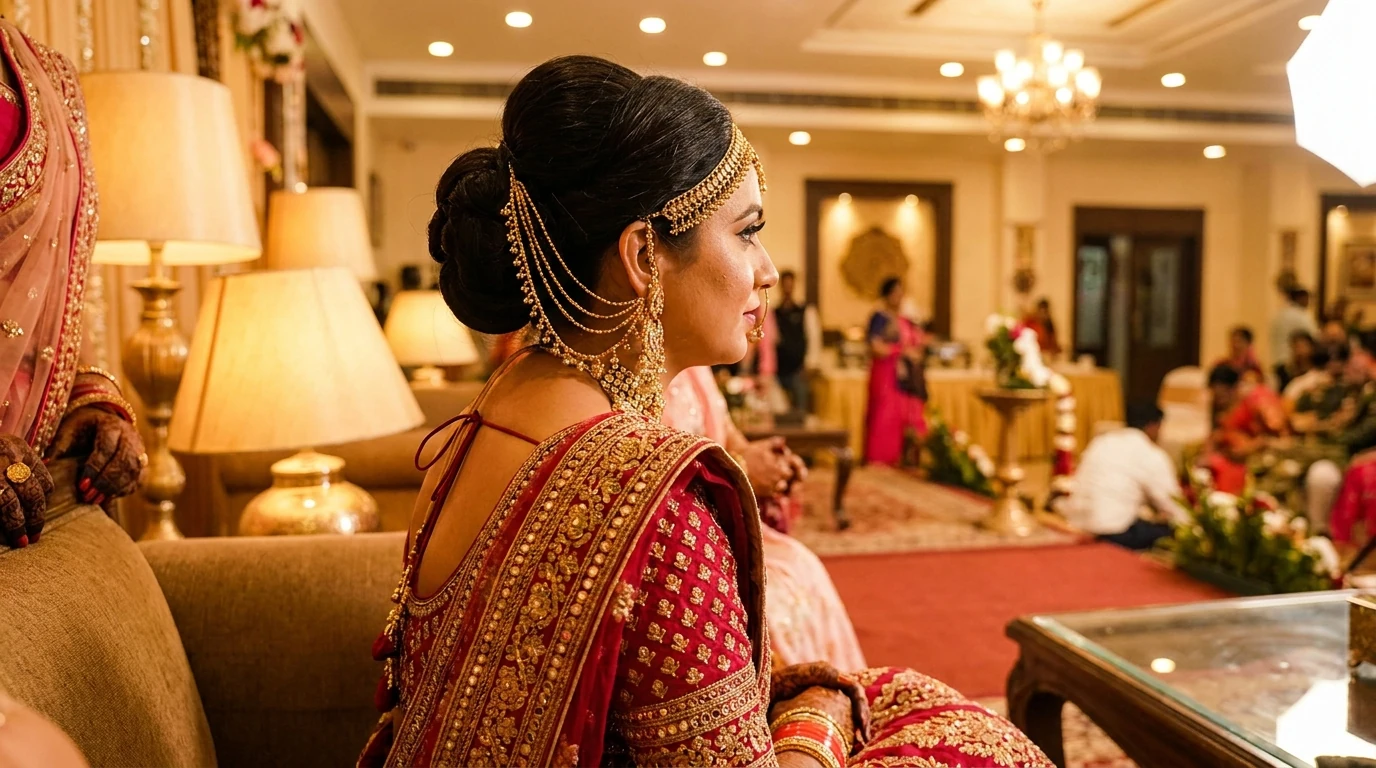
South Indian Bridal Hairstyles
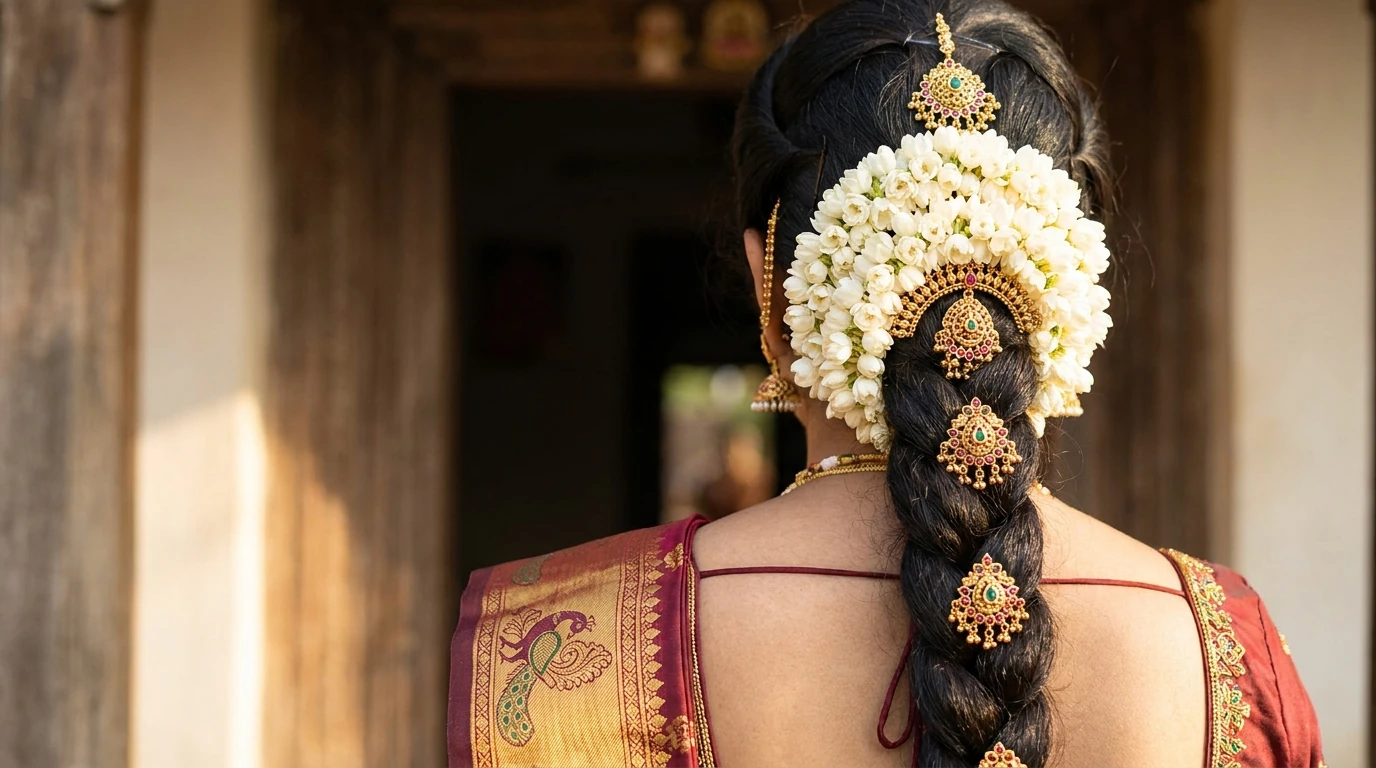
South Indian temple weddings center on a completely different aesthetic: loose, flowing, and transformed entirely by flowers—particularly jasmine and tuberose gajra, which release fragrance throughout the ceremony.
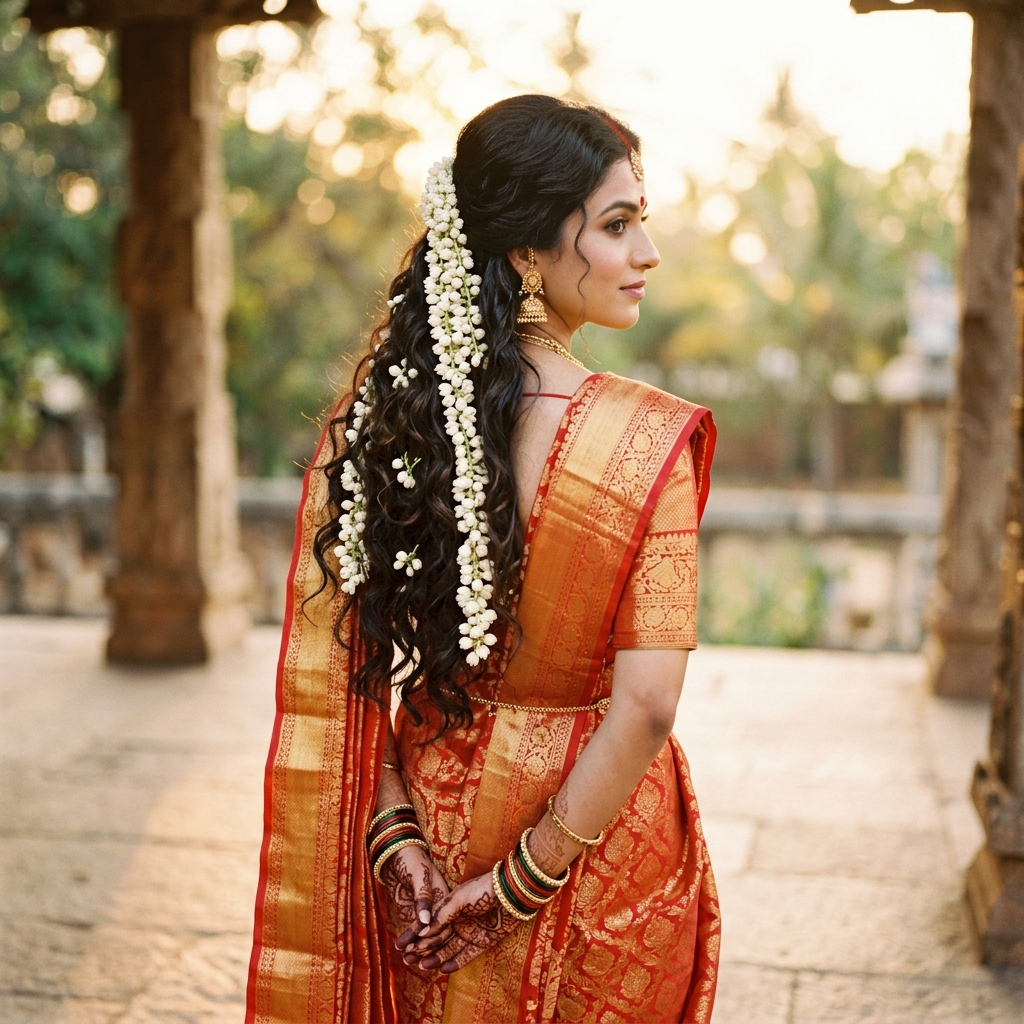
Temple Curls with Gajra
A signature South Indian style: loose curls or soft waves throughout the hair, then adorned with long strands of gajra woven through and around. The curls frame the face; the flowers trail down the back and sides.
What makes it work:
- Gajra flowers show best on loose hair; the fragrance travels around you
- Works beautifully on any hair type, especially straight or slightly wavy
- Creates a romantic, ethereal bridal look distinct from North Indian formality
Styling timeline: 2–2.5 hours (curling time is substantial)
Best for: Temple ceremonies, outdoor weddings, brides prioritizing fragrance and tradition, summer celebrations
Hair type compatibility:
- Straight hair: Holds curls best; can last 4–6 hours with good hairspray
- Wavy hair: Natural texture + gentle curling gives effortless elegance
- Curly hair: Often blown straight first, then re-curled for uniformity
- Thin hair: Curls may fall faster; use texturizing spray before styling
Temple Curls Variation: Half-Up, Half-Down
The top half (crown area) is pinned with gajra woven through the pins; the bottom half falls in loose curls. Balances sophistication with movement.
South Indian Kumkum and Flowers
In many South Indian temples, the bride’s forehead receives kumkum (vermillion red powder) in the center and along the hairline. Your hairstyle should frame this—not cover it.
Styling consideration: If you have a smaller face or narrow center part, position the hairline piece of your gajra to sit just above the kumkum, creating a layered effect of flower and color.
South Indian Bridal Hair Tips
Gajra freshness:
- Fresh gajra strands are woven the morning of, or sometimes just hours before the ceremony
- Bring your hairstylist fresh flowers; they’ll know how to weave without damaging hair
- Change gajra strands every 2–3 hours if your celebration lasts all day
Curl longevity:
- Ask your stylist to set curls with a texturizing spray before curling iron (makes curls last longer)
- Avoid touching curls frequently (oils from hands break curls down)
- Pin the back section lightly once curls cool to prevent flattening
Temple-specific etiquette:
- Some temples require covered hair during specific rituals; bring a dupatta or shawl
- Flowers may need to be removed before entering inner sanctum—plan with your stylist
- Walk carefully in loose curls if navigating temple steps
Pakistani Bridal Hairstyles
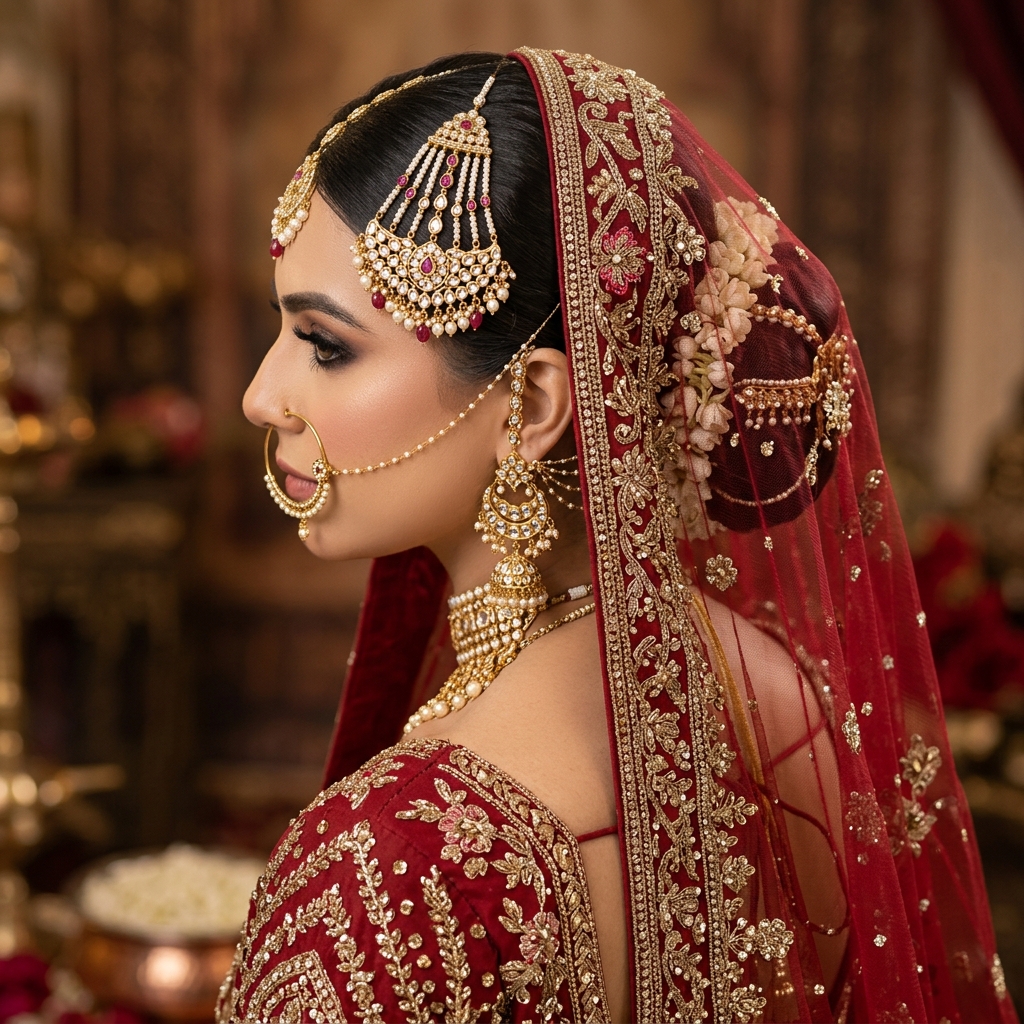
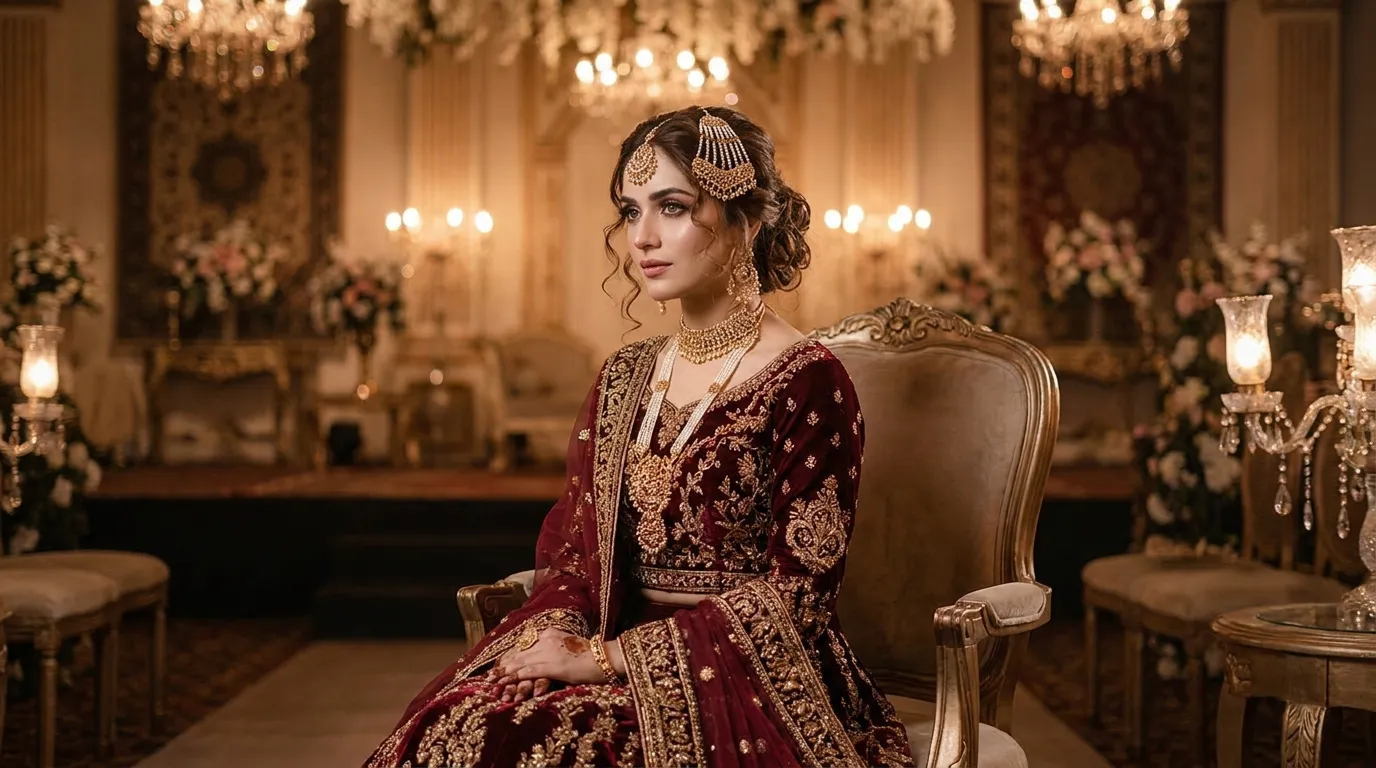
Pakistani bridal hair traditions blend elements of North Indian styling with distinctly Pakistani aesthetics, often incorporating the dupatta (veil) as part of the overall hair presentation.
Pakistani Bridal Maang
Similar to the North Indian bun in structure but typically styled for integration with the dupatta. The maang (center parting) is prominent and often adorned with jewelry that coordinates with the bridal lehenga.
What makes it work:
- The dupatta drapes over the bun, creating a cohesive silhouette
- Allows for prominent jewelry placement (maang tika, earrings, facial jewelry)
- Works for both traditional walima ceremonies and modern Pakistani wedding events
Styling timeline: 1.5–2 hours
Best for: Formal Pakistani weddings, banquet halls, celebrations where the bride remains mostly indoors, lehenga pairings
Dupatta integration:
- The dupatta typically sits on the bun and drapes down the back
- Lighter dupatta fabrics (chiffon, net) work best with hair styling—they won’t weigh down pins
- Your stylist should practice dupatta placement with your actual fabric before the wedding day
Pakistani Half-Up Styling
A more modern approach where the top half of hair is pinned (often with decorative clips or jewelry) and the bottom half falls in waves or curls. The dupatta pins to the top section.
Best for: Younger Pakistani brides, outdoor celebrations, mehendi-to-reception transitions where formality varies.
Pakistani Bridal Hair Tips
Dupatta coordination:
- Show your hairstylist the dupatta fabric before your appointment
- Heavy, embellished dupatta fabrics need pins placed securely at the base of the bun
- Lighter dupatta can drape more freely; less pinning needed
Jewelry balance:
- If wearing a heavy maang tika, keep the bun structured and low
- Light facial jewelry (e.g., small nath) allows for more playful hair styling
Climate considerations:
- Pakistani summer weddings often happen in evening hours; loose waves may be more comfortable than tight buns
- Heavy buns can cause scalp tension after 6+ hours; plan break-time activities
Bengali Bridal Hairstyles
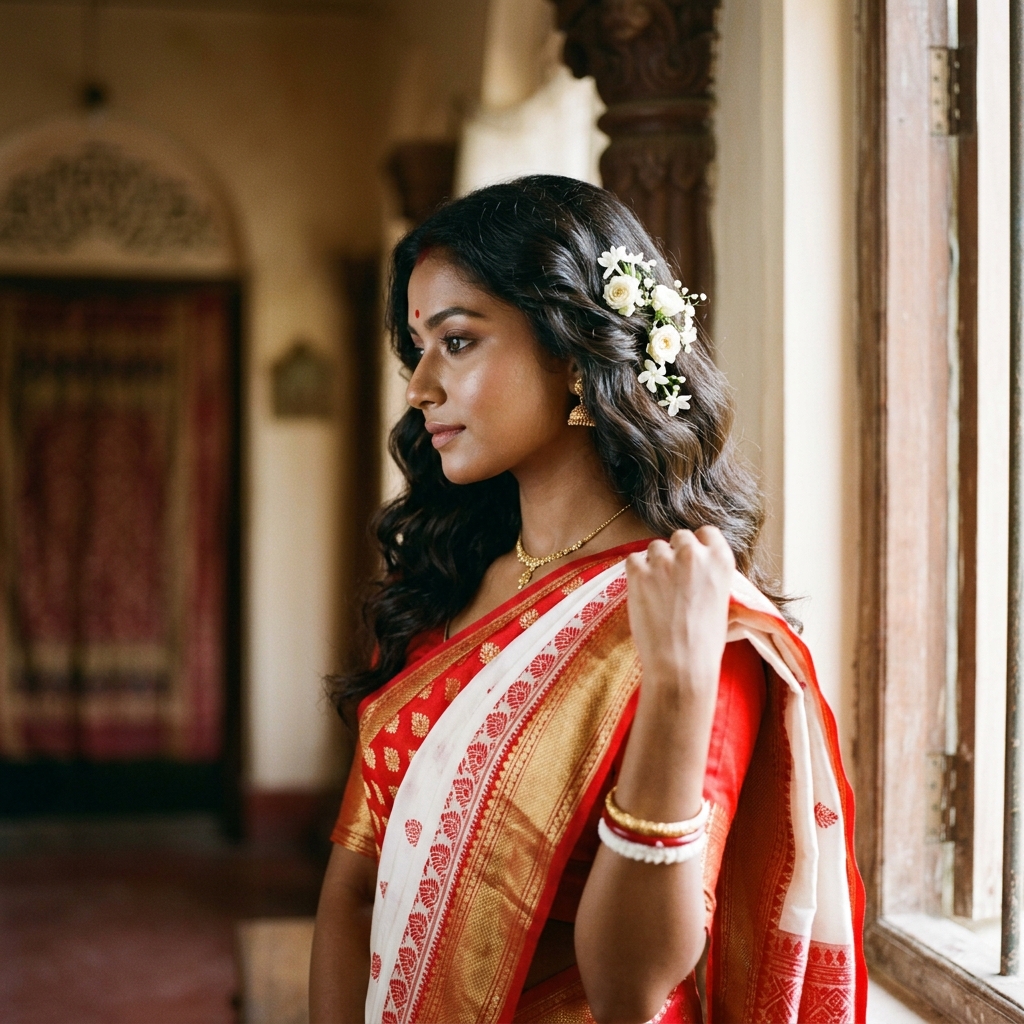
Bengali wedding traditions often favor looser, more romantic hairstyles compared to North Indian formality. The bride frequently wears sankhha (shell bangles) in place of traditional wedding rings—and her hairstyle complements this more understated elegance.
Loose Waves with Flowers
A signature Bengali bridal look: soft, loose waves or very gentle curls, often adorned with simple flowers (jasmine, rose, or dhak flowers during spring celebrations). The overall effect is romantic and intimate.
What makes it work:
- Works beautifully with traditional Bengali red and white sari (the formal waves don’t compete visually)
- Complementary to the fine, delicate jewelry that characterizes Bengali bridal aesthetics
- Low-stress styling for brides who find tight buns uncomfortable
Styling timeline: 45–90 minutes (depending on hair texture)
Best for: Intimate Bengali celebrations, outdoor events, brides preferring comfort and elegance over formality
Hair type compatibility:
- Naturally wavy hair: Minimal styling needed; product and light heat for definition
- Straight hair: Needs light curling; waves fall faster, requiring mid-event touch-ups
- Curly hair: Often tamed with straightening cream, then very gently re-waved
- Thin hair: Looks fuller in loose waves than updos
Bengali Bun Variation (Less Common)
Some Bengali brides opt for a low, very soft bun, often with a single strand of hair left to frame the face. More understated than North Indian versions.
Bengali Bridal Hair Tips
Wave maintenance:
- Apply texturizing spray or sea salt spray before styling to help waves last
- Use a round brush on low heat for gentler waves that last longer
- Pin sections loosely if waves are falling flat mid-celebration
Flower placement:
- Bengali brides often tuck flowers into waves rather than weaving them throughout
- Flowers can be changed out easily if you’re wearing multiple outfits during multi-day celebrations
Sankhha coordination:
- The delicate sankhha bangles mean your hair shouldn’t be too ornately jeweled; less is more
- Keep earrings simple so jewelry feels balanced overall
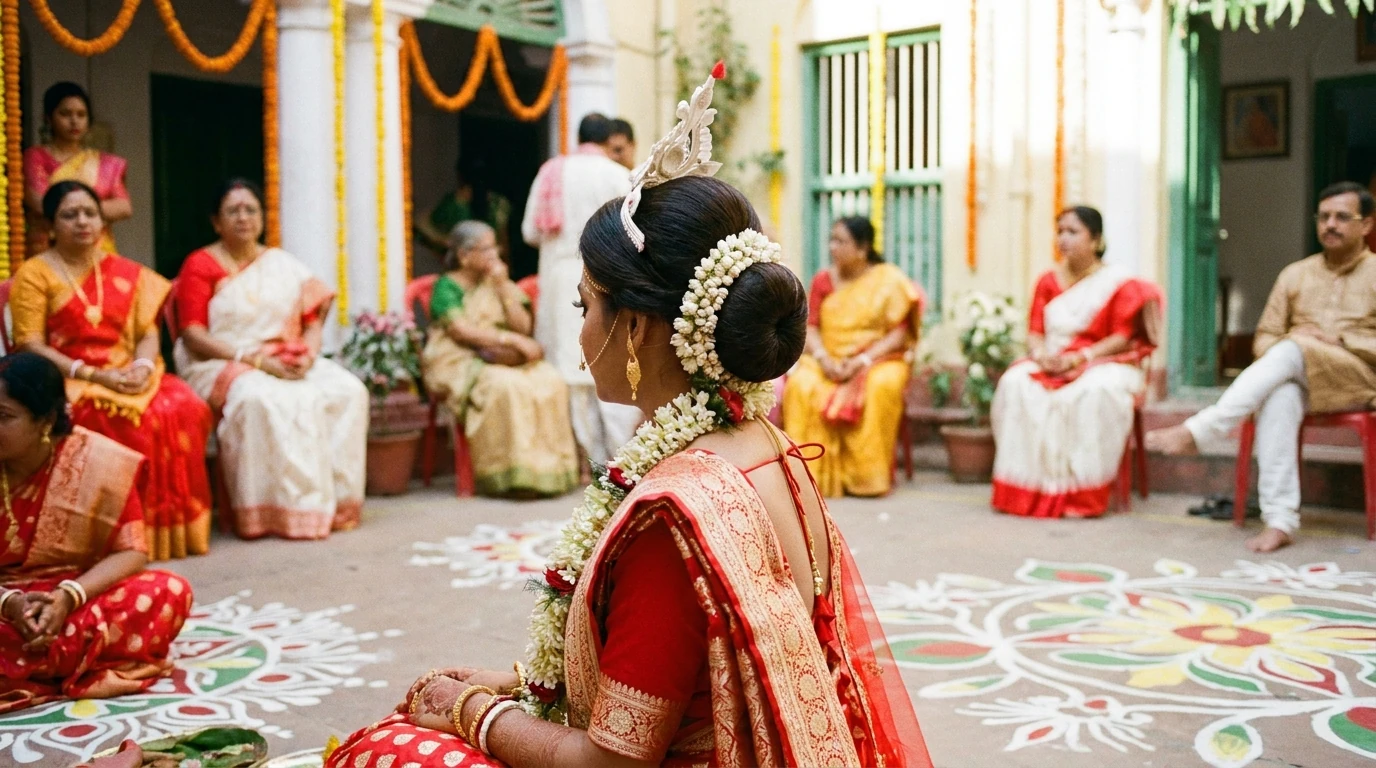
Maharashtrian Bridal Hairstyles
Maharashtrian bridal traditions feature a distinctive tiered or stacked bun, often worn with a nath (nose ring) as a signature piece of jewelry.
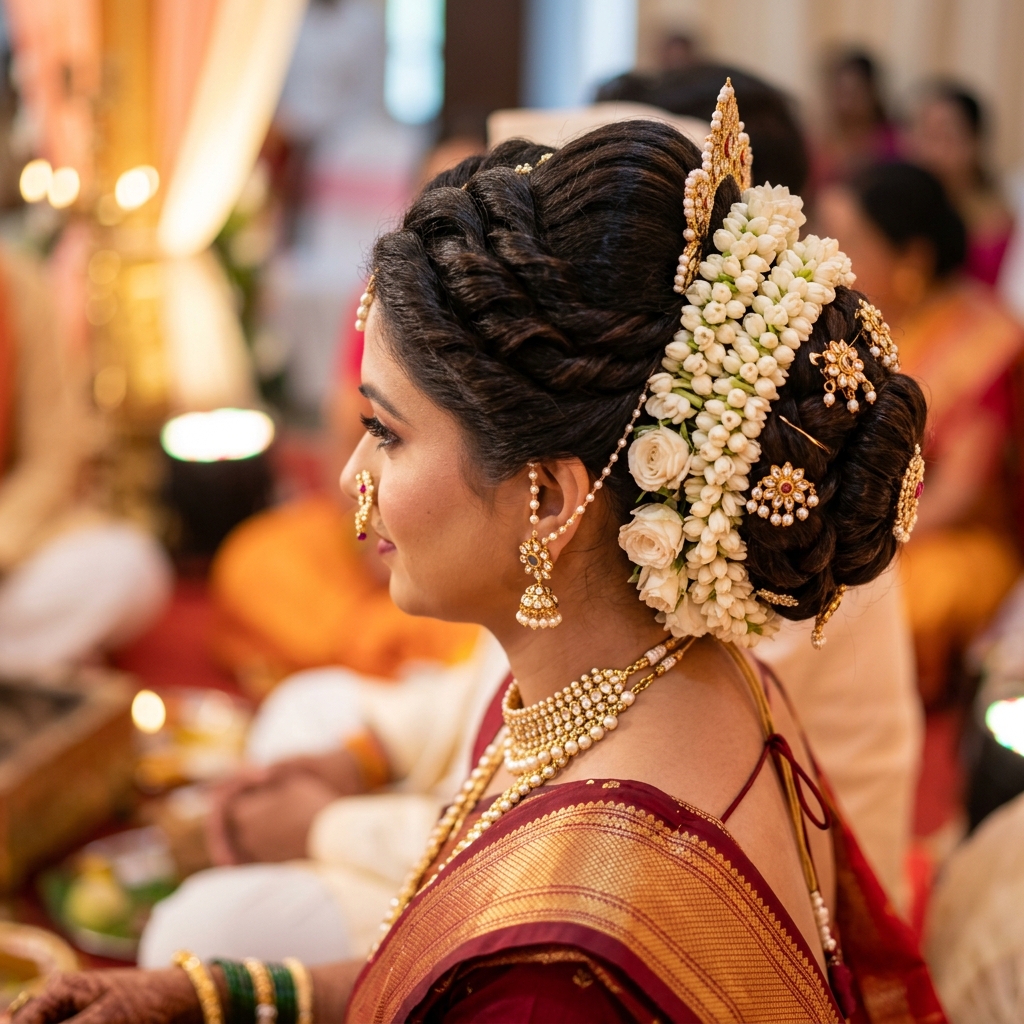
Tiered Bridal Bun
A bun structured in layers—sometimes creating a sculptural, crown-like effect. Typically adorned with flowers, jewelry pins, or both.
What makes it work:
- The tiered structure creates visual interest and height
- Provides secure placement for the nath (nose ring) to be visible and celebrated
- Works beautifully with Maharashtrian wedding jewelry (traditional kundan and pearls)
Styling timeline: 1.5–2 hours
Best for: Maharashtrian weddings, celebrations where the nath is central to bridal identity, formal family events
Nath coordination:
- A tiered bun creates visual balance with the downward curve of a nath
- The height of your bun should complement the length of your nath’s hanging portion
Maharashtrian Bridal Hair Tips
Bun structure:
- Tiered buns require more teasing and pinning; ask your stylist about silk pins to reduce breakage
- Bring your nath to your hair appointment so your stylist can practice placement
Durability:
- These buns are built for all-day wear and often survive vigorous dancing
- Regular hairspray applications throughout the day keep structure intact
Comfort:
- Tiered buns can feel heavier than single buns; if you have scalp sensitivity, plan for breaks or pain management
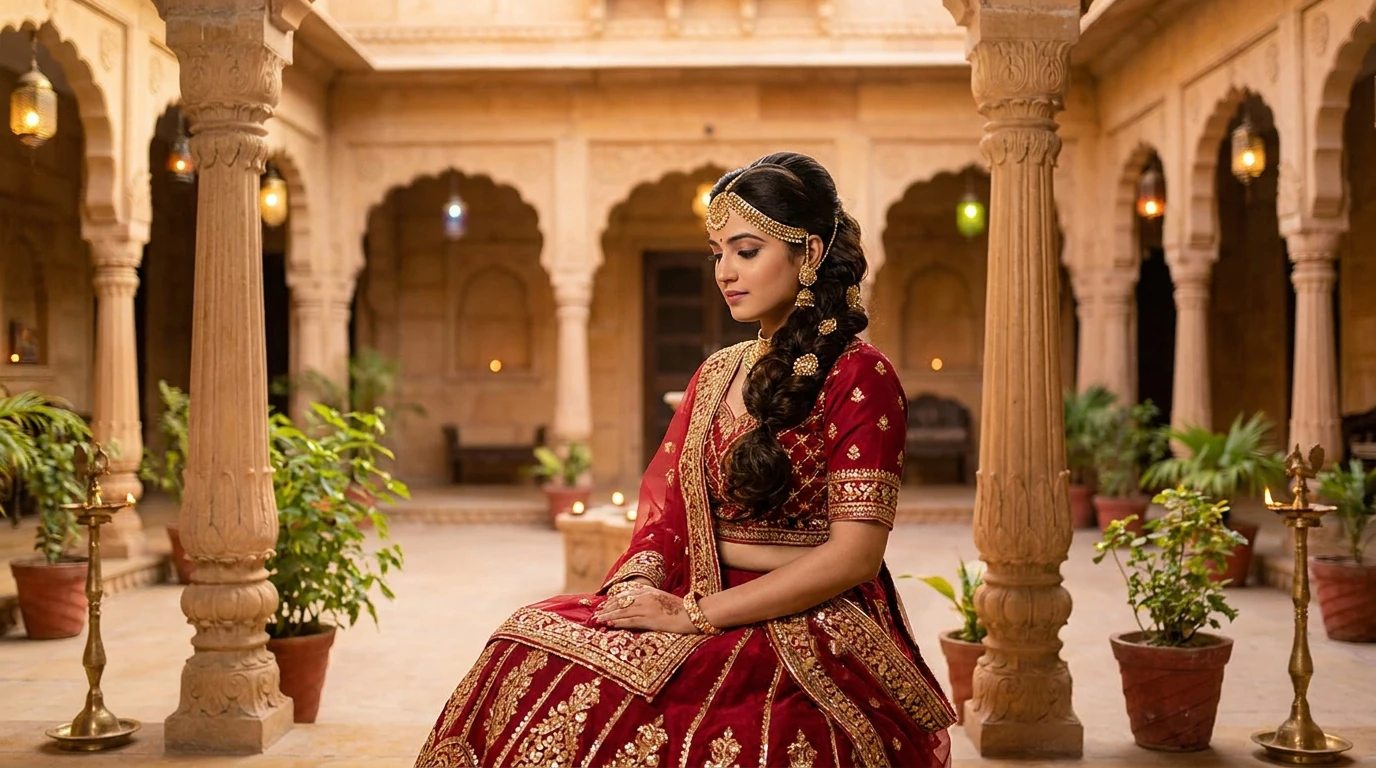
Hairstyle Selection by Wedding Scenario
- Temple ceremony + banquet reception → Consider a convertible style: formal bun for temple, then remove pins and reset for looser waves at reception (requires professional styling support on-site)
- Outdoor, daytime wedding → South Indian temple curls or Bengali waves handle movement and weather better than tight buns; flowers add shade-friendly elegance
- Multi-day celebration (mehendi → sangeet → baraat → reception) → Work with your stylist to plan outfit-specific hair: lighter waves for mehendi, formal bun for main ceremony, relaxed style for reception
- Intimate, small celebration → Bengali or Pakistani half-up styles allow flexibility and don’t feel over-styled for smaller gatherings
- Hot climate or summer wedding → Loose waves or half-updos feel more comfortable than full buns; plan for mid-event touch-ups
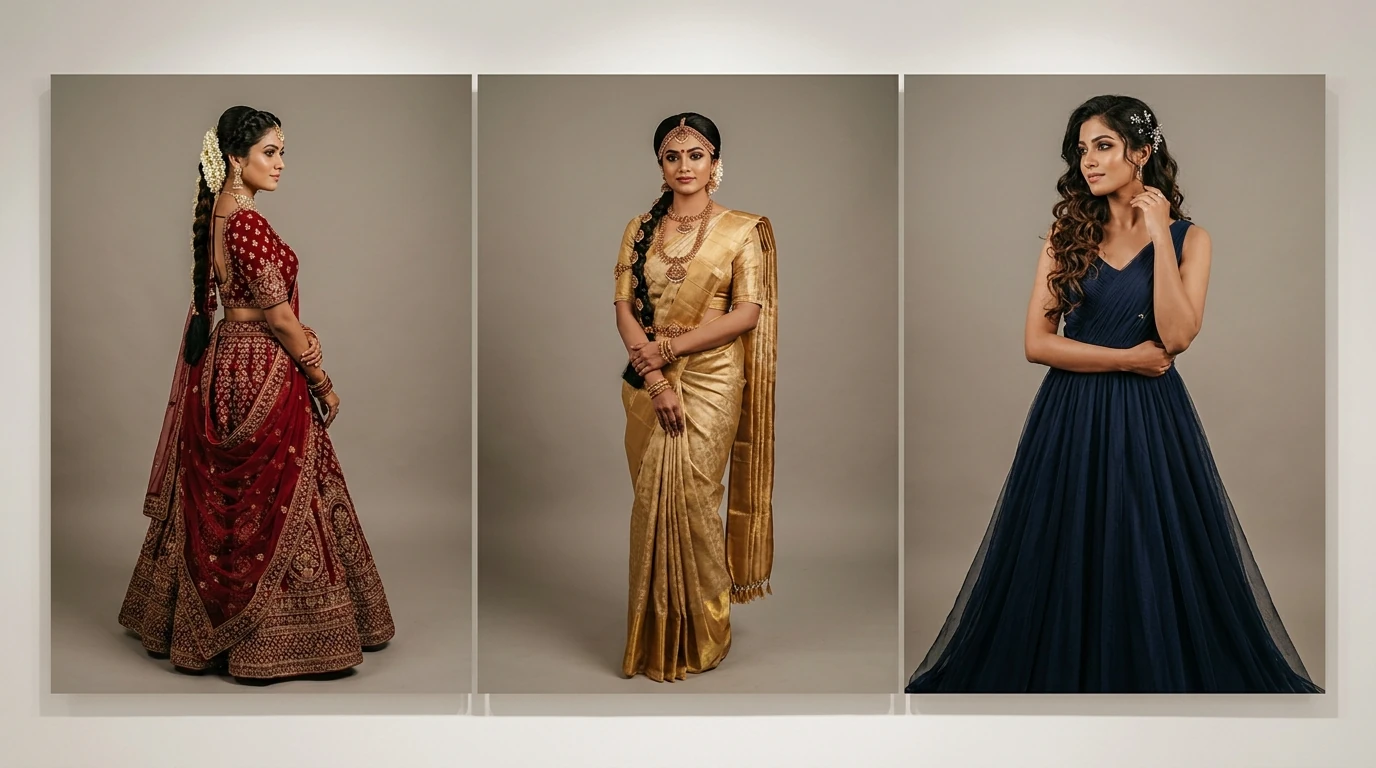
Common Bridal Hair Challenges & Solutions
Challenge: Hair Fall After Mehendi
Why it happens: Henna paste (mehndi) can be drying; the mehendi process itself may involve heat or teasing.
Solution:
- Do a deep conditioning treatment the night before mehendi
- Ask your mehendi stylist to use a lightweight oil during application
- Avoid teasing for mehendi styling if possible
- Post-mehendi, use leave-in conditioner and silk pillowcase for 3–4 nights before the wedding
Challenge: Maintaining Curls in Humidity
Why it happens: South Indian and Bengali styles depend on curls; humidity breaks them down.
Solution:
- Use humidity-proof hairspray (ask for product recommendations from your stylist)
- Pin sections of curls loosely to prevent flattening
- Bring a flat iron or curling tool and a stylist on-site for touch-ups every 2–3 hours
Challenge: Scalp Tension Headaches from Heavy Hair or Jewelry
Why it happens: Tight buns, heavy maang tikka, or extended styling time causes tension.
Solution:
- Do a trial hairstyle 2–3 weeks before to identify tension points
- Ask your stylist to use lighter pins or silk pins
- Wear hair down for 1–2 days after the wedding to give your scalp relief
- Take breaks during celebrations to loosen pins slightly
Challenge: Hairstyle Not Lasting Through Multi-Ceremony Day
Why it happens: 6–12 hours of wear, dancing, and humidity is a lot for any style.
Solution:
- Hire an on-site stylist to refresh hair between ceremonies
- Bring extra hairspray, bobby pins, and silk scarves
- Plan a “hair break” midday where you remove pins and let hair rest for 30 minutes
- Choose a style known for durability (North Indian bun outlasts Bengali waves in longevity)
Challenge: Balancing Heavy Jewelry with Thin Hair
Why it happens: Thin hair can’t anchor heavy ornaments without slipping or breaking.
Solution:
- Use teasing and volumizing spray to create a dense base
- Work with your stylist on reinforced pinning techniques
- Consider lighter jewelry options, or split the weight (wear smaller maang tikka, larger earrings)
- Use hair extensions if needed to create the volume for jewelry placement
Next Steps: Choose Your Regional Hairstyle
Now that you’ve explored five major Indian and Pakistani bridal traditions, here’s your action plan:
- Identify your region or the tradition most meaningful to you
- Gather inspiration photos of the style you prefer—save 5–10 to show your stylist
- Research stylists in your area who specialize in bridal hair for your tradition
- Book a trial appointment 2–3 weeks before your wedding
- Communicate clearly: Show photos, discuss your hair type, comfort level, and any concerns
- Plan logistics: Schedule your stylist for your wedding day; arrange on-site touch-up support if your celebration spans multiple ceremonies
Explore Deeper: Related Guides
- Best Mehendi Hairstyles for Indian Brides — Specific styles for your mehendi night
- South Indian Bridal Hair: Regional Deep Dive — Temple curls, gajra placement, and authentic styling
- Pakistani Bridal Hairstyles & Dupatta Coordination — Complete guide to maang, jewelry, and modern variations
- Hairstyles for Different Wedding Venues — Temple, banquet hall, outdoor, garden reception
- Hair Care Before Your Wedding — Conditioning, treatments, and scalp health in the final week
About This Guide
This guide is designed for Indian and Pakistani brides planning their wedding hairstyle. Every regional tradition is valid, every bride’s choice is personal. Whether you choose a North Indian bridal bun, South Indian temple curls, or any other style—what matters is that you feel confident, beautiful, and connected to your celebration.