Introduction: Why Your Wedding Outfit Matters
Every Pakistani bride remembers her wedding day outfits — not just as clothes, but as a reflection of her identity, her family’s heritage, and the joy of her celebrations. Pakistani wedding outfits tell a story. They honor generations of tradition while celebrating who you are as an individual bride stepping into a new chapter of your life.
This is not just a guide about buying a lehenga or choosing a color. This is about understanding the why behind Pakistani bridal fashion — the cultural significance woven into every thread, the regional pride that distinguishes a Lahore bride’s style from a Karachi bride’s elegance, and the confidence that comes from wearing something that feels authentically you.
Whether you’re planning a wedding in Lahore, getting married abroad as part of the UK Pakistani community, or celebrating your cultural heritage in any part of the world, this comprehensive guide will walk you through every decision: which outfit for each ceremony, how to choose colors that flatter your skin tone and honor tradition, which fabrics feel luxurious, how to accessorize like a Pakistani bride, and where to actually shop without overspending.
If you are also comparing general styles across South Asia, feel free to read our comprehensive Wedding Outfits for Brides Guide.
By the end of this guide, you’ll understand Pakistani wedding outfits at every level — from the mehndi to the walima, from traditional silhouettes to modern fusion trends, and most importantly, how to feel like the most confident version of yourself on every single day of your wedding celebrations.
Understanding Pakistani Wedding Events: What to Wear for Each Ceremony
The short answer: Pakistani weddings include multiple events (mehndi, baraat, walima) where brides wear different outfits. Each event has distinct styling expectations — the mehndi is colorful and playful, the baraat requires a formal, heavily embroidered lehenga, and the walima is elegantly formal but slightly less ornate.
Why this matters: Understanding the sequence and styling of each event ensures you invest in the right pieces and feel confident at every celebration. Pakistani wedding traditions vary by region, family, and personal preference — this guide helps you navigate those variations confidently.
Pakistani weddings aren’t a single event — they’re a series of celebrations, and each one has its own dress code, vibe, and styling expectations. Your Pakistani wedding outfits will change from day to day, and that’s where the real fun begins.
The Mehndi Ceremony
The mehndi is traditionally the most colorful, playful, and joyful event of the Pakistani wedding calendar. It’s when the bride’s family celebrates with the groom’s family, intricate henna designs are applied, and everyone — from grandmothers to small cousins — is dancing and laughing.
What the bride wears to mehndi:
Your mehndi outfit should be vibrant, comfortable (because you’ll be moving around and applying henna!), and joyful. This is not the time for heavy, restrictive clothing. A traditional mehndi dress might be a colorful gharara or sharara in emerald green, deep pink, coral, or even an unexpected shade like mustard yellow or turquoise. The key is brightness and celebration.
Many modern Pakistani brides are breaking the mold here — pairing traditional silhouettes with contemporary colors, or even opting for a beautifully embroidered simple gown. The mehndi is yours to make personal. Some brides choose to wear multiple mehndi outfits across different events (at the groom’s house, at their own), which is why investing in at least one stunning mehndi dress is important.
Embroidery is common but not mandatory — a silk gharara with subtle gold gota work or even a chiffon sharara with minimal embellishment can look equally stunning. The focus is on color and movement, not weight.
The Baraat Day: The Bride’s Grand Entrance
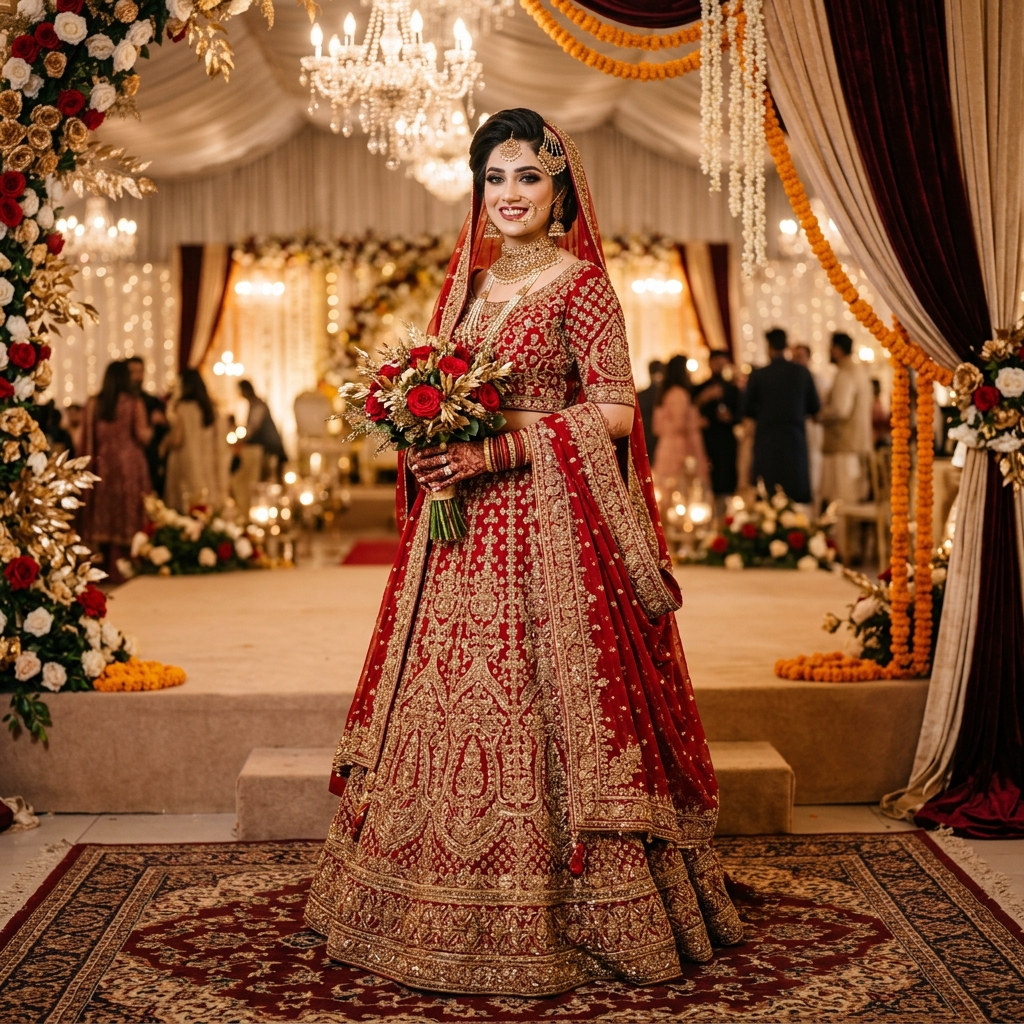
The baraat is when the groom’s family arrives at the wedding venue with music, celebration, and dancing. For the bride, this is the most significant moment of the wedding — the day she becomes the central focus. Your bridal outfit on baraat day should be statement-making, traditional, and photograph-worthy.
This is where the heavy, ornate Pakistani bridal lehenga shines. The baraat outfit is typically the most expensive, most embellished, and most formal of all your wedding clothes. Red, maroon, or gold tones are traditional (though modern brides often choose emerald, deep pink, or even blush). The lehenga should have substantial embroidery — zardozi, gota patti, beadwork, mirror work, or a combination.
The dupatta (veil) is crucial on baraat day. It’s traditionally red or gold, heavily embroidered, and draped in specific ways that vary by region. For this day, your hair and makeup styling should support the weight of the veil, which is discussed in detail in our Pakistani Wedding Hairstyles Guide.
Many Pakistani brides wear multiple outfits throughout baraat day — a heavier lehenga for the formal moments and a lighter one for reception-style events later in the evening. This is also the day when your jewelry is most on display, your makeup is most dramatic, and your confidence should be at its peak.
“Anchor your baraat dupatta styling with multiple reinforced pins. The weight of heavy zardozi can easily pull back a loosely pinned veil during your walk down the aisle.
AAmina Khalid
Lead Bridal Stylist
The Walima Reception: Formal Elegance
The walima is traditionally the groom’s family’s reception for the bride, though modern Pakistani weddings often treat it as a second major celebration. Your walima outfit should be elegant but slightly less heavy than your baraat lehenga — you’ll be sitting, greeting guests, and celebrating, not just performing ceremonial moments.
A beautifully embroidered lehenga works, or you might opt for a gharara, sharara, or even a fusion gown. The walima is where some brides introduce jewel tones like emerald or sapphire, or go more contemporary with blush, champagne, or even ivory-based outfits (which would be unusual but increasingly popular among modern Pakistani brides).
The walima is also where regional style differences become very visible. A Karachi bride might opt for a lighter fabric and more minimalist embroidery; a Peshawar bride might choose heavier embroidery and richer colors; a UK Pakistani bride might introduce Western silhouettes blended with traditional embellishments.
Additional Events: Photo Shoots, Mayun, and Beyond
Modern Pakistani weddings often include:
- Mayun ceremony (pre-wedding ritual): A more casual outfit, often in yellow or green, reflecting the playful, intimate nature of this family event.
- Photo shoots: Some brides invest in a third outfit specifically for pre-wedding or post-wedding photography — this might be a lighter, more mobile silhouette.
- Bridal shower or engagement: Depending on your traditions, you might need another outfit in jewel tones or pastels.
Types of Pakistani Bridal Outfits Explained: Beyond Just Lehenga
What are the main types? The four primary Pakistani bridal outfits are the lehenga (three-piece traditional: choli, full skirt, dupatta), the gharara (fitted tunic with dramatically flared bottom), the sharara (wide-legged trouser-style with fitted top), and modern fusion gowns (contemporary silhouettes with traditional embroidery).
Key differences:
- Lehenga: Most ornate, heaviest option, most formal for baraat day.
- Gharara: Elegant, less bulky, flattering for most body types.
- Sharara: Modern, mobile, elegant without restricting movement.
- Fusion gowns: Contemporary, wearable after the wedding, ideal for comfort-focused brides.
When most people think of Pakistani wedding outfits, they think lehenga. But Pakistani bridal fashion is far more diverse than that. Understanding the differences will help you choose what actually works for your body, your comfort level, and your personal style.
The Lehenga: The Royal Choice
The lehenga is the most iconic Pakistani bridal silhouette. It consists of three pieces: a fitted blouse (choli), a full, voluminous skirt (lehenga), and a dupatta (veil).
Why it’s iconic: The lehenga allows for maximum embroidery display. The full skirt creates an incredibly photogenic silhouette, the fitted choli defines your waistline, and the dupatta adds drama and elegance. For Pakistani brides, the lehenga is often the outfit you’ll wear on your most important day (baraat day).
Modern variations: Contemporary lehengas might have:
- A shorter, more wearable length instead of full-length.
- Asymmetrical hemlines or layered skirts.
- Blouses with contemporary cuts (off-shoulder, backless, cape-style).
- Lighter fabrics that move more easily.
- Minimalist embroidery instead of full-coverage designs.
Body type fit: The lehenga works beautifully for most body types, but especially flatters pear-shaped brides (the full skirt balances wider hips) and petite brides (the vertical lines of the lehenga elongate the frame).
Comfort consideration: A traditional, heavily embroidered lehenga can weigh 10-15 kilograms. That’s significant. Modern brides often choose lighter fabrics or less dense embroidery to stay comfortable throughout long wedding days.
The Gharara: The Formal Statement
The gharara is an elegant, traditional Pakistani outfit consisting of a fitted kameez (tunic), a high-waisted skirt that’s gathered at the knees and then flares out dramatically below the knee, and a dupatta.
Why it’s special: The gharara creates an incredibly elegant silhouette. It’s slightly more formal and regal than a lehenga, with less fabric bulk. The dramatic flare at the bottom creates beautiful movement and photographs beautifully. Gharaas are particularly popular in formal, conservative Pakistani circles.
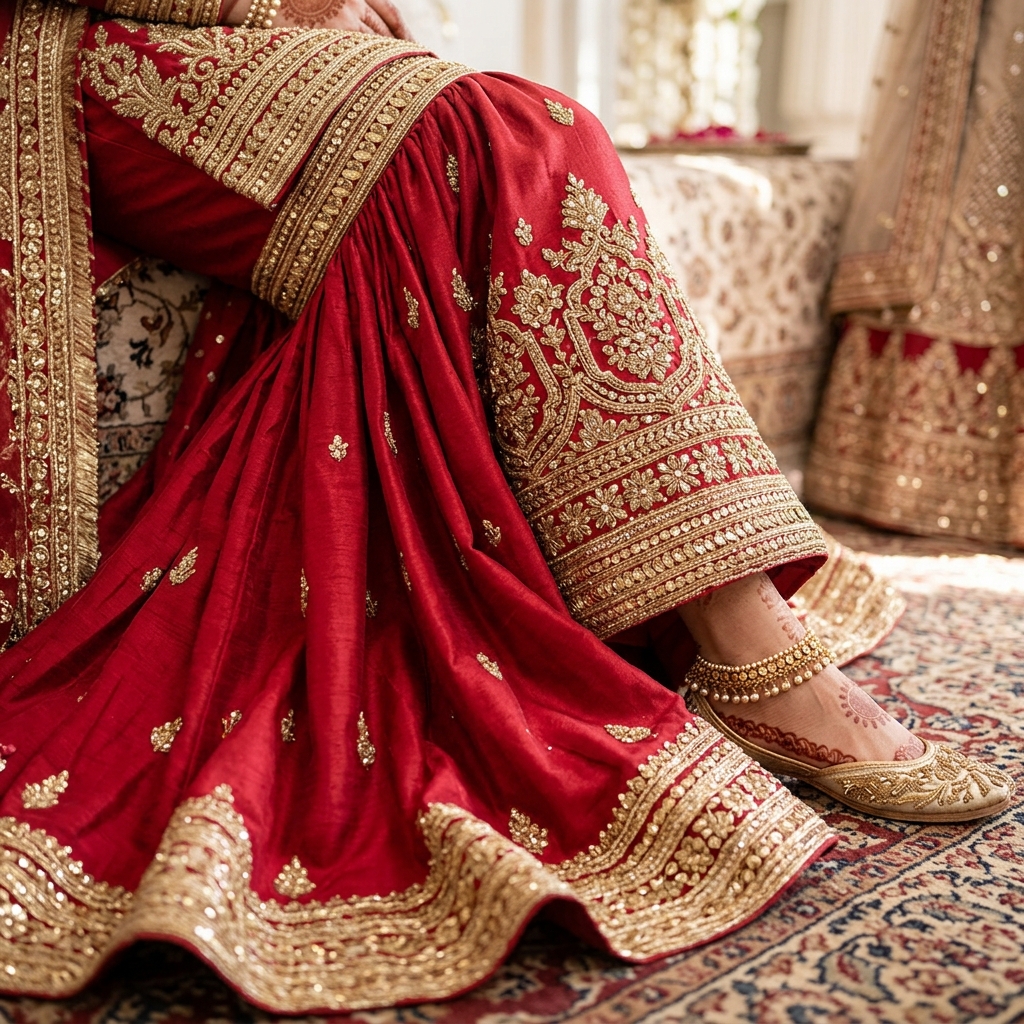 Figure 1: Close-up detail of a traditional red silk bridal gharara with detailed gota embroidery flare.
Modern variations: Contemporary gharaas feature:
- Lighter, more breathable fabrics.
- Asymmetrical hemlines.
- Simpler embroidery patterns.
- Blouses that are more contemporary in cut.
Body type fit: The gharara is exceptionally flattering for apple-shaped and hourglass-figured brides. The fitted waist and flared hemline create beautiful proportion. It’s also excellent for brides who want elegance without the full bulk of a lehenga.
Comfort consideration: A gharara is generally lighter and more mobile than a lehenga, making it a popular choice for brides who’ll be doing a lot of movement or multiple outfit changes.
The Sharara: The Elegant Alternative
The sharara is similar to a gharara but with a slightly different construction — it’s a wide-legged trouser-like bottom piece that flares from the hip, paired with a fitted kameez and dupatta.
Why choose it: The sharara offers elegance with even more mobility than a gharara. It’s less “traditional-formal” and more “modern-elegant,” making it popular with contemporary Pakistani brides who want to honor tradition without feeling restricted.
Modern variations: Many modern sharaas feature:
- Ankle-length legs instead of full-length for easier movement.
- Minimal embroidery, focusing on quality over quantity.
- Contemporary blouses in unexpected colors or cuts.
- Lighter fabrics like chiffon instead of silk.
Body type fit: The sharara is exceptionally flattering for pear-shaped and hourglass-figured brides. It creates a balanced silhouette by adding volume at the hip and thigh, then streamlining at the ankle.
Fusion & Western Gowns: Modern Pakistani Bridal Fashion
Increasingly, Pakistani brides are exploring fusion options — traditional embroidery techniques on contemporary silhouettes. This might mean:
- A heavily embroidered gown instead of a lehenga.
- A fit-and-flare dress with traditional Pakistani embroidery.
- A contemporary white or ivory gown with gold or jewel-tone embroidery.
- A Western-style wedding dress with traditional dupatta.
This approach is particularly popular among:
- UK Pakistani brides and diaspora communities.
- Brides who want a dress they can wear again after the wedding.
- Brides with mixed cultural backgrounds.
- Those prioritizing comfort and mobility.
Important note: Wearing a fusion outfit is a deeply personal choice. There’s no “right” way to be a Pakistani bride — only the way that feels authentic to you and honoring to your heritage.
Colors That Celebrate Your Beauty: Traditional & Modern Palettes
Color in Pakistani wedding outfits isn’t just aesthetic — it carries cultural meaning, regional significance, and personal psychology. Choosing the right color for each event is one of the most important decisions you’ll make.
Traditional Pakistani Wedding Colors
- Red: The most iconic Pakistani bridal color. Red represents prosperity, joy, and passion. Historically, it’s the color of baraat and walima outfits. But red comes in many shades — from deep burgundy to bright scarlet to muted maroon.
- Maroon: A slightly more muted version of red, maroon is increasingly popular because it photographs better and can be more flattering on certain skin tones than bright red.
- Gold and champagne: These warm metallics are secondary colors in Pakistani wedding fashion. They’re often combined with red, green, or jewel tones for a luxurious effect.
- Green: In some regional traditions, green holds significant meaning. In other regions, it’s considered unlucky. This is where understanding your specific family traditions becomes important.
Modern Pakistani Wedding Color Trends
Contemporary Pakistani brides are expanding the palette:
- Jewel tones: Emerald, sapphire, ruby, and amethyst are increasingly popular. They photograph beautifully in both natural and studio lighting, and they feel modern while still honoring traditional embroidery and craftsmanship.
- Blush and champagne: Soft, romantic tones that feel modern and are flattering on many skin tones. These are particularly popular for mehndi outfits and photo shoot looks.
- Powder blue and lavender: Unexpected but stunning choices that feel contemporary while remaining elegant.
- Gold and bronze with jewel tone combinations: Modern brides often pair traditional gold embroidery with contemporary jewel-tone base fabrics for a “traditional-modern” aesthetic.
- Coral and peach: Warm, joyful colors that feel celebratory — perfect for mehndi or photo shoots.
Choosing Your Perfect Color
Consider your skin tone:
- Fair/pale skin: Looks stunning in deep reds, jewel tones (emerald, sapphire), and gold. May want to avoid overly muted colors that wash you out.
- Medium/olive skin: Extremely versatile. Can wear nearly any color. Red, maroon, emerald, gold, and blush all work beautifully.
- Deep/dark skin: Glows in jewel tones, gold, warm reds, and rich colors. Avoid overly muted or grayish tones.
Consider your regional tradition:
What color did your mother wear? Your grandmother? What does your family region traditionally favor? This context matters and adds cultural richness to your choice.
Consider your personal style:
Are you someone who wears bold colors confidently? Or do you prefer softer, more subtle tones? Your wedding outfits should feel like an amplified version of yourself, not a complete departure from who you are.
Multiple outfits, multiple colors:
Remember, you’ll wear multiple outfits. You can choose red for baraat, emerald for mehndi, and blush for walima — giving yourself permission to explore what actually makes you feel most beautiful.
Fabrics & Embellishments: Quality That Lasts
The fabric of your Pakistani wedding outfit determines not just how it looks, but how it feels, how it moves, how it photographs, and whether it will still look beautiful at 2 AM when you’re dancing at your reception.
Premium Pakistani Bridal Fabrics
- Silk: The gold standard of Pakistani bridal fabrics. Silk has natural sheen, drapes beautifully, and feels luxurious against the skin. Heavier silk (like dupioni or raw silk) is traditional; lighter silk (like chiffon silk blends) is more contemporary. Silk holds embroidery beautifully and photographs with depth.
- Velvet: Increasingly popular for Pakistani bridal outfits, velvet creates a rich, luxurious look. It’s heavy and dramatic, photographs beautifully in artificial light (important for evening ceremonies), and feels incredibly elegant. The downside: it can be heavy and hot to wear for long periods.
- Organza: A crisp, structured fabric that’s lighter than silk but holds shape beautifully. Often used for lehenga skirts to create volume without excessive weight. Organza with embroidery creates a lacy, elegant effect.
- Georgette: A flowing, draped fabric that’s lighter than silk but more textured than chiffon. It creates beautiful movement and is increasingly popular for more contemporary bridal looks.
- Chiffon: The lightest traditional option, chiffon is popular for dupattas, overlays, and for brides who prioritize comfort and mobility. It flows beautifully but doesn’t hold as much embroidery or structure as heavier fabrics.
Embroidery & Embellishment Techniques
- Zardozi: Gold thread embroidery that creates metallic, luxurious effects. This is the most traditional and most expensive embroidery technique. Zardozi embroidery can weigh significantly, which is important to consider.
- Gota patti: Gold ribbon embroidery that creates geometric, bold patterns. It’s lighter than zardozi but equally dramatic. Gota is particularly popular in certain regional traditions (especially Rajasthani influences in Pakistani fashion).
- Beadwork: Individual beads hand-stitched into patterns. This creates textural, jewel-like effects. Beadwork can be dense or sparse depending on the design.
- Sequins and mirror work: Adds sparkle and drama. Mirror work (small mirrors stitched into fabric) is particularly popular and creates a shimmering, reflective effect.
- Thread embroidery: Fine embroidery using colored threads to create detailed, intricate patterns. This is lighter than other techniques and creates more delicate, detailed designs.
- Minimalist embroidery: Modern trend where embroidery is concentrated in specific areas (neckline, hemline, or one side) rather than full coverage. This creates elegance without excessive weight.
Quality Indicators & What They Mean for Price
- Hand-embroidery vs. machine embroidery: Hand-embroidery is significantly more expensive but creates irreplaceable, unique details. Machine embroidery is more affordable and perfect for many contemporary designs.
- Fabric weight: Heavier, higher-quality silk costs more. You can feel the difference — luxury silk feels smooth and substantial; lower-quality silk feels thin and papery.
- Embroidery density: More embroidery = higher cost. A fully embroidered lehenga costs significantly more than one with embroidery only on the border.
- Designer label vs. local artisan: Designer brands command premium prices; local artisans and smaller shops often offer exceptional quality for significantly less.
Accessorizing Like a Pakistani Bride: The Complete Picture
A Pakistani bridal outfit without proper accessories is like a painting without a frame. Your jewelry, dupatta, shoes, and finishing touches complete the vision.
The Jewelry Hierarchy: What You Actually Need
- The maang tika: A traditional piece worn in the hair, hanging onto the forehead. It’s ornamental and highly symbolic in Pakistani weddings. You’ll wear this on baraat day and possibly walima. It should complement your outfit’s embroidery style.
- The necklace: This is your statement piece. A heavy, ornate necklace (often in gold, with pearls or precious stones) is traditional for baraat and walima. Your necklace should complement your blouse neckline, not compete with your dupatta, and feel comfortable to wear for hours.
- Bangles: Traditional Pakistani brides wear stacks of bangles. Mehndi bangles are often red or green; baraat bangles match your outfit; walima bangles can be more contemporary. Bangles should feel comfortable enough to move in without sliding up and down your arm all day.
- Earrings: These should balance your face shape. If you’re wearing a heavy maang tika, lighter earrings work better. If your necklace is statement-making, more delicate earrings create balance.
- Rings and hand jewelry: Traditional Pakistani weddings often include intricate hand jewelry (like hathphool — hand chains) worn only on baraat day. This is increasingly optional but adds beautiful detail.
The Dupatta: More Than Just a Veil
The dupatta is one of the most significant pieces of your bridal outfit. It’s not just decoration — it’s a cultural symbol and a styling element.
- Baraat dupatta: This is typically red or gold, heavily embroidered, and quite long (enough to cover you completely when draped). It’s draped in specific ways depending on regional tradition. In some traditions, it covers your entire face until the groom arrives; in others, it’s worn over your shoulders and head. Modern versions might be lighter, shorter, or less heavily embroidered.
- Walima dupatta: Often lighter and less heavily embroidered than the baraat dupatta. Some brides choose a completely different dupatta for walima.
- Mehndi dupatta: Often in complementary colors (gold for a green outfit, for instance) or in the same color family as your outfit. Can be more playful and less formal.
If your dupatta has heavy embroidery on its borders, consider choosing a lightweight net or chiffon base fabric to prevent it from weighing heavily on your head.
Shoes and Final Touches
- Bridal shoes: Pakistani bridal shoes are often gold (matching the embroidery), red (matching the traditional color), or jewel-toned. They should be comfortable enough to wear for hours, beautiful enough to be photographed, and secure enough that they won’t fall off while you’re dancing.
- Henna: While technically not jewelry, henna is a crucial part of the bridal aesthetic. Bridal henna is intricate, covering both hands and extending up the arms. This is applied at the mehndi ceremony and is central to your look for all subsequent events.
- Tikka and bindi: Some regional traditions include a tikka (decorative mark on the forehead) or bindi. If this is part of your tradition, coordinate the design and color with your overall aesthetic.
Regional Wedding Outfit Variations: Celebrating Local Pride
Pakistani wedding fashion isn’t monolithic. A Lahore bride’s wedding outfit looks different from a Karachi bride’s, which looks different from a Peshawar bride’s. Understanding these regional nuances helps you honor your specific heritage.
Lahore Wedding Style: Urban Sophistication
Lahore has historically been the epicenter of Pakistani fashion. Lahore brides often favor:
- Designer-driven outfits: Lahore has access to Pakistan’s top bridal designers (Sania Maskatiya, Faraz Manan, Ali Xeeshan, etc.), so many Lahore brides invest in high-end designer lehengas.
- Contemporary cuts with traditional embroidery: Lahore brides pioneered the fusion trend — traditional embroidery techniques on modern silhouettes.
- Minimalist approach: Instead of full-coverage embroidery, Lahore bridal fashion often features strategically placed embroidery for a more refined look.
- Color experimentation: Lahore brides are more likely to choose non-traditional colors (emerald instead of red, blush instead of maroon).
Karachi Coastal Elegance
Karachi, as a coastal city, has developed its own distinct bridal aesthetic:
- Lighter fabrics: Karachi’s humid climate makes lighter silks, organzas, and chiffons more practical and comfortable.
- Fusion and fusion-forward: Karachi has a significant international influence, so fusion outfits (traditional embroidery on Western silhouettes) are more common.
- Jewel tones and contemporary colors: Karachi brides frequently choose emerald, sapphire, and blush — stepping away from traditional red.
- Simplified embellishment: Heavy zardozi is less common; beadwork and sequins are more popular.
Peshawar Traditional Heritage
Peshawar maintains stronger connections to traditional embroidery and regional textile arts:
- Chikankari and heavy embroidery: Peshawar bridal wear often features dense embroidery, including traditional Peshawar embroidery techniques.
- Rich, jewel-tone colors: Deep reds, maroons, emeralds, and sapphires.
- Silk and velvet: Heavier fabrics that hold embroidery beautifully.
- Traditional silhouettes: While contemporary options exist, traditional lehengas and gharaas remain more dominant.
UK Pakistani Communities: Diaspora Style
UK Pakistani brides (and diaspora communities worldwide) have developed a hybrid aesthetic:
- Fusion as standard: Mixing Pakistani embroidery with Western silhouettes is the norm, not the exception.
- Venue-conscious choices: UK weddings might include both traditional Pakistani outfits and contemporary Western dresses.
- Comfort and practicality: Outfits are often chosen for wearability — brides are dancing, moving, and celebrating in ways that traditional, heavy lehengas make difficult.
- Cultural pride with contemporary expression: Second-generation Pakistani brides often wear outfits that honor their heritage while expressing their modern identity.
Styling Tips for Confidence & Comfort: Dressing for Your Body & Soul
The most beautiful Pakistani wedding outfit in the world won’t make you feel stunning if it doesn’t fit properly, move comfortably, or feel authentically you. Here’s how to bridge the gap between tradition and personal confidence.
Dressing for Your Body Type
- Petite brides: Vertical lines elongate your frame — a traditional lehenga works beautifully. Avoid oversized, overly voluminous skirts that can overwhelm. Statement jewelry draws the eye upward to your face. Shorter hemlines or layered lehengas can work better than full-length.
- Pear-shaped brides (wider hips, narrower shoulders): A full, voluminous lehenga or sharara beautifully balances your proportions. Fit-and-flare silhouettes emphasize your narrower waist. Jewelry and embroidery on the upper half draw attention to your shoulders and face. Avoid overly fitted blouses that emphasize hip width.
- Apple-shaped brides (wider midsection): A fitted blouse with an A-line lehenga creates beautiful proportion. Horizontal embroidery placement at the hip creates balance. A gharara with its fitted waist is exceptionally flattering. Layered lehengas or sharara styles work well.
- Hourglass brides (balanced, curvy): You can wear nearly any silhouette successfully. Fitted garments that emphasize your waist are stunning. A traditional lehenga with a fitted choli is ideal. Statement jewelry and embroidery anywhere looks good.
You can pair these guidelines with our complete 50+ Hairstyles for Wedding guide to frame your necklines beautifully.
The Confidence Factor: Wearing What Feels Like You
Beyond body type, consider:
- Movement: Can you move, sit, dance, and celebrate in this outfit? Or will you spend your wedding day uncomfortable and restricted? Modern modifications (shorter hemlines, lighter fabrics, simpler embroidery) exist for a reason.
- Comfort: Will you be comfortable wearing this for 12+ hours? Does it itch, feel heavy, or make you sweat? A less ornate but comfortable outfit beats an uncomfortable statement piece every time.
- Personal style: Are you someone who loves bold, dramatic fashion? Then go for full embroidery and heavy fabrics. Do you prefer minimal, elegant simplicity? Then embroidery placement and lighter silhouettes are your answer.
- Authenticity: Does this outfit feel like an amplified version of who you are? Or does it feel like you’re playing a character? Your wedding day is not the time to wear something that doesn’t feel authentically you.
The Modern + Traditional Balance
Honoring tradition while expressing your contemporary self is possible:
- Wear a traditional silhouette (lehenga, gharara) but in a non-traditional color.
- Choose traditional embroidery techniques but on a modern dress silhouette.
- Wear a fusion outfit but incorporate traditional jewelry.
- Pick a lighter, more wearable version of a traditional outfit.
- Change your outfit multiple times to express different facets of your style.
There’s no rule saying you must choose between tradition and modernity. The most stunning Pakistani brides are those who find their own balance.
Where to Shop & Budget Reality: The Practical Guide
Now for the question every bride asks: where do I actually buy Pakistani wedding outfits, and how much will it cost?
Designer Brands in Pakistan: Investment Pieces
Pakistan’s top bridal designers create runway-quality wedding outfits that set the standard for the entire South Asian bridal industry.
Premium designers (Faraz Manan, Sania Maskatiya, Nida Azwer, Ali Xeeshan, HSY):
- Price range: Rs. 200,000 - 800,000+ (USD $650 - $2,500+)
- Quality: Exceptional — hand-embroidery, museum-quality craftsmanship.
- Options: Full custom design possible, exclusive hand-embroidery, premium silk and velvet.
- Access: Pakistan showrooms, export to UK/USA, online consultation, trunk shows.
Why they’re worth it: These designers’ pieces are heirloom quality — passed down through generations and regularly featured in wedding blogs and magazines. Their work sets trends that filter down to mid-market designers within 6-12 months.
Mid-range Pakistani designers:
- Price range: Rs. 100,000 - 250,000 (USD $300 - $800)
- Quality: Very good to excellent.
- Options: Semi-custom, good fabric quality, thoughtful embroidery.
- Access: Online, Pakistan-based shops, some international presence.
Pakistani bridal boutiques and smaller designers:
- Price range: Rs. 50,000 - 150,000 (USD $150 - $450)
- Quality: Good to very good.
- Options: Ready-made or custom, various embroidery options.
- Access: Local shops, online platforms like TikTok shops, Instagram.
Budget-Friendly Shopping: Quality Without Breaking the Bank
- Local markets in Pakistan (Rang Mahal, Lahore; Fashion Street, Karachi): Price range of Rs. 20,000 - 80,000. Haggling is expected, and custom tailoring is available.
- Online Pakistani platforms (local Instagram boutiques): Price range of Rs. 30,000 - 150,000. Look for customer photos and reviews. Good for secondary or lighter outfits.
- Renting or borrowing: Some high-end Pakistani rental services exist (particularly in the UK and USA), costing Rs. 20,000 - 40,000 for a day, allowing you to wear a premium designer outfit affordably.
For practical budgeting, see our 10 Budget-Saving Wedding Tips for general ideas, or check our 20 Tips for Your Wedding Planning Checklist.
Budget Breakdown: Planning Your Investment
For a complete Pakistani wedding wardrobe (all events):
- Mehndi outfit: Rs. 50,000 - 150,000 (simpler, more playful)
- Baraat outfit (the main piece): Rs. 150,000 - 500,000+ (this is your core investment)
- Walima outfit: Rs. 75,000 - 200,000 (lighter, less ornate)
- Jewelry (renting or borrowing is common): Rs. 50,000 - 300,000+ if purchasing
- Accessories and shoes: Rs. 10,000 - 50,000
Total realistic budget: Rs. 400,000 - 1,200,000 (USD $1,200 - $3,500) for a complete bridal wardrobe.
This assumes you’re investing in the baraat outfit and having simpler options for other events. Many brides spend less; some spend significantly more.
Conclusion: Your Wedding Day, Your Way
Pakistani wedding outfits are more than clothes. They’re cultural artifacts, family statements, and personal expressions of identity. They’re the visual representation of who you are, who your family is, and what this moment means to you.
As you navigate the process of choosing your mehndi, baraat, and walima outfits, remember:
- There’s no single “right” way to be a Pakistani bride. Your way is the right way.
- Comfort matters as much as beauty. You can’t feel confident if you’re uncomfortable.
- Tradition and modernity aren’t opponents. They’re partners in creating something uniquely yours.
- Regional variations are features, not bugs. Celebrating where you or your family is from makes your wedding more meaningful.
- Budget flexibility exists. You can create a stunning bridal wardrobe at any price point.
Whether you choose a Rs. 600,000 designer lehenga or a Rs. 60,000 high-quality piece from a local artisan, whether your mehndi dress is emerald green or sunset pink — the magic of your wedding day comes from within you, not from the outfit.
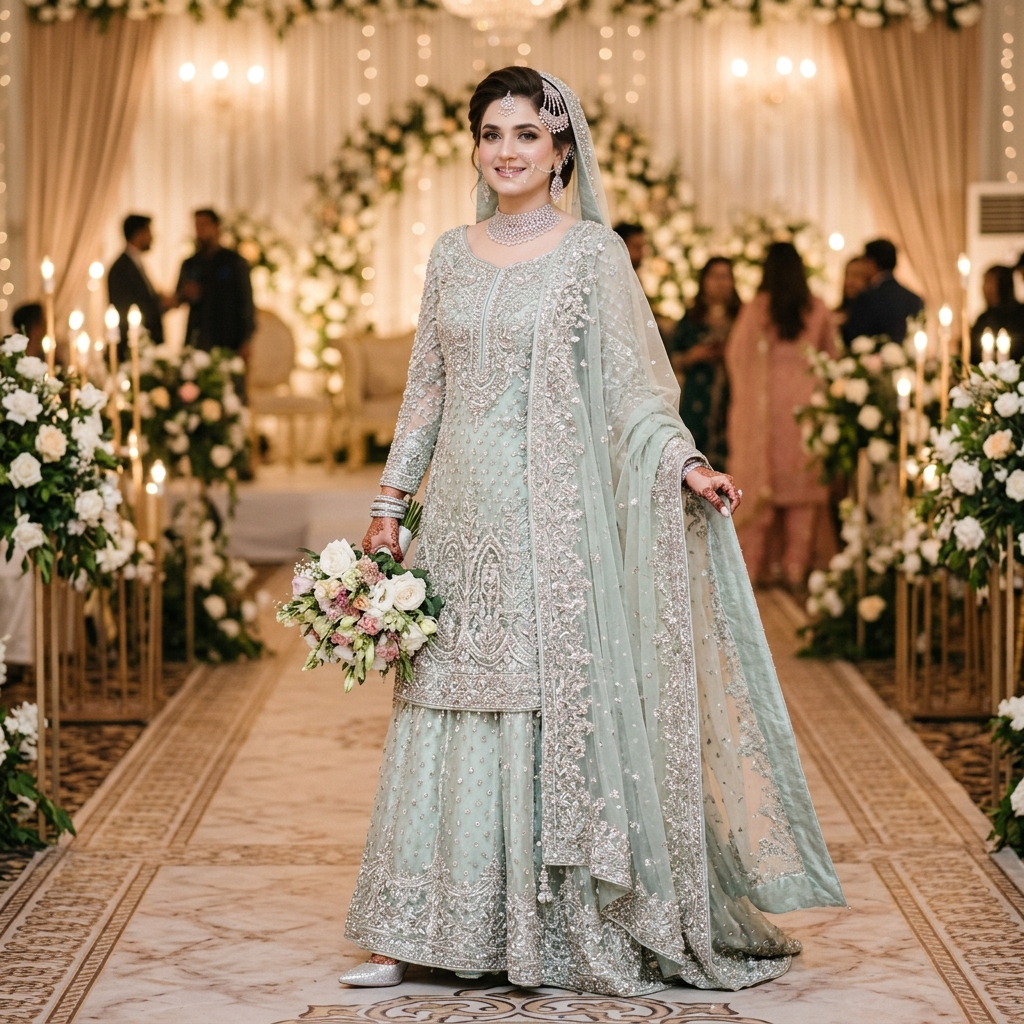 Figure 2: An elegant contemporary pastel mint green Walima bridal outfit with light silver details.
Your Pakistani wedding outfits are your armor, your celebration, and your canvas. Wear them with confidence, honor your heritage in a way that feels authentic to you, and step into your wedding day as the most beautiful version of yourself.
Ready to dive deeper? Check out our complete guides on:
- Pakistani Wedding Hairstyles: 45+ Styles for Mehndi, Baraat & Walima
- Wedding Outfits for Brides: Complete Style Guide
- 10 Budget-Saving Wedding Tips Every Couple Needs to Know
- The Ultimate Wedding Planning Checklist Guide
- How to Choose the Perfect Wedding Venue
- Perfect Guest List Guide: How to Cut Your List Nicely